

Speakers gather for Asia Content Business Summit, or ACBS, in Hong Kong on March 12. CALVIN NG / CHINA DAILY
Filipina film editor Manet Dayrit has seen how collaboration with filmmakers outside of the Philippines can enrich both the local and Asian movie industries.
Dayrit recalled that during the COVID-19 pandemic, production houses in France, Norway, the Philippines, Singapore, and Vietnam joined hands to produce Cu Li Never Cries — a debut feature from Vietnamese filmmaker Pham Ngoc Lan.
The movie, about a Vietnamese widow who inherits her husband's pet pygmy slow loris, won a best first feature award at the 74th Berlin Film Festival last month in Germany.
Co-productions in the film industry offer numerous benefits, Dayrit said in an interview with China Daily ahead of the Asia Content Business Summit (ACBS).

Filipina film editor Manet Dayrit. CALVIN NG / CHINA DAILY
The conference, part of the Hong Kong International Film & TV Market (FILMART), opened on March 12 at the Hong Kong Convention and Exhibition Centre.
Dayrit said that co-producing movies encourages transfer of technology, knowledge, and skills.
"We also (learn to) embrace each other's cultures and help each other's film industry (to grow) through co-productions," Dayrit said.
Dayrit, like other Southeast Asian ACBS participants, said that she believes that regional cooperation is key to developing and sustaining their respective film industries.
Kamil Othman, chairman of the National Film Development Corporation Malaysia (Finas), said Southeast Asian countries can work together to develop movies by "following the European Union style of doing things".
He noted that European film producers work together to develop and market their movies to the whole EU.
Southeast Asian filmmakers can do the same, he said, under the auspices of the Association of Southeast Asian Nations (ASEAN). However, according to Kamil, ASEAN-wide film cooperation can only be possible through a government-to-government negotiation.
Dwi Heriyanto, CEO of Produksi Film Negara (State Film Productions) in Indonesia, said that in order to co-produce a movie, filmmakers must learn more about the other country's culture and film market.
"Asian countries vary greatly in terms of culture, language, and market (development)," Heriyanto said. He said collaboration entails an analysis of each country's strengths and weaknesses in content creation.
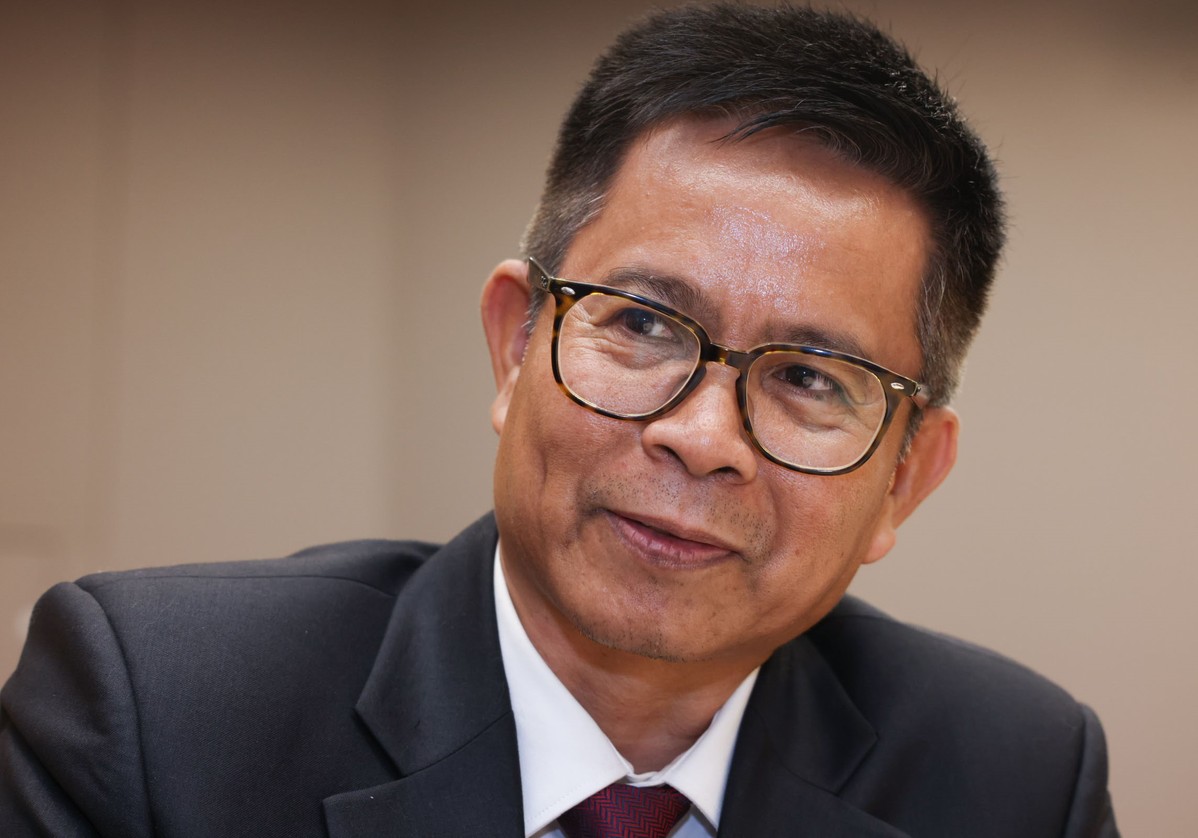
Dwi Heriyanto, CEO of Produksi Film Negara (State Film Productions) in Indonesia. CALVIN NG / CHINA DAILY
"For example, countries with a rich cultural heritage like Indonesia can focus on producing culturally-relevant content," Heriyanto said, adding that a country with advanced technology infrastructure can contribute technical expertise.
Sirisak Koshpasharin, vice-chairman of the Motion Pictures and Contents Association of Thailand, said that co-production is possible "once in a while" but noted language barriers, cultural differences, and diversity in work styles can be a challenge among Southeast Asian film industry players.
He noted that the Thai film market is small but, when combined with other countries in the region, the market can expand.
Sirisak added that streaming platforms can allow one locally-produced film to "travel around the world, not only in Asia".
No Southeast Asian country has a market as big as India's Hindi cinema — commonly known as Bollywood — nor as large a global appeal as South Korea's K-Dramas.
Nonetheless, the rise of streaming services has introduced Southeast Asian cinema to a wider audience.
Indonesia's period drama Gadis Kretek (Cigarette Girl) and the Philippines' black comedy TV series A Very Good Girl, both released in 2023, have made it to the Global Top 10 list on streaming platform Netflix.
ASEAN filmmakers are going beyond the region for co-production and to tap the wider Asian market.
For example, the movie Abang Adik, a social drama about two undocumented orphans in the capital city of Kuala Lumpur, is a collaboration between filmmakers in Malaysia and Taiwan of China.

Sirisak Koshpasharin, vice-chairman of the Motion Pictures and Contents Association of Thailand. CALVIN NG / CHINA DAILY
Abang Adik was released last December and it topped the box office not only in Malaysia but also in the Taiwan region and the Hong Kong Special Administrative Region.
"I think in Asia, everybody's talking about bigger markets, bigger production values (that can be achieved by) working together," Sirisak said.
This is why he welcomes the Belt and Road Initiative (BRI) and how it can help in tapping the "very big" Chinese film market for Thai filmmakers. He said that he is proud that some Thai TV dramas are now hits in China.
He said that the BRI will encourage more co-production. "I think (filmmakers) from Asian countries would love to do something together," Sirisak added.
Dayrit from the Philippines said the Belt and Road Film Festival Alliance has helped in connecting Asian film industry players. She said that members of the alliance join the Shanghai International Film Festival (SIFF) and other major film festivals where they have the opportunity to meet, exchange ideas, and close business deals with their colleagues. The Belt and Road Film Festival Alliance was established in 2018, initiated by the SIFF Organizing Committee. The alliance aims to strengthen film-cultural exchanges among BRI member countries.
ASEAN filmmakers also talked about the benefits and challenges that are presented by emerging technologies like artificial intelligence (AI).
For Dayrit who has worked extensively on restoring classic Filipino movies, tools like AI are a boon as they can accelerate the technical process of film restoration like "cleaning" a film or rendering visual effects.
"The advancements in AI has made (film restoration) more efficient (and) cheaper," she said. It will also reduce the time spent on technical work while allowing those in the movie industry to focus more on creative work, she added.
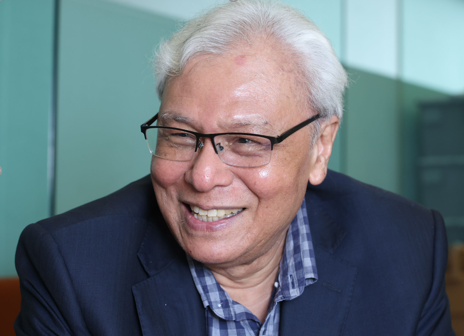
Kamil Othman, chairman of the National Film Development Corporation Malaysia (Finas). CALVIN NG / CHINA DAILY
Kamil from Malaysia said AI is part of the technological aspect of filmmaking but noted that you still need "human intervention" to produce a film.
Sirisak said the film industry needs to balance both the positive and negative aspects of AI. "If (you use AI) too much, then you lay-off all the people, I think that should not happen. But you should have that AI (technology) to make your work better," he said.
Jan Yumul in Hong Kong contributed to this story.
