
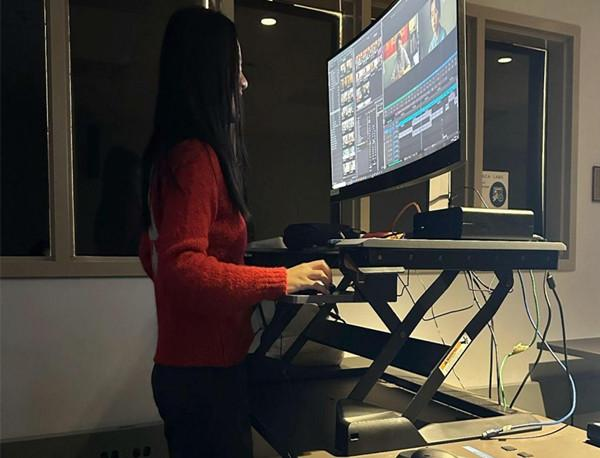
Los-Angeles-based Chinese editor Yuntong "Hazel" Dai helps turn damaged footage and a missing scene of a Chinese micro-budget film into an overseas cash-point. [Photo provided to chinadaily.com.cn]
As Drifting, South, a 16 mm short-film directed by Chinese director Zhang Di, has just won the Winner award in the Short Film International Competition at Riga International Film Festival 2025 in Latvia, its true story may be economic — a micro-budget project that turned damaged footage and a missing scene into an overseas cash-point.
With jurors praising its "fleeting connections", Drifting, South focuses on the brief intersection of three marginalized figures on Xiaobei Road in Guangzhou, Guangdong province, but witnessed its unnoticed pivot being made in post-production by Chinese editor Yuntong "Hazel" Dai, now Los-Angeles-based.
Dai, whose "narrative reconstruction and tech repair" is being considered to have re-energized China's arthouse sector, replaced re-shoots with "post directing" and swapped expensive global sharpening for artificial intelligence-assisted local repair.
Her workflow is already being imitated by Chinese film editors as a low-cost insurance policy against gaps, defects, and festival deadlines.
The RIGA IFF trophy gives the film potential overseas sales heat and raises the international exposure of director Zhang (whose previous project was already Venice-selected) and her team.
The film once had a production crisis, as two narrative scenes were never filmed. Conventional reshoots meant re-blocking locations, rehiring actors, and blowing the already tiny budget.
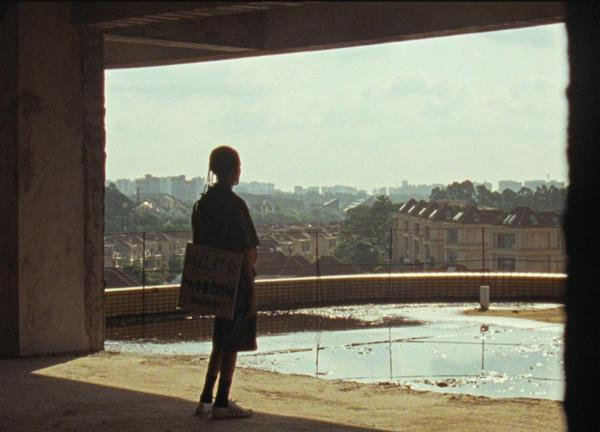
Drifting, South, a 16 mm short film won the Winner award in the Short Film International Competition at RIGA IFF. [Photo provided to chinadaily.com.cn]
Then Dai stepped in as a "post-director". By using montage techniques to weave the dancer's and the boy's emotional shots into the barbershop girl's storyline, the edit not only patches a narrative gap caused by the lack of a clear character arc, but also avoids the high costs of reshoots. This kind of "post-production narrative reconstruction" offers low-budget projects a viable, cost-effective way to resolve missing footage. It repairs the structure through editing, rather than pushing the risk back onto production through additional shooting.
The localized defocus issues caused by shooting on 16mm film also became a representative example of reducing costs through technical means. Fixing focus after film digitization is a well-known industry pain point: applying aggressive sharpening across the entire frame not only delivers poor results, but can also increases post-production costs. Dai's key innovation in this case lies in her "localized detail restoration" workflow. She first uses Topaz Labs' AI software to screen and identify defects, then employs DaVinci Resolve's PowerWindow and Tracker tools to concentrate the restoration on key areas such as characters' faces — solving the technical problem while preserving the film's texture.
Compared with traditional full-frame restoration, this hybrid approach of AI plus manual fine-tuning significantly reduces labor time and cost. The workflow has since been adopted and reused among some Chinese film editors, forming a replicable cost-saving practice.
Experts say there are takeaways for China's arthouse ecosystem from the success. When shoots under-deliver, an editor who can restructure the story and patch tech flaws is a more economical solution than restarting production. As AI repair trickles down, festival windows may become the default monetization path for micro-budget Chinese art films, with post crews — not investors — holding the risk-off switch.
Please contact the writer at hanjingyan@chinadaily.com.cn
