

The themes of micro-dramas are becoming increasingly diverse, encompassing family relationships, personal growth, education, martial arts, romance, and time travel. Shengxia Fendela is one of the latest hits, earning acclaim for its cinematic visual quality, nuanced performances, and outstanding aesthetics. The series has achieved over 4 billion views. [Photo provided to China Daily]
A coldhearted tycoon enters a contractual marriage with a spirited young woman; he starts off by despising her, but eventually falls head over heels in love with her. A tragic protagonist is reborn, and travels back in time to exact revenge. A billionaire conceals his identity, toiling at manual work, while patiently waiting for the right moment to reveal his true self.
For years, these hypercharged tropes, marked by unrealistic romantic fantasies, extreme identity twists, rapid-fire revenge and formulaic power boosts, were the engines of the micro-drama phenomenon. They were engineered for maximum viewer gratification through single episodes that rarely exceeded three minutes.
However, in 2025, the genre's breakout hits tell a different story.
The second season of Jia Li Jia Wai (The Family We Build) set a benchmark for China's micro-drama industry by surpassing 1 billion views within just four days of its early December premiere on Hongguo, a micro-drama platform in China.
Set in the 1980s and performed in authentic Sichuan dialect, this season follows single mother Cai Xiaoyan and widower Chen Haiqing as they blend their families.
It depicts their journey in building a thriving household, steering clear of melodrama, sensational plot twists and flat characters to instead explore genuine struggles, including the trials of launching a business and the delicate dynamics of stepfamily life, all conveyed through the quiet, enduring warmth that holds them together.
"The entire micro-drama industry has made significant strides in both scriptwriting and aesthetic expression," says Zhao Youxiu, chief producer at Heard Island, the production company behind the hit.
As an example, Zhao shares that during the 30-day shoot for Jia Li Jia Wai Season 2, the production team prepared over 800 sets of costumes and more than 1,000 period props to faithfully re-create the era's atmosphere and character authenticity.
"Whether it's a short drama or a long series, we must lean closer to the real lives of ordinary people. Relying on momentary emotional spikes cannot retain audiences for long. But if a series is infused with relatable emotions, or concludes with a surge of nostalgia, the impact is both stronger and lasts longer,"Zhao says.
The themes of micro-dramas are becoming increasingly diverse, encompassing family relationships, personal growth, education, martial arts, romance, and time travel. Shengxia Fendela is one of the latest hits, earning acclaim for its cinematic visual quality, nuanced performances, and outstanding aesthetics. The series has achieved over 4 billion views. [Photo provided to China Daily]
In October, the romance micro-drama Shengxia Fendela (Summer Rose) also enjoyed phenomenal success.
Distinguished by its cinematic visual quality, nuanced performances and outstanding vertical-screen aesthetics, the series achieved over 4 billion views.
Guo Yuxin, who portrays the female lead Bai Qingmei, describes her character as "a fully realized, flesh-and-blood person", noting that the script provides Bai with a complete growth arc and psychological depth.
"As actors, we need to use our performance power to make the essence of each character visible and palpable, so that they resonate with the audience. This is out of respect for our viewers, and it holds the key to the sustainable development of the micro-drama industry,"Guo says.
Zhao, the chief producer at Heard Island, observes that audience tastes have shifted sharply, with viewers now rejecting conventional micro-drama formulas.
"As more production companies enter the field and viewership expands, the evolution of aesthetic expectations has accelerated, moving faster than many anticipated," he says.
The China Internet Development Report 2025, a blue book published in November by the Chinese Academy of Cyberspace Studies, indicates that as of December 2024, China's micro-drama audience has grown to 662 million viewers, while the market's value has surpassed 50 billion yuan ($7 billion).
For the first time, the sector has overtaken domestic box-office revenues, establishing itself as a major new arena in content consumption.
Reflecting on the shift within the industry, Zhao connects it to the history of media technology.
He observes that from the film projector giving birth to cinema, to the television nurturing TV series, and now the smartphone era spawning vertical-screen short videos and micro-dramas, the content form has always been shaped by its medium.
"In this sense, today's vertical-screen micro-dramas are essentially 'smartphone-native dramas'," he notes.
"It's a form built around mobile phone interaction and viewing habits. As long as the vertical-screen format dominates our devices, this paradigm will persist and continue to permeate culture and industry."
The themes of micro-dramas are becoming increasingly diverse, encompassing family relationships, personal growth, education, martial arts, romance, and time travel. Shengxia Fendela is one of the latest hits, earning acclaim for its cinematic visual quality, nuanced performances, and outstanding aesthetics. The series has achieved over 4 billion views. [Photo provided to China Daily]
A new ecosystem
Recognizing the format's inherent strengths, such as its fast-paced and high-density content, low-cost and agile production, and grounded, internet-savvy mode of storytelling, the industry has actively advanced the "Micro-Drama Plus" initiative promoted by the National Radio and Television Administration over the past year.
The initiative encourages micro-drama creation to integrate extensively with tourism, intangible cultural heritage, public legal education, branding, cultural classics, and science popularization, thereby enhancing the cultural value of micro-drama content and boosting the development of diverse sectors.
It has already sparked a surge of productions featuring more varied themes.
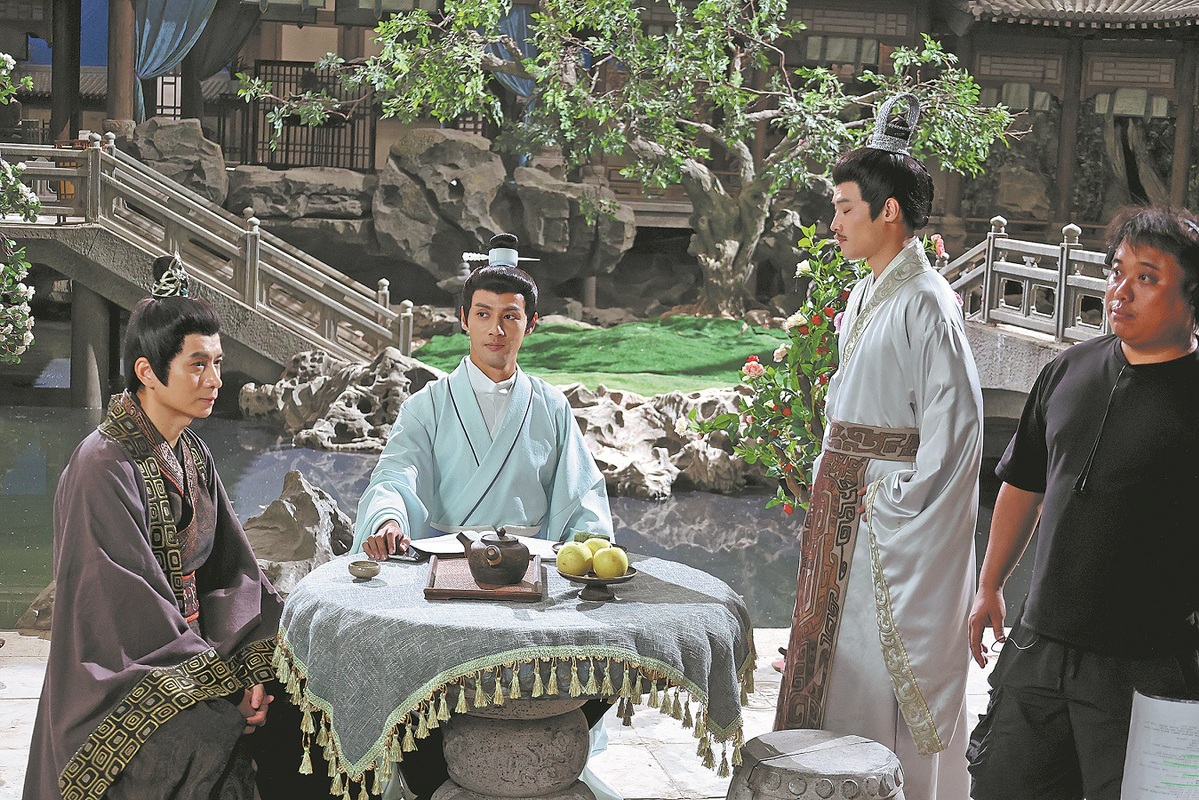
A standout example is Maoxing Langya (Langya Wang Clan), which tells the story of a modern Chinese literature PhD scholar who accidentally travels back to the Qi Dynasty (479-502). Discarding the superpowers prevalent in conventional time-travel plots, the protagonist relies solely on his academic knowledge to navigate political intrigue and stay alive.
The drama garnered 500 million views in the first week after it premiered, and earned an eight out of 10 rating on the review site Douban, where it was widely praised as "well-produced, tightly paced, and genuinely educational".

The themes of micro-dramas are becoming increasingly diverse, encompassing family relationships, personal growth, education, martial arts, romance, and time travel. Shengxia Fendela is one of the latest hits, earning acclaim for its cinematic visual quality, nuanced performances, and outstanding aesthetics. The series has achieved over 4 billion views. [Photo provided to China Daily]
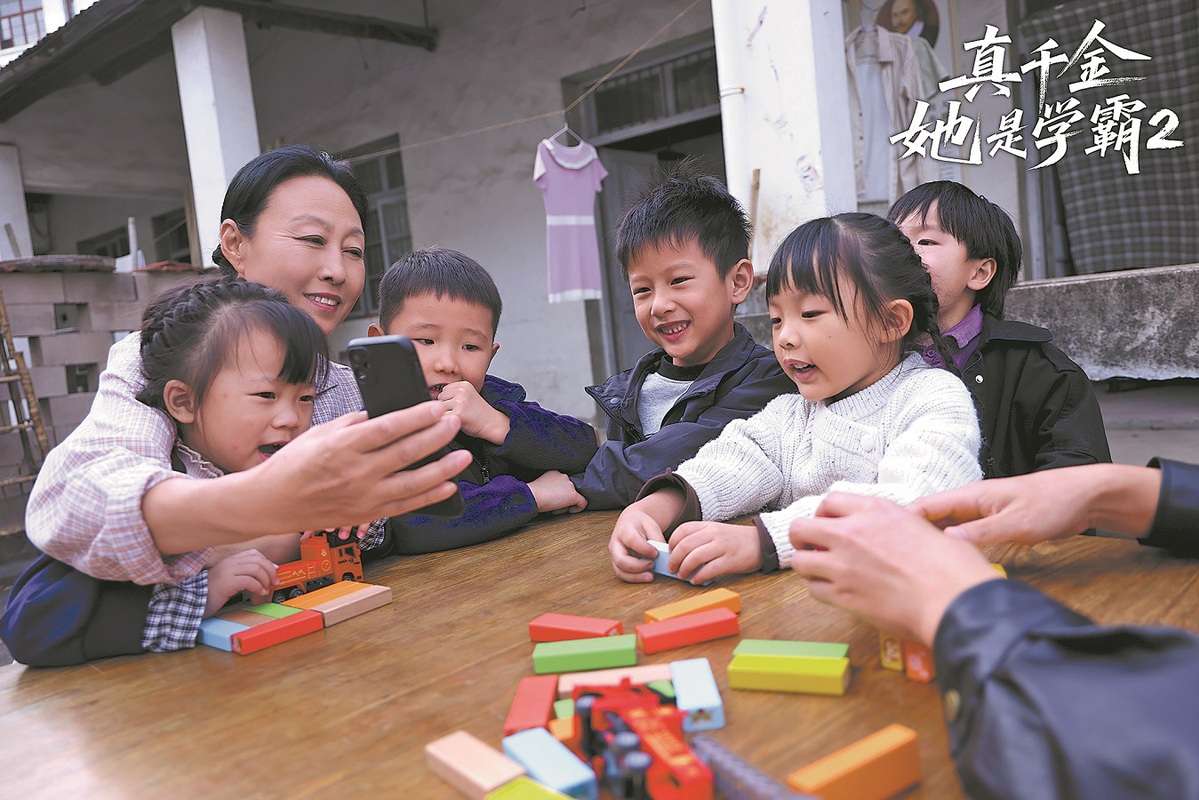
Another notable example is Nongchao (Riding the Waves), an inspiring story of female entrepreneurship that follows a woman starting from a street stall in the early years of China's reform and opening-up in the 1980s, eventually building her clothing store into a popular local fashion brand.
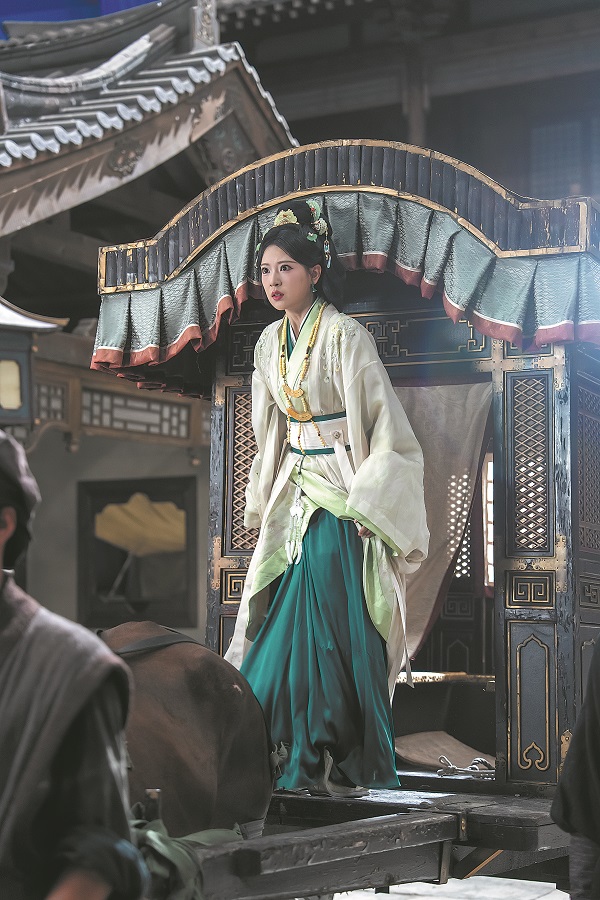
Likewise, Jiejie De Santiao Zan (Sister's Three Hairpins) integrates elements of intangible cultural heritage, including Qinqiang Opera and shadow puppetry, and even invites inheritors of these arts to serve as consultants on the production.
"We are pleased to see the micro-drama sector diversifying and upgrading in quality. While genre dominance is fading, themes like realism, family, history and cultural tourism are gaining ground. Production quality has also improved significantly, with high-definition visuals becoming standard," says a representative of Hongguo.
"On the commercial front, brand collaborations with micro-dramas are deepening and maturing, moving beyond simple product placements toward deeper integration with content and scenarios. That reflects growing market confidence," the representative adds.
With upgraded production quality and more diverse content, the demographics of micro-drama audiences are also shifting toward younger age groups.
Actress Xu Mengyuan, 31, notes that this year, a growing number of social media users interacting with her about her micro-drama roles are young people.
Xu, who earlier played supporting roles in full-length TV series, stayed under the public radar until she began starring as the female lead in vertical-screen micro-dramas in 2024, and soon emerged as a highly sought-after actress in this thriving sector.
"Micro-dramas have opened a valuable pathway into the industry for many young people," she says.
"Whether formally trained or self-taught, many people aspire to work in the industry but often lack sufficient practical project experience. The rise of micro-dramas is now changing that by creating accessible entry points for emerging actors, directors and screenwriters to gain practical experience and build their careers."
Released on Dec 5 by the China Netcasting Services Association, the 2025 insight report on the micro-drama industry ecosystem shows that the core production sectors of the industry have driven the creation of 1.33 million jobs.
The demand for related talent surged 26 percent year-on-year in the first three quarters of 2025, forming a full-chain job matrix covering screenwriting, directing, operation, marketing and other fields.
The themes of micro-dramas are becoming increasingly diverse, encompassing family relationships, personal growth, education, martial arts, romance, and time travel. Shengxia Fendela is one of the latest hits, earning acclaim for its cinematic visual quality, nuanced performances, and outstanding aesthetics. The series has achieved over 4 billion views. [Photo provided to China Daily]
Building production hubs
This booming sector has also acted as a powerful catalyst for urban economic growth. A standout example is Zhengzhou, the capital of Henan province, which has quickly emerged as one of China's premier micro-drama production hubs, bolstered by a fully integrated industrial chain spanning creation, filming, production and distribution.
In the first eight months of 2025, the value of Zhengzhou's micro-drama market reached 3.85 billion yuan, a year-on-year increase of 35.7 percent.
The city is home to more than 800 micro-drama enterprises, according to Lou Baomin, president of the Zhengzhou Cultural Market Association.
The city also boasts more than 40 filming bases, which typically offer one-stop solutions including script incubation, shooting locations, costumes, makeup, props, post-production supervision, and even review and distribution support.
For instance, the Dazhi Film and Television Base in Zhengzhou's Jinshui district features over 50 sets in its first phase, including core scenes such as a nostalgic clubhouse, a European-style banquet hall, a metro platform, a police station and a hospital, each with adjacent makeup rooms.
"We host about 10 film crews on average each day," says Zhang Yuwan, general manager of the Dazhi Film and Television Base.
"As long as the director brings the script, we can handle all supporting services — from arranging actors, props, costumes and makeup to ensuring accommodations for the crew members."
Zhang adds that the base has established an actors' guild that can train young people, as well as middle-aged and elderly individuals, who are passionate about acting,"allowing ordinary people to realize their acting dreams".
Wang Xia, a local micro-drama producer, recalls that even three years ago, there were no such filming bases in Zhengzhou.
"If we wanted to shoot diverse scenes for a micro-drama, the producers would have to negotiate on-site for each location, and a great deal of time was wasted just traveling between them," she says.
In mid-December, the provincial government of Henan introduced a series of measures aimed at promoting the high-quality development of the micro-drama industry.
These measures include providing financial incentives for outstanding script creation, production projects and broadcasting platforms, building first-class industrial clusters for micro-drama development, improving the efficiency of content review services, strengthening copyright protection, and enhancing efforts to attract and cultivate talent.
Wang, whose company focuses on producing micro-dramas mostly rooted in local cultures of Henan, says she has already seen the tangible benefits of these policies.
"Local micro-drama script competitions have given us access to quality scripts, our crews are now allowed to film in local scenic spots free of charge, and some of our projects have successfully secured financial support," she adds.
However, there remains a shortage of talented local screenwriters, Wang points out.
To address this gap, universities in Henan have started integrating themselves into this emerging industrial chain.
Zhengzhou University of Technology has established a dedicated micro-drama major, while Technology and Media University of Henan Kaifeng has launched an AI micro-drama creation base and organized specialized job fairs for young talent in the field.
