
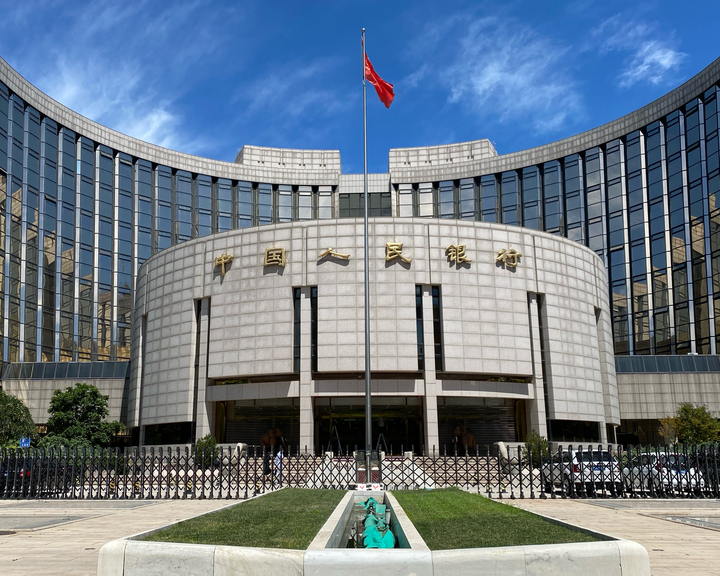
Headquarters of the People's Bank of China, the central bank, is pictured in Beijing. [Photo/Xinhua]
China has expanded its pilot program for multinational companies to operate integrated domestic and foreign currency capital pools into a nationwide policy, marking a significant stride in financial opening-up. The move aims to facilitate foreign business expansion in China and bolster Chinese companies' global operations.
The People's Bank of China, the country's central bank, and the State Administration of Foreign Exchange announced the nationwide implementation in a notice on Friday. The decision follows phased trials launched in 2021, which were expanded progressively to more regions.
Under the policy, eligible multinationals can centrally manage both renminbi and foreign currency funds across borders, with companies encouraged to use the renminbi.
This, the notice said, includes centralized handling of current-account receipts and payments through a domestic master account, net settlement — where multiple transactions of current-account receivables and payables are consolidated into a single transaction over a certain period — and concentrating funds to adjust liquidity surpluses and shortfalls within the group.
Qualified multinationals can centrally handle foreign debt borrowing and intragroup funding to overseas affiliates within quotas linked to their net assets, allowing firms to deploy funds autonomously and efficiently within approved limits.
According to the notice, qualified multinationals can raise external debt within 3.5 times their attributable owners' equity and provide funding to overseas affiliates within 0.8 times that amount. Except for quota adjustments, related business can be handled directly through banks, helping reduce administrative costs for companies.
Eligibility thresholds are set to ensure prudent implementation. Participating multinational groups must have combined annual cross-border receipts and payments of at least 7 billion yuan ($999 million) for all onshore members, combined onshore operating revenue of no less than 10 billion yuan, and combined offshore operating revenue of at least 2 billion yuan.
Financial institutions, local government financing vehicles and real estate companies are excluded, except where finance companies act as the lead entity.
By the end of September, 98 multinationals — spanning State-owned, private and foreign-funded enterprises — had joined the pilot, covering approximately 5,000 member companies. With approximately 300 multinationals estimated to meet the eligibility criteria nationwide, significant further uptake is anticipated, according to SAFE.
"The nationwide rollout of the policy will help create a unified, transparent and predictable institutional environment, and enhance market entities' confidence in China's cross-border financial management policies," a relevant senior SAFE official told China Daily.
The official said this policy would enhance multinationals' cross-border fund management efficiency, reduce their operational costs and help strengthen their international competitiveness.
A case in point is Wistron InfoComm (Chongqing) Co Ltd, a major foreign-invested electronics manufacturer, which joined the pilot in March 2025.
A spokesperson of the company said the integrated pool mechanism has streamlined fund transfers among 20 member firms, reduced settlement costs, and improved access to lower-cost overseas financing. It has also supported its Southeast Asian supply chain investments through intragroup funding to overseas affiliates.
At the same time, authorities underscored the importance of risk control. The notice clarifies operational standards for both multinational companies and cooperating banks, and requires local branches of the central bank and SAFE to strengthen statistical monitoring and conduct off-site and on-site inspections to guard against cross-border capital flow risks.
