
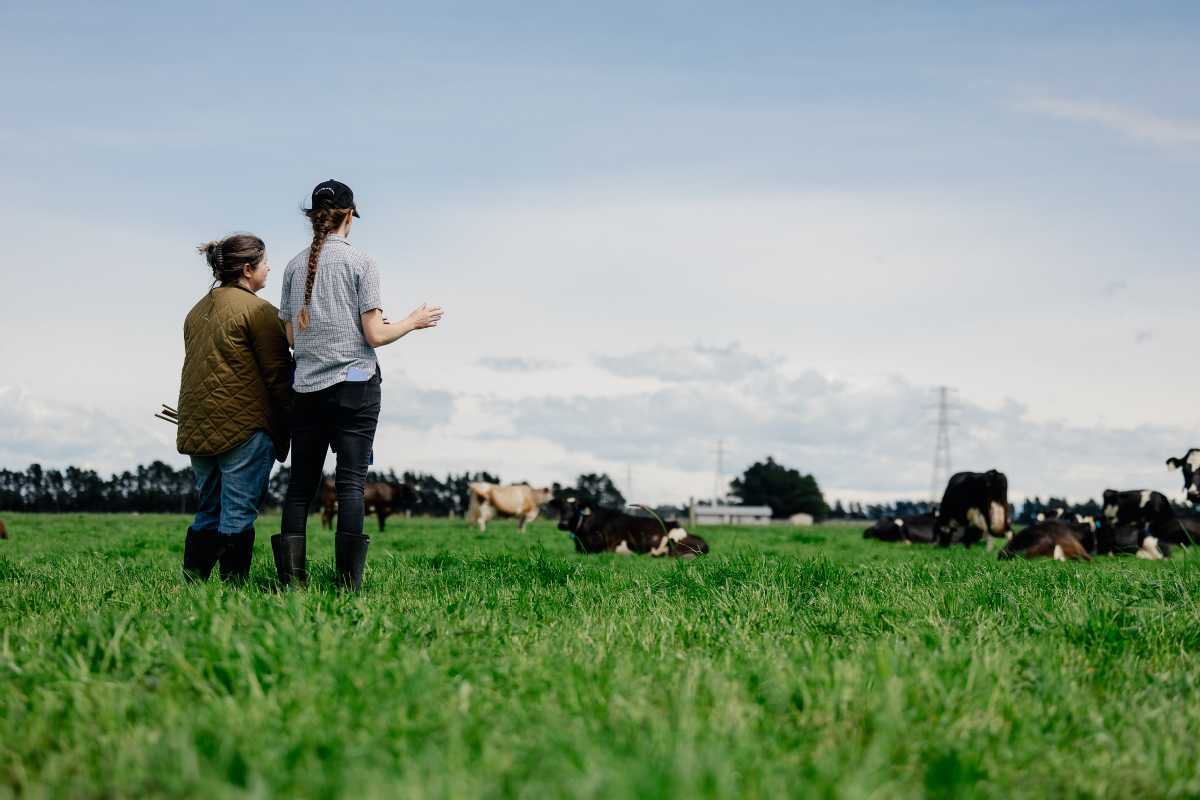
Lincoln University research technician Bella Orellana Howe (right) and landscape architect/research assistant Anna O'Sullivan (left) survey cows in specially landscaped pastures that benefit dairy cow health at the university's Integral Health Dairy Farm in November 2024. [Photo by Lincoln University/For chinadaily.com.cn]
For New Zealand kiwifruit scientist Sarah Pilkington, getting access to research material in China has been one of the highlights of her work.
"Kiwifruit originated in China, any kiwifruit that exists around the world is from China," Pilkington, referring to the fruit's germplasm, said.
"We want to help our Chinese colleagues protect what material is there and the diversity in it for the future."
The award-winning scientist leads a team who use molecular technologies to cultivate new kiwifruit varieties, or cultivars, at the Plant and Food Research group of the state Bioeconomy Science Institute in Auckland.
The institute, formed through a merger of four organizations earlier this year, combines expertise in plant and animal systems, advanced manufacturing, agritech, biotechnology, and the food, biomaterials and environmental sectors.
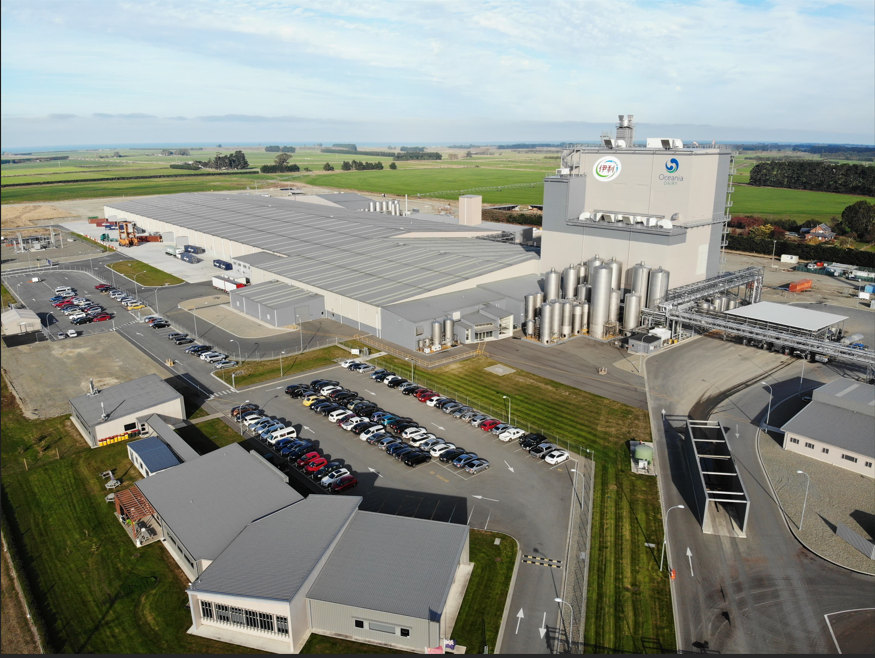
Aerial view of Yili's Oceania Dairy plant in South Canterbury, New Zealand. [Photo provided to chinadaily.com.cn]
Pilkington's work looks at the variety of genetics naturally available in kiwifruit, which will help ensure crop diversity and develop disease tolerance.
"If we have, say, a change in climate and it gets really hot, then if we don't protect that material, another gene that we're interested in may die because the plant that has it is not robust to the heat," she said.
"So if we're looking for a gene for pest and disease resistance but we lose a whole lot of wild material in a climate event … our ability to breed into the future gets harder and harder."
China, as the source of the kiwifruit, offers "more knowledge of the genes that control the traits of the kiwifruit that we can't get around the rest of the world… then we can use that knowledge to breed new kiwifruit varieties", Pilkington added.
Her efforts offer a fitting continuity in the cultivation of kiwifruit, which was introduced to New Zealand from China in the early 20th century. Local growers subsequently came up with a commercial variety that was promoted overseas – naming the fruit after their country's national bird, the kiwi.
The strong ties in kiwifruit research and development can be traced to a major China-New Zealand joint laboratory established in Auckland in 2014, a result of a series of cooperation agreements, with subsequent exchanges in fields ranging from agriculture, culture, science and technology, to trade, tourism and education.
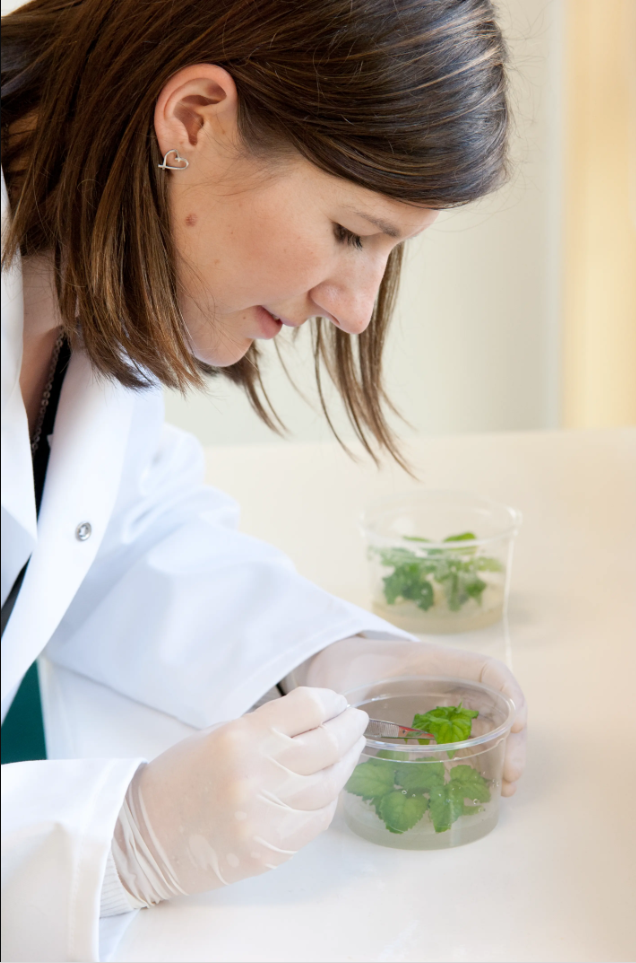
Kiwifruit scientist Dr Sarah Pilkington at work in the Plant and Food Research laboratory in Auckland, New Zealand. [Photo by Bioeconomy Science Institute/For chinadaily.com.cn]
These links have since reaped rich rewards in research and other fields, proving the importance of a vision of shared development through close cooperation.
The lab itself helped provide firm foundations for Chinese and New Zealand scientists' successful collaborations in kiwifruit cultivation and research, reflected in Pilkington's work.
"The laboratory was established originally to conserve germplasm, to ensure that kiwifruit species from the wild could be looked after, to ensure that we maintain the diversity in kiwifruit that exists in the wild in China," Pilkington said.
"Since then, the work at the laboratory has focused on how we do research together that's mutually beneficial. So from a New Zealand perspective, we are very interested in research into things that we cannot study in New Zealand.
"For example, the New Zealand climate is really good for our own kiwifruit, which is a problem for us, for kiwifruit breeding, because we want to be able to breed kiwifruit that would grow in different environments and be robust to climate change. So that's an example of one area where we're really keen to collaborate with Chinese researchers, to look at the environment in China and how kiwifruit grow in different environments to what we have in New Zealand."
Researchers from Southwest China's Sichuan province who are involved in the joint lab have also hailed its achievements in preserving germplasm resources, breeding new varieties of kiwifruit and promoting them, helping to develop the sector in countries involved in the Belt and Road Initiative through cultivation technologies.
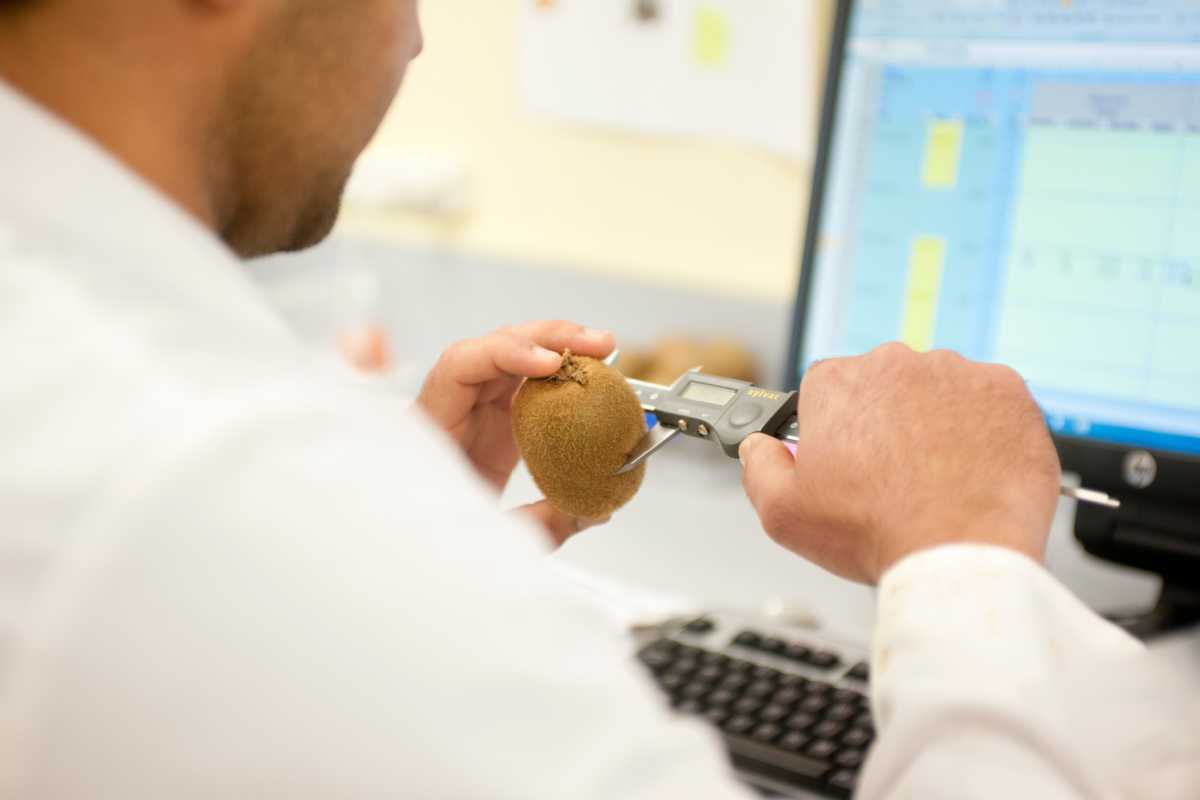
Work ongoing at the fruit evaluation lab, Te Puke, New Zealand. [Photo by Bioeconomy Science Institute/For chinadaily.com.cn]
Liverpool Zhang, a relationship and development manager at Plant and Food Research (Greater China), said, "We're also leveraging the partnership to work with others, to maximize the benefits and potential to China and the global kiwifruit sector."
According to Zhang, the lab unveiled 11 years ago continues to have an impact beyond the industry. Its Bioeconomy Science Institute international joint laboratory platform and links also mean that researchers in New Zealand are able to enjoy "intangible benefits, because that means we can do more work, and they have more people and more resources. It makes our partnership stronger", he said.
Winning formula
The pillar dairy sector also received a significant boost in 2014, with a major memorandum of understanding signed between Chinese dairy giant Yili Group and New Zealand's Lincoln University which focused on technological innovations in dairy production and processing in both countries.
The memorandum, which was renewed in April, led to the establishment of the Yili Innovation Centre Oceania at Lincoln University in Christchurch, New Zealand.
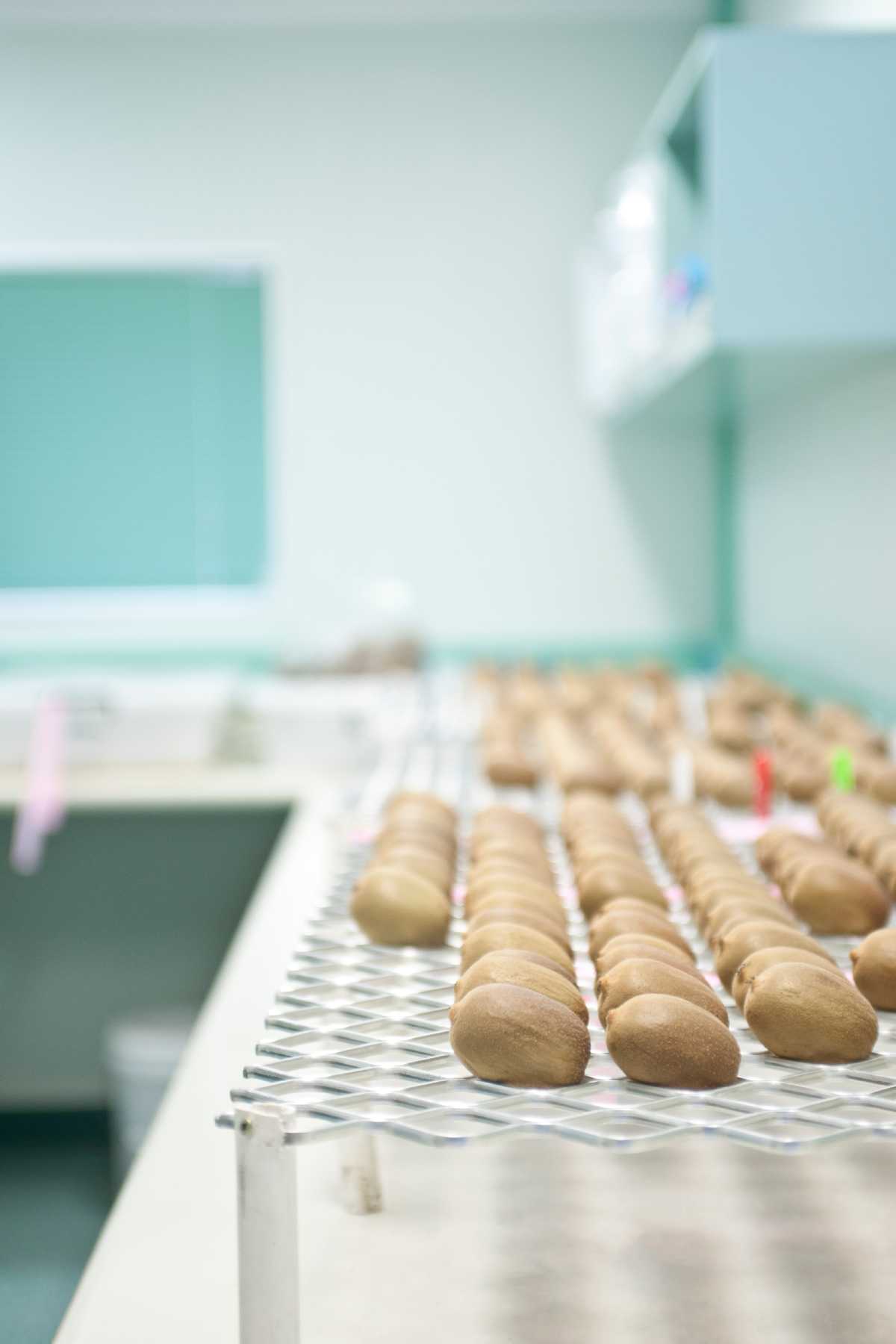
Kiwifruit in the laboratory, Te Puke, New Zealand. [Photo by Bioeconomy Science Institute/For chinadaily.com.cn]
Philip Wescombe, who leads the innovation center, said the move provides the opportunity to collaborate with dairy experts in nutrition in New Zealand as well as Australia and beyond.
"We get to identify leaders in the field who are really pushing the boundaries," he said.
"There's also a good feeling from developing knowledge that's good for the whole industry, including consumers."
Outcomes of the memorandum include the development of bacteriophage control systems and new ingredient patents, with world-leading research also conducted on the bioavailable amino acid composition of human breast milk, in collaboration with top Chinese and New Zealand scientists, Wescombe added.
The Yili Innovation Centre Oceania has since been involved in breakthrough research that has had major global health implications, such as work on sustainable farming practices, as well as becoming a hub for research collaboration across Oceania by using Lincoln University as a base and positioning it as a key player in regional dairy innovation.
Christine Jasoni, a professor and dean of the faculty of agriculture and life sciences at Lincoln University, said the university's research "finds solutions which are going to be developing products that people want to buy, but in a sustainable way".

Lincoln University research technician Bella Orellana Howe (right) and researcher Guillermo Aldao-Humble inspect the range of plants among the pastures, providing cows a choice in diet, at the university's Integral Health Dairy Farm in November 2024. [Photo by Lincoln University/For chinadaily.com.cn]
"One of the things that we're quite keen to do is to continue to develop our relationship with China," Jasoni added.
"What we have to offer is innovation in agricultural space. We're working with a number of universities around China, mostly agricultural universities, because we obviously have a lot of synergies there."
Student and scholar exchanges play a big role in the sharing of knowledge and expertise, she said, "because I think we have a lot to learn from both sides, that would be really beneficial to everyone".
At Lincoln University, Pablo Gregorini, a professor of livestock production and agricultural systems, leads groundbreaking research with the Yili innovation center that demonstrates how greater botanical diversity in pastures can transform the future of dairy in both China and New Zealand.
According to the research, by moving beyond traditional ryegrass-based systems and embracing a wider range of forage species, the nutritional and health value of milk can be significantly enhanced.
"We're producing healthier milk, we have healthier cows, cows that literally, based on the measurements we've done… even sleep differently in the field," Gregorini, whose fieldwork covers North China's Inner Mongolia autonomous region, said.
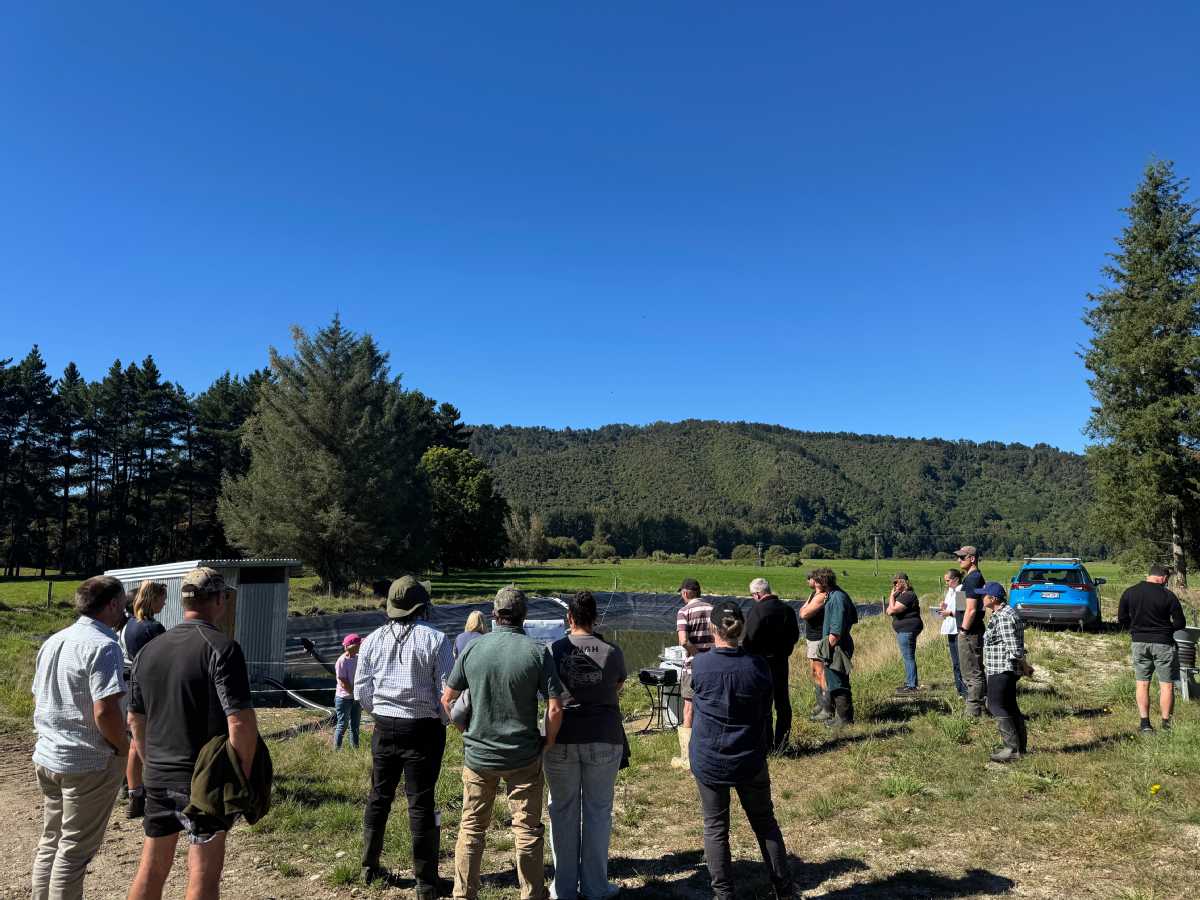
Farmers meet to study better water management with Lincoln University expertise on one of Yili's Westland Milk Products supplier farms in Mawheraiti, New Zealand, in March. [Photo by Penny McIntosh/For chinadaily.com.cn]
Yili's assistant president Ignatius Szeto said that the strategic cooperation with Lincoln University is an important part of Yili's internationalization strategy.
"After more than 10 years of in-depth cooperation, Yili's industrial footprint in New Zealand now spans the entire industry chain, including milk source partnerships, innovation and R&D, production and manufacturing, and brand marketing," he said.
The company operates seven production bases and has established partnerships with over 400 local farms. Meanwhile, Yili has become the largest Chinese dairy company in New Zealand in terms of investment scale and cooperation scope, making it a classic example of Chinese dairy enterprises going global and providing valuable reference and methodology for other Chinese companies to expand internationally, he said.
Zhiqiang Li, managing director of Yili's Westland Milk Products and Oceania Dairy groups in New Zealand, said the company is "deeply honored to be part of research that advances health outcomes around the world through the important work of the Yili Innovation Centre Oceania and Lincoln University".
"We are enormously proud of the fact that work coordinated through the center with leading researchers is associated with nutrition policy at the highest level, including the Food and Agriculture Organization and World Health Organization of the United Nations, and that we have helped demonstrate that more sustainable farming practices, such as diverse species of forage, can lead to better health outcomes for people who consume dairy products," Li added.
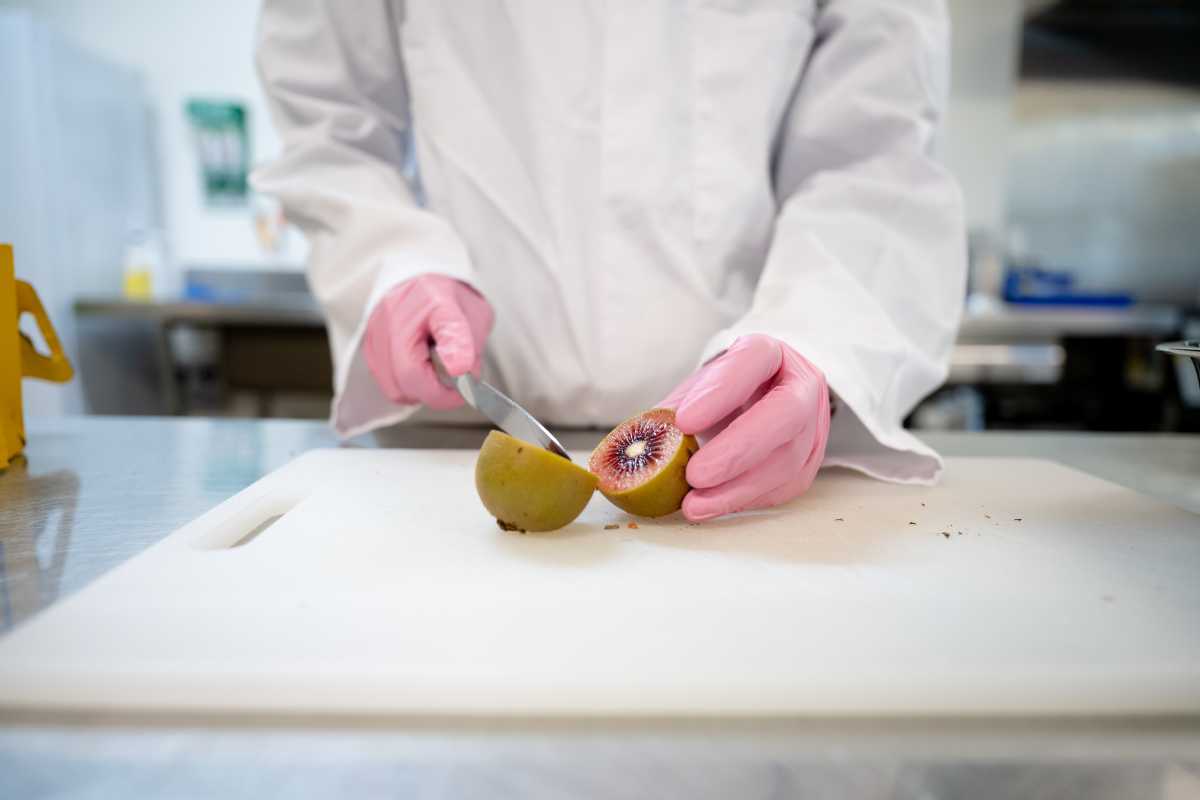
A member of the Plant and Food Research Food Solutions Team cutting red kiwifruit in the lab, Palmerston North, New Zealand. [Photo by Bioeconomy Science Institute/For chinadaily.com.cn]
New Zealand's Bioeconomy Science Institute also has a presence at the university, which means that the Yili Innovation Centre Oceania is able to draw further on the country's research network and resources.
Stefan Clerens, science group manager of smart foods and bioproducts at the institute, said the arrangement offers a framework to build connections and trust.
"It has allowed us to have really open conversations about the research problems that Yili wants to solve and that has allowed us to have open explanations about the science we can do and the capabilities we can bring," said Clerens, whose work with Yili includes modeling and better measuring taste perceptions of UHT milk.
The institute's chief executive officer, Mark Piper, said it has "deep and enduring links with China, built on decades of scientific collaboration and shared innovation.
"From dairy to horticulture, our partnerships have shaped research that benefits both nations," he added.
Contact the writers at alexishooi@chinadaily.com.cn
