
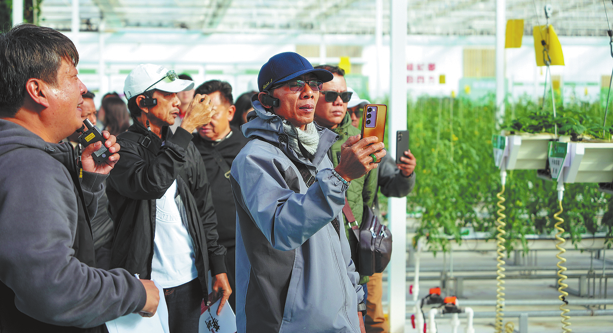
Indonesian village heads visit the Jidu Modern Agriculture Co Prosperity Park in Shouguang, Shandong province, on Nov 2. XU SUHUI/XINHUA
In November, when outdoor temperatures hovered at just 8 C, a delegation from Indonesia experienced advanced agricultural technology firsthand inside a greenhouse in Cuilingxi village, Shouguang, Weifang, in East China's Shandong province. In a greenhouse, where temperatures were kept at 33 C, the Indonesian officials examined rows of thriving cucumber plants.
"This greenhouse was built in 2016 with an investment of 160,000 yuan ($22,630), and it paid for itself in less than two years," said Cui Xinzhong, a member of the local farmers' cooperative who manages three such greenhouses and reports an annual income of 300,000 yuan.
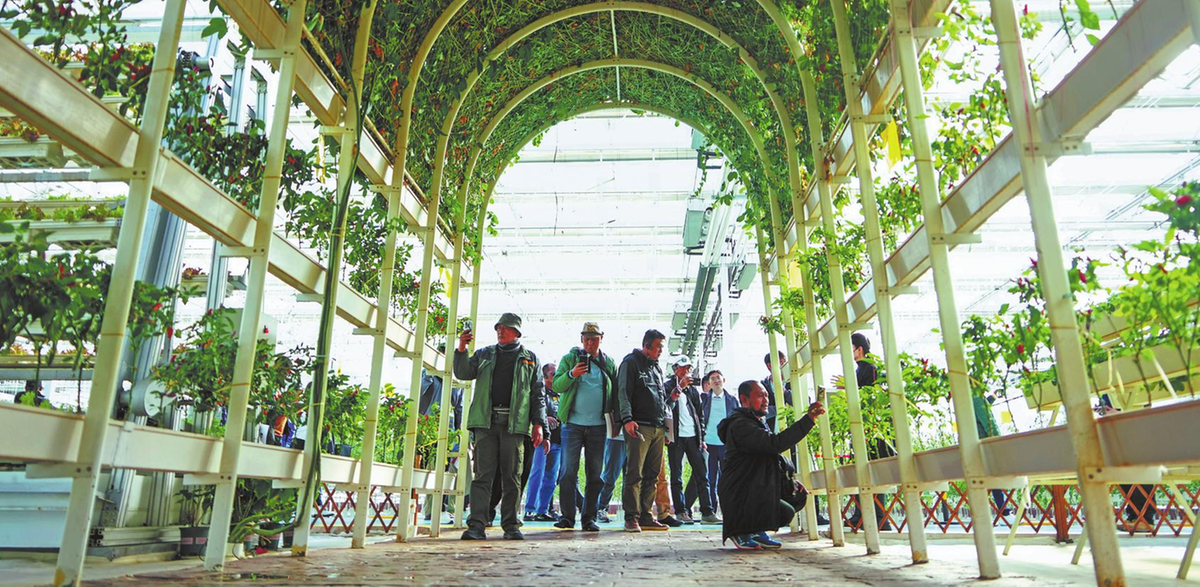
Indonesian village heads visit the Jidu Modern Agriculture Co Prosperity Park in Shouguang, Shandong province, on Nov 2. The training program for Indonesian village officials was formally launched in 2019 by the Chinese embassy in Indonesia in cooperation with Indonesia's Ministry of Village, Development of Disadvantaged Regions, and Transmigration. XU SUHUI/XINHUA
He said the cooperative model efficiently connects farmers with markets and wholesalers, offering the technological and logistics support they need. This allows farmers to focus solely on cultivation, which boosts product quality and overall profits.
Fajri Suryadi Putera, head of Kesugihan village in Lampung in Indonesia, praised the model, saying it effectively integrates the strengths of investors, technical experts, management teams, and local farmers. He said this synergy helps prevent harmful price competition among individual farmers, which can otherwise erode profits across the industry.

The delegation tours the factory of Weichai Lovol Intelligent Agricultural Technology in Weifang, Shandong province, on Nov 3. CEN WENPENG/XINHUA
Fajri was part of a 22-member delegation of Indonesian village heads and agricultural officials who recently visited Shandong province, marking a new milestone in an exchange program that immerses local Indonesian leaders in China's approaches to poverty alleviation and rural revitalization.
The training program for Indonesian village officials was formally launched in 2019 by the Chinese embassy in Indonesia in cooperation with Indonesia's Ministry of Village, Development of Disadvantaged Regions, and Transmigration. Each session selects 20 to 30 Indonesian village heads to visit China for exchanges and learning. This year's group is the fifth cohort of the "village head class".
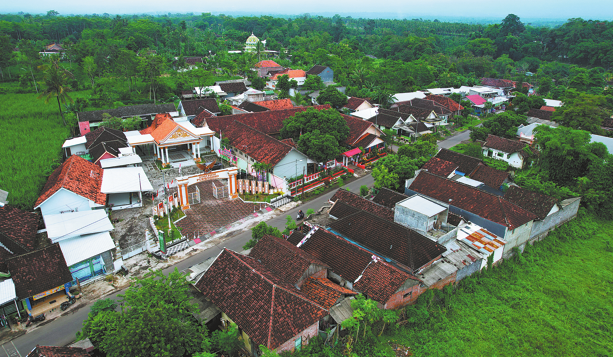
A view of Purwosono village on Nov 13. CEN WENPENG/XINHUA
The visit, which took place in early November, centered on studying the development of agricultural cooperatives, agricultural machinery manufacturing, and community welfare initiatives.
The delegation also toured the factory of Weichai Lovol Intelligent Agricultural Technology in Weifang, where they learned how modern assembly lines significantly enhance manufacturing efficiency. A particular point of interest was a row of container boxes outside the factory — some labeled in Indonesian language — filled with newly produced smart rice harvesters bound for Indonesia via Qingdao Port.

An Indonesian village head takes a photo with children at a kindergarten in Longkou, Shandong province, on Nov 4. CEN WENPENG/XINHUA
Sugito, an official from Indonesia's village ministry, said he hoped to strengthen cooperation so that Indonesian farmers could obtain modern agricultural equipment at more affordable prices.
The delegation also visited a kindergarten operated by Nanshan Group, a conglomerate that has grown from a small village enterprise in Yantai into a company with presence across sectors, including aluminum, textiles, and real estate.
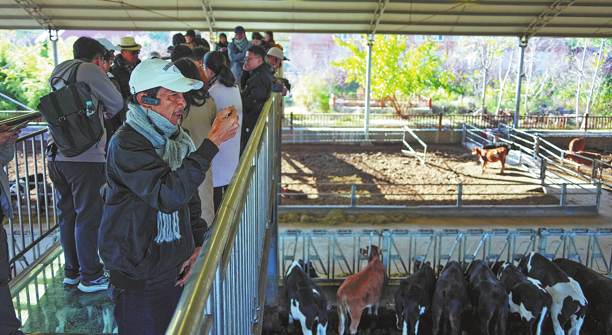
Members of the fifth session of the Indonesian Rural Cadre Training Program visit a village in Weifang, Shandong province, on Nov 3. CEN WENPENG/XINHUA
Zeky Hamzah, head of Tepian Langsat village in East Kalimantan, observed that Chinese villages place strong emphasis on education, vocational training, and infrastructure development.
'Positive cycle'
He described a "positive cycle" in which governments at all levels — village enterprises, agricultural cooperatives, and local conglomerates — work together to drive economic growth, strengthen governance, and improve social welfare.

Indonesian village heads visit the Jidu Modern Agriculture Co Prosperity Park in Shouguang, Shandong province, on Nov 2. XU SUHUI/XINHUA
"This is worthy of being an example for our villages," Zeky said, as quoted by Antara news agency.
Nanshan Group is already implementing this model in Indonesia, where it has operated since 2015. General Manager Wang Yuhai said that in addition to aluminum development, the group has opened several schools in Central Java and other regions.
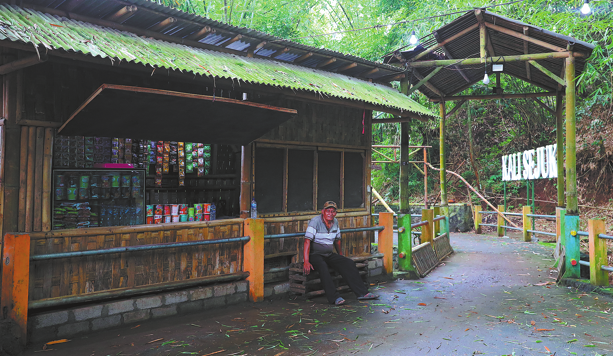
A shop by the "Cooling Creek" at Purwosono village, East Java, Indonesia, on Nov 13. CEN WENPENG/XINHUA
Nanshan village established friendly relations with several Indonesian villages on Nov 4 to promote grassroots innovation, production capacity, and tourism development.
Liu Peng, an official from the Chinese embassy in Indonesia, described the ongoing village head exchange program as a "small but positive impact initiative" between China and Indonesia.
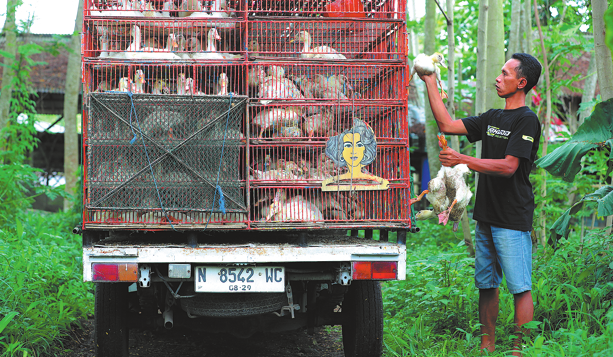
Ducks raised by Purwosono villagers are loaded onto a truck on Nov 13. Hendrik Dwi Martono, chief of Purwosono village and a participant in the village chief program, has already applied village governance practices that he learned in China. CEN WENPENG/XINHUA
He said China welcomes more Indonesian village heads and related stakeholders to witness firsthand the country's extensive rural development and the daily lives of its people.
Xinhua contributed to this story.
