
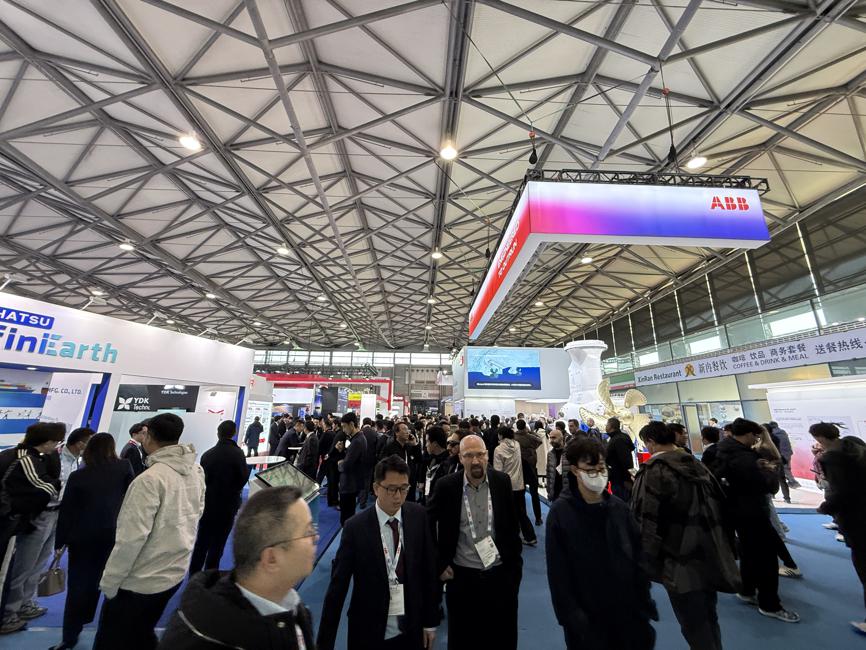
The 2025 Marintec China, a major international event in the maritime industry, attracts over 2,200 companies from more than 40 countries and regions. [Photo by Zheng Zheng/chinadaily.com.cn]
The 2025 Marintec China, a major international event in the maritime industry, showcased advancements in green shipping technology and alternative marine fuels during its four-day exhibition starting on Dec 2 in Shanghai.
Attracting over 2,200 companies from more than 40 countries and regions, the exhibition area exceeds 110,000 square meters across 11 specialized zones.
"This year's exhibition marks a pivotal moment in maritime history as we witness unprecedented industrywide commitment to sustainable shipping solutions," said Xing Wenhua, head of the Shanghai society of naval architects and marine engineers, and chairman of the Chinese organizing committee for Marintec China.
Despite the one-year delay in the International Maritime Organization's net zero framework, the momentum toward green and low-carbon transformation remains unstoppable, Xing noted. New orders for alternative fuel vessels surged 78 percent in the first half of 2025 compared to all of 2024.
The centerpiece of this year's event was the inaugural Energytec zone focusing on alternative energy sources and their support chain. It featured cutting-edge technologies from global marine energy companies, hosted specialized forums exploring alternative energy supply chains, electrification, wind and solar applications, and nuclear-powered vessels.
Norway, as the Country of Honor, showcased its national pavilion featuring cutting-edge technologies in ammonia fuel supply and carbon capture, highlighting collaborative opportunities with Chinese enterprises.
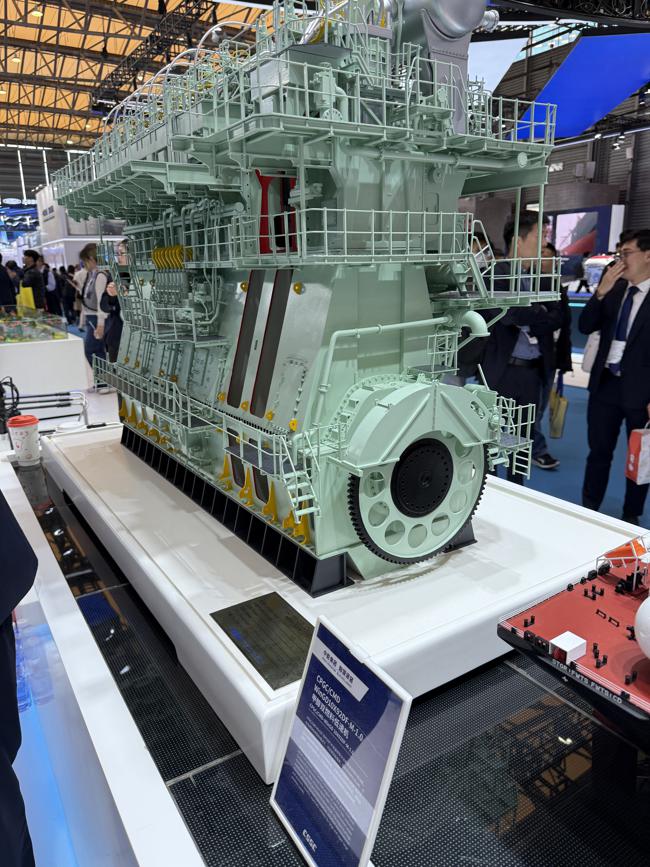
China State Shipbuilding Corporation showcases the latest high-power dual fuel engine at the event. [Photo by Zheng Zheng/chinadaily.com.cn]
China State Shipbuilding Corporation (CSSC) unveiled its domestically produced "Qiyao" marine engine series at the expo, receiving the world's first type approval certificate for ship-use ammonia-hydrogen fuel engines from China Classification Society.
"We're observing a significant shift toward new energy power systems in ship orders," said Qiu Aihua, deputy director of CSSC's 711 research institute. "Power solutions now encompass LNG, methanol, ammonia, and hybrid systems with energy storage batteries, signaling the future of ship propulsion."
Wang Pu, designer at CSSC power, presented their latest high-power dual fuel engine which can achieve zero carbon emission when using green methanol. "This can be regarded as China's first domestically produced methanol dual-fuel main engine. It has already secured dozens of orders from major domestic shipyards, demonstrating market confidence in our green solutions."
The exhibition also featured innovative wind propulsion technologies. Heikki Pntynen, CEO of Norsepower, emphasized their practical impact: "Wind propulsion technology complements other energy-saving measures and alternative fuels, enhancing vessels' environmental performance while meeting IMO greenhouse gas requirements and regional regulations like the EU maritime fuel plan."
The shipping industry, if considered as an independent economic entity, would rank eighth globally in CO2 emissions, said Zhu Lei, professor at Shanghai Jiao Tong University. "This underscores the sector's urgent need for green transformation."
