
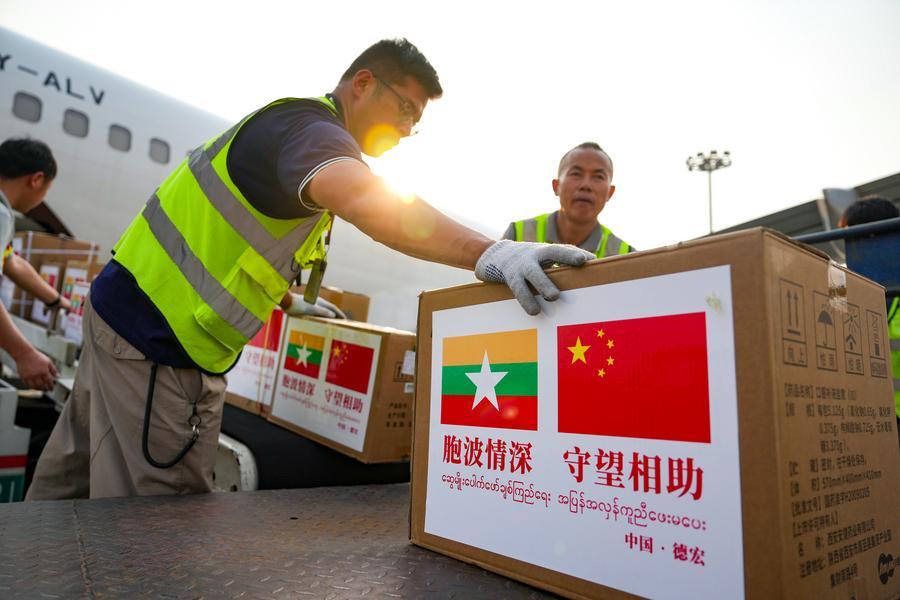
Staff members load donated medical supplies onto a plane at Dehong Mangshi Airport in Mangshi city, Dehong Dai and Jingpo autonomous prefecture, Southwest China's Yunnan province, April 1, 2025. [Photo/Xinhua]
BEIJING -- When future historians look back on the once-in-a-century global transformation and trace the underlying logic of evolving international relations, they will surely recognize Sept 1, 2025 as a pivotal moment -- when Chinese President Xi Jinping proposed the Global Governance Initiative (GGI).
Prior to this, Beijing had put forward a series of major global initiatives: the Global Development Initiative (GDI) in 2021, the Global Security Initiative (GSI) in 2022, and the Global Civilization Initiative (GCI) in 2023. Together with the GGI, they constitute a holistic framework for jointly building a community with a shared future for humanity.
Each initiative addresses a fundamental pillar of global cooperation: the GDI seeks to lay the material foundation, the GSI is designed to safeguard stability, the GCI tries to foster shared understanding, and the GGI intends to provide the institutional architecture. As noted by UN Secretary-General Antonio Guterres, the four global initiatives proposed by China "are totally compatible with the UN Charter." Many countries also view them as pragmatic and constructive solutions to contemporary global challenges.
Yet the world remains fractured amid a rising tide of uncertainty and turbulence. While some advocate dialogue and cooperation, others cling to unilateralism and bloc politics, compounding long-standing crises and creating new risks.
Global development remains fragile, characterized by widening North-South disparities and compounded by overlapping energy and food crises. Around the world, more than 1 billion people continue to live in extreme poverty. Security is deteriorating, with armed conflicts reaching post-war highs, rising displacement, and increased reliance on sanctions and bullying by certain country.
Meanwhile, the discourse of "a clash of civilizations" appears to overshadow exchanges between them, while global governance is eroded by withdrawals from international treaties, practices of decoupling, and the expansion of barriers that undermine fairness and equality, especially for the Global South.
The grim reality underscores the relevance and timeliness of the four global initiatives, further highlighting the need to build international consensus and strengthen solidarity.
A call for shared development
As Xi has noted, development holds the master key to solving all problems. The Global Development Initiative focuses on the shared development needs of humanity, closely aligns with the United Nations 2030 Agenda for Sustainable Development, and directly addresses the real challenges in the field of global development. This initiative contributes Chinese wisdom and solutions to jointly advancing global development toward a new stage of balanced, coordinated and inclusive growth.
Ten years on, the 2030 Agenda for Sustainable Development has stalled. Of its 169 specific targets, only about 35 percent are on track, while nearly half are progressing too slowly and 18 percent have regressed.
Globally, development is reversing in key areas. Extreme poverty has risen for the first time in two decades, with the poorest half of humanity holding just 2 percent of global wealth. Some 2.6 billion people still lack internet access, and the funding gap for developing countries to adapt to climate change is continuously widening.
Moreover, wars and conflicts have pushed 140 million people into acute food insecurity, while unilateral sanctions continue to severely impact the livelihoods of billions.
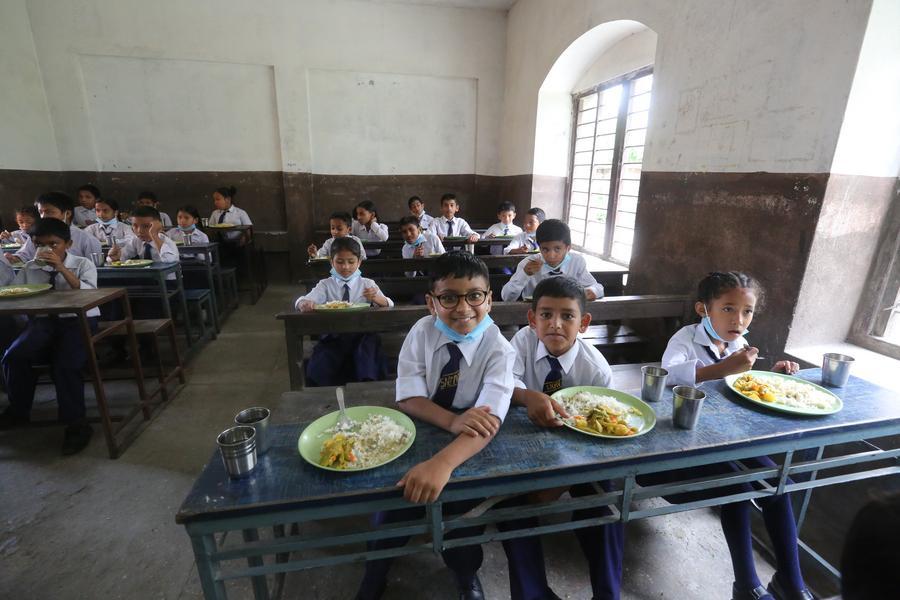
Students have lunch in a dining room following the launch ceremony of Nepal Smiling Children Project funded by the Global Development and South-South Cooperation Fund in Kathmandu, Nepal, July 11, 2022. [Photo/Xinhua]
These alarming facts expose fundamental flaws in global development. Some developed countries have prioritized geopolitical interests over cooperation, exploiting development resources through sanctions, decoupling and aid cuts. In so doing, they have betrayed the universal consensus that the right to development is an inalienable human right.
An imbalanced global governance structure has long left developing nations at a disadvantage in shaping international rules, while technological blockades and trade barriers continue to widen the development gap.
Meanwhile, multilateral cooperation mechanisms are increasingly weakened by unilateral actions, leading to a severe shortage of global public goods and a lack of coordinated international responses.
These issues have not only raised the risk of the 2030 Agenda's failure, but highlighted the urgent need for targeted measures to address global development challenges.
The GDI, proposed at this crucial time, has gained tremendous global appeal by breaking away from the outdated paradigm in which major powers dominate and smaller nations are forced to depend on them. The initiative also promotes collective action with an attitude of equality and a systematic approach, ensuring that every participant becomes a beneficiary of development.
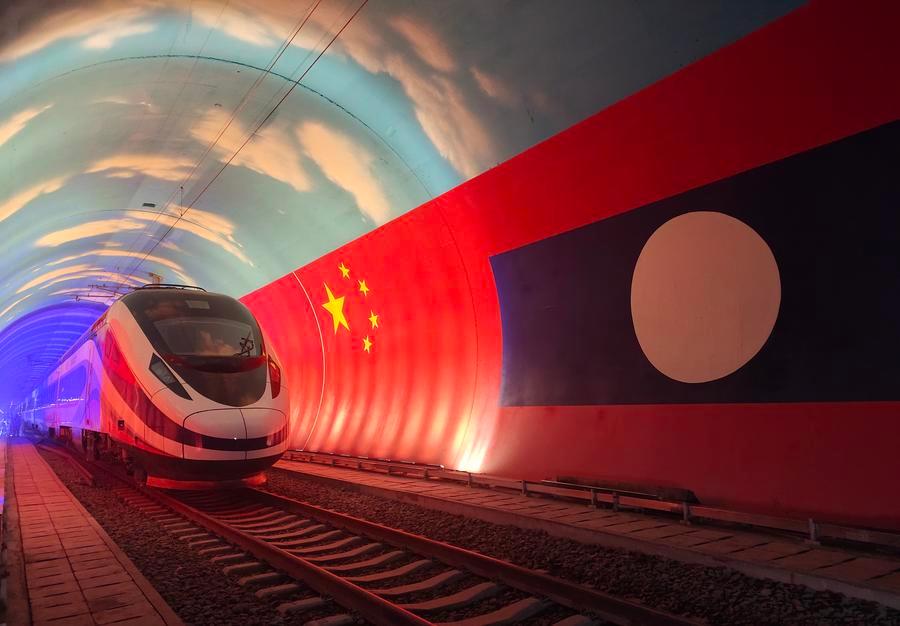
The Lane Xang EMU train passes by the China-Laos borderline inside a tunnel, Oct 15, 2021. [Photo/Xinhua]
As a proactive champion of the initiative, China has always been guided by the "Six Principles" and relies on platforms such as the Belt and Road Initiative, the Global Development and South-South Cooperation Fund, the Asian Infrastructure Investment Bank, and the New Development Bank to empower international development cooperation.
The China-Africa Agricultural Technology Demonstration Center implements the "teach a man to fish" model, leading to an average increase in local crop yields of 30-60 percent. It has benefited over a million farmers, serving as a tangible manifestation of the priority development concept.
The China-Laos Railway has turned Laos from landlocked into a land-linked hub, cutting logistics costs by over 30 percent and creating more than 100,000 jobs. Meanwhile, China-Brazil joint technology innovation centers have enhanced ecological protection and expanded clean energy access to remote communities, promoting inclusive, innovation-driven growth and harmony between people and nature.
Beyond giving robust impetus to the 2030 Agenda, the GDI is revolutionizing and reshaping global development concepts. Its theoretical breakthrough lies in breaking free from the dependence on conventional Western development models, putting first the common interests of humanity and laying a solid foundation for building a community with a shared future for humanity.
For development dividends to reach more people equitably across the globe, nations should move beyond narrow self-interest, embrace historical trends, champion common development, uphold fairness and justice, and fully commit to mutually beneficial cooperation.
A new path to lasting peace and security
The world today is experiencing its most profound turbulence and transformation since the end of the Cold War. With growing deficits in peace and security, global security governance faces severe challenges. The international community urgently needs security visions and approaches that are in tune with the spirit of the times.
The Global Security Initiative has emerged in response to the current situation, aligning with the shifting international landscape through the concept of unity, and addressing security challenges with a win-win approach. It is dedicated to eliminating the root causes of international conflicts and improving global security governance.
Looking back at the course of human development, the pursuit of absolute security through strength and the creation of an exclusive security framework is, at its core, a form of the "law of the jungle." History has repeatedly proven its dangers. The horrific devastations of the two World Wars, as well as regional instability caused by hegemonic competition, all stemmed from the obsessive pursuit of absolute security and the brutal application of the law of the jungle. Nations that exploit others and bully the weak ultimately face either a vicious cycle of security dilemmas or are swept away by the tides of history.
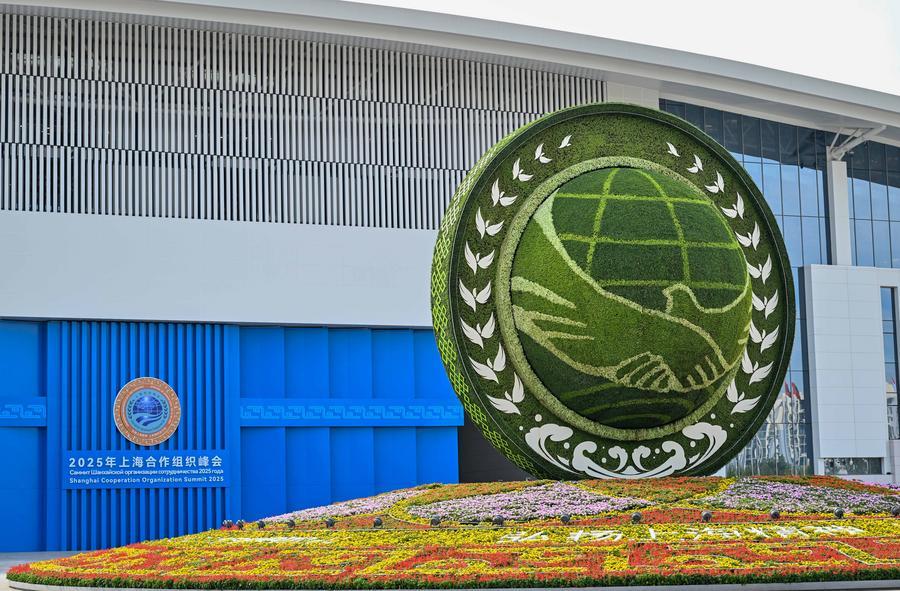
This photo taken on Aug 30, 2025 shows an exterior view of the main venue of the Shanghai Cooperation Organization (SCO) Summit 2025 in North China's Tianjin. [Photo/Xinhua]
Looking at the present, this rigid security doctrine based on the law of the jungle is already out of step with the trends of the times. In today's world, economic globalization is deepening, with the interests of countries closely intertwined and their fates shared. The interconnectedness, transnational nature, and complexity of security issues are becoming increasingly evident, and no country can remain isolated. Attempts to violate the purposes and principles of the United Nations Charter, disregard the collective will of the international community, and unilaterally pursue absolute security are movements against the tide of history.
As Xi has noted, the Cold War mentality would only wreck the global peace framework, hegemonism and power politics would only endanger world peace, and bloc confrontation would only exacerbate security challenges in the 21st century. This important observation offers profound insights on the root causes of the global security predicament.
The GSI is underpinned by "six commitments," specifically, commitment to the vision of common, comprehensive, cooperative and sustainable security; respecting the sovereignty and territorial integrity of all countries; abiding by the purposes and principles of the U.N. Charter; taking the legitimate security concerns of all countries seriously; peacefully resolving differences and disputes between countries through dialogue and consultation; and maintaining security in both traditional and nontraditional domains.
In the traditional security domain, China has actively promoted the political settlement of hotspot issues and is the largest contributor of peacekeeping personnel among the permanent members of the UN Security Council.
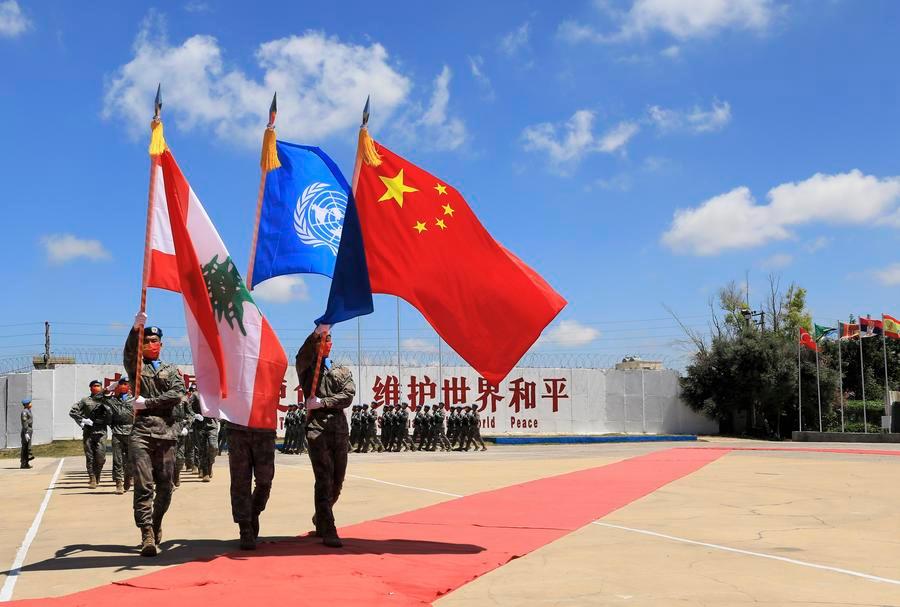
Chinese peacekeepers march at a medal parade ceremony in Hanniyah village, southern Lebanon, July 1, 2022. [Photo/Xinhua]
In non-traditional security domains, China has participated in and often led multilateral cooperation on counter-terrorism, drug control and public health security. It has also carried out numerous humanitarian assistance programs, addressing emerging global threats through collaboration.
In regional security cooperation, China has leveraged platforms such as the Shanghai Cooperation Organization and the Conference on Interaction and Confidence-Building Measures in Asia to steadily contribute to regional stability.
Committed to building a more balanced, effective and sustainable security architecture, China, together with other countries, is pursuing a new path of security based on dialogue rather than confrontation, partnership rather than alliances, and win-win cooperation rather than zero-sum outcomes.
When multilateralism becomes the defining feature of global security governance and consultation on an equal footing becomes the shared choice of all countries to address security concerns, humanity will surely embark on a bright path toward lasting peace and universal security. The tide of peace and development is destined to surge forward.
A nod to civilizational diversity
At present, some countries pursue unilateralism and protectionism, clinging to theories of the "clash of civilizations" and "civilizational superiority."
When estrangement between civilizations, cultural friction and confrontations over values fuel tensions and conflicts between nations, a range of issues usually break out -- ranging from widening development gaps and weakened international rules to growing disorder in global governance.
In response to these pressing challenges, the Global Civilization Initiative offers a shared cultural foundation for countries to address their common struggles.
"The world we live in is diverse and colorful. Diversity makes human civilization what it is, and provides a constant source of vitality and driving force for world development," Xi has said. This important statement provides guidance for answering the questions of how different civilizations should coexist and where human civilization is headed.
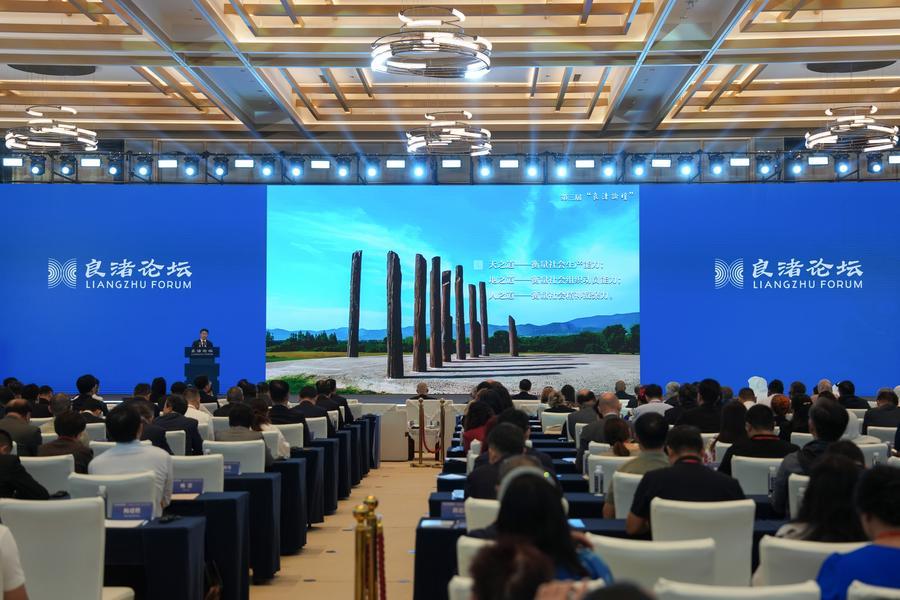
This photo taken on Oct 18, 2025 shows a scene during the third Liangzhu Forum in Hangzhou, East China's Zhejiang province. [Photo/Xinhua]
The GCI can be summarized with four common advocacies: to respect the diversity of civilizations, to uphold the common values of humanity, to attach importance to inheritance and innovation of civilizations, and to strengthen international people-to-people exchanges and cooperation.
While this initiative confronts misconceptions and prejudices, it promotes equality, mutual learning, dialogue and mutual accommodation between civilizations. It also opposes cultural arrogance, and seeks to create platforms for equal dialogues, enabling different civilizations to deepen their understanding of one another and advance through mutual exchanges and learning.
China holds deep respect for civilizational diversity and has been advancing deeper, more substantive exchanges among civilizations. The country has initiated and supported multilateral dialogue platforms, including the Conference on Dialogue of Asian Civilizations, the Liangzhu Forum, the World Conference of Classics, and the Global Civilizations Dialogue Ministerial Meeting. Additionally, China helped build consensus at the 78th session of the UN General Assembly to establish the International Day for Dialogue among Civilizations. In June 2025, China successfully hosted the first global event marking the International Day for Dialogue among Civilizations.
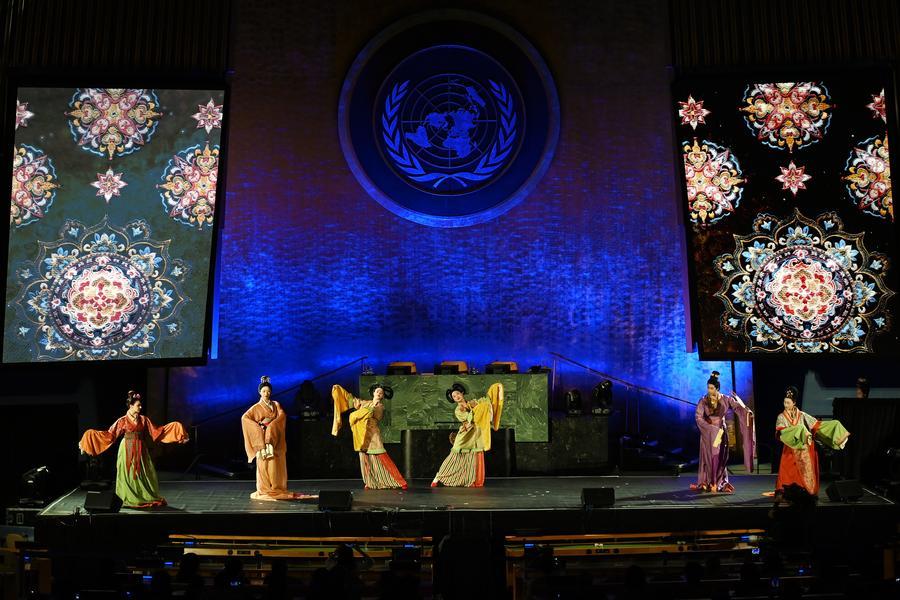
Actors showcase traditional Chinese attires during an art performance at the UN headquarters in New York, June 9, 2025. [Photo/Xinhua]
China has also expanded dialogue on governance and development through mechanisms such as the Communist Party of China in Dialogue with World Political Parties High-Level Meeting, the High-level Dialogue on Global Development, the China-EU Human Rights Dialogue, and the China-Latin America Human Rights Roundtable.
In addition, China has signed cooperation agreements with more than 100 countries in areas such as culture, cultural heritage and tourism, and has advanced cooperation in joint archaeology, world heritage protection and the mutual translation of classical works, safeguarding its own cultural roots while contributing to the preservation of humanity's shared heritage.
In an increasingly interconnected world, the coexistence, exchanges and mutual learning among civilizations are vital for advancing global modernization and enriching a diverse tapestry of world civilization. The GCI offers a framework for countries to pursue modernization paths that are grounded in their own traditions while being open to the shared wisdom of humanity.
A bold experiment for better global governance
Some countries remain entrenched in the outdated belief that "might makes right." Their hegemonic mindset and practices have stalled the reform of global rules, weakening the world's collective capacity to act in the face of an ineffective global governance system.
New challenges, such as the exploration of deep-sea resources, the commercial use of polar shipping routes, the definition of outer space resource rights, and cross-border data flows, are emerging rapidly, yet corresponding international rules remain largely absent or fragmented.
At the same time, some Western countries, leveraging long-established advantages, dominate major multilateral institutions in global economic and financial governance. By contrast, Global South countries, which account for more than 80 percent of the world's population and over 40 percent of global economic output, remain underrepresented in international organizations, with their legitimate concerns ineffectively addressed.
Moreover, some countries bypass or coerce multilateral mechanisms, resorting to withdrawals and sanctions, further fragmenting global governance.
This continuous weakening of governance effectiveness has caused insufficient provision of global public goods, leaving responses to many global challenges mired in prolonged deliberation without decision, and decisions without implementation.
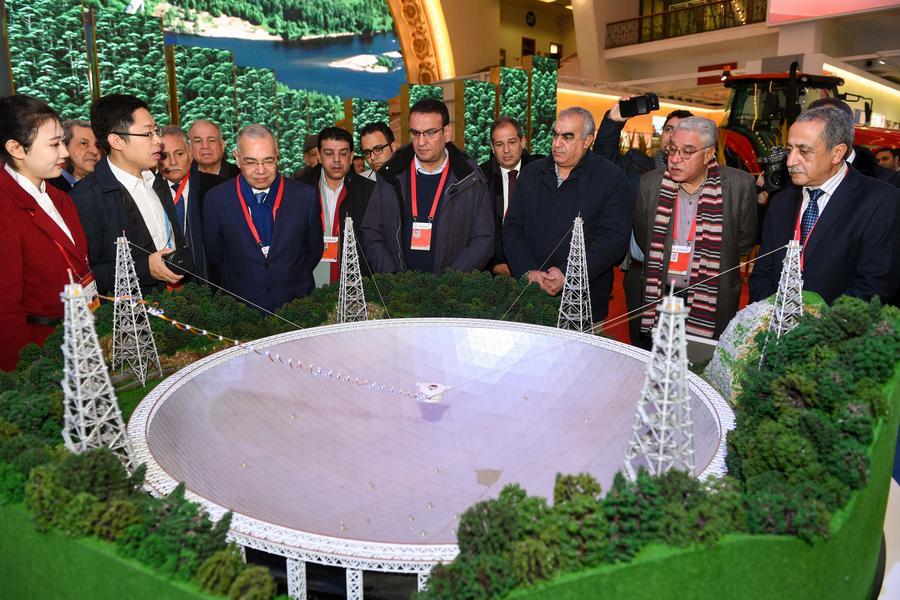
Representatives of attendees of the Communist Party of China (CPC) in Dialogue with World Political Parties High-Level Meeting visit an exhibition on China's achievements in Beijing, capital of China, Dec 1, 2017. [Photo/Xinhua]
"Countries around the world are like passengers aboard the same ship who share the same destiny. For the ship to navigate the storm and sail toward a bright future, all passengers must pull together. The thought of throwing anyone overboard is simply not acceptable," Xi once said.
With this vivid metaphor, Xi underscores the vision of a community with a shared future for humanity, charting a course for improving the global governance system and promoting the common development of humanity.
The GGI seeks to address this governance deficit. It calls for adhering to sovereign equality, directly targeting the shortcomings of a system in which "a few countries call the shots," and affirms that the destiny of the world should be shaped collectively by all peoples. Regardless of size, strength, or level of development, all countries are equal members of the international community, with the right to participate in global governance.
It calls for abiding by the international rule of law, emphasizing that international rules must be jointly formulated by the international community rather than monopolized by a few countries.
It advocates for rules that evolve with the times, taking into account countries' different stages of development and legitimate interests.
It calls for practicing multilateralism by upholding the purposes and principles of the UN Charter, reinforcing the central role of multilateral mechanisms, opposing bloc politics and camp confrontation, and promoting a more coordinated and effective system of global governance.
The initiative promotes a people-centered approach, emphasizing that the ultimate goal of global governance is to improve the well-being of all peoples. It seeks to address the issues most directly related to people's lives, such as employment, education and healthcare, so that the outcomes of governance are shared more broadly and more equitably among all peoples.
It focuses on taking real actions, prioritizes the delivery of concrete results from the GGI, and encourages countries to turn consensus into action and address governance challenges through pragmatic cooperation.
These five pillars reinforce one another, outlining a clear framework for reforming the global governance system.
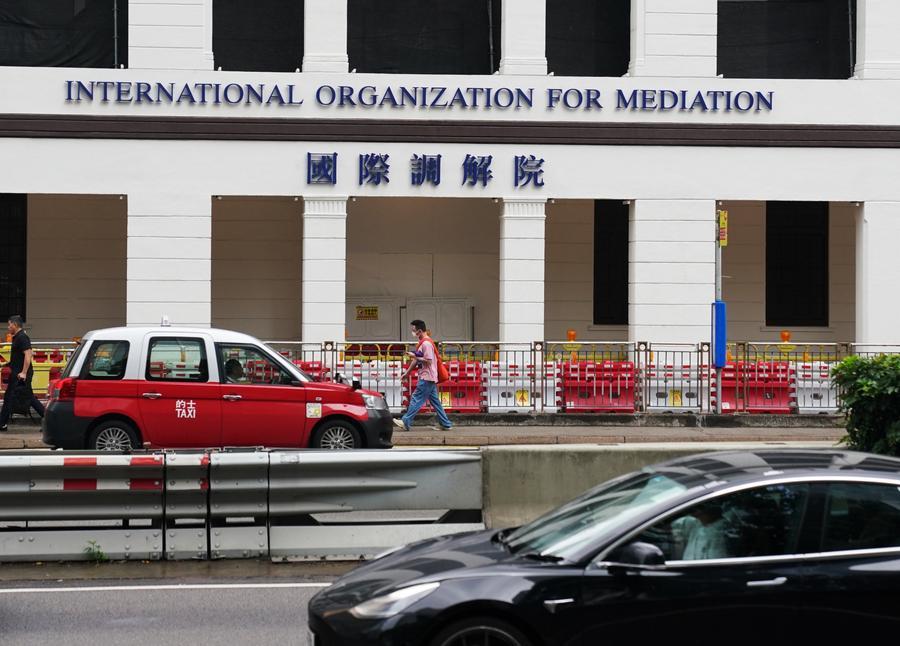
This photo taken on May 30, 2025 shows a view of the International Organization for Mediation in South China's Hong Kong. [Photo/Xinhua]
As a guardian of the international order and a provider of global public goods, China has been advancing the reform of global governance through practical actions, achieving concrete progress.
China actively participates in global ecological governance. It has fully and effectively implemented the Paris Agreement and the Kunming-Montreal Global Biodiversity Framework, announced its Nationally Determined Contributions target for 2035, and proposed the establishment of a Global Clean Energy Cooperation Partnership.
China is also deeply engaged in formulating digital governance rules. It has put forward the Global Initiative on Data Security, the Global AI Governance Initiative, and the Global Cross-Border Data Flow Cooperation Initiative, working to improve and refine the digital governance framework so that technological innovation does not become "a game for rich countries and the wealthy."
In response to persistent power imbalances, China is promoting badly-needed reforms in major multilateral institutions in global economic and financial governance, supporting developing countries in amplifying their voices and representation. China is also advancing the expansion of cooperation mechanisms such as the BRICS and the Shanghai Cooperation Organization, and fostering South-South cooperation platforms, including the Forum on China-Africa Cooperation and the China-CELAC Forum, injecting new vitality into the reshaping of the global governance landscape.
In line with the needs of multilateral coordination, China firmly supports the United Nations in playing a central role. It has increased investment in the China-UN Peace and Development Fund and has been steadily advancing related cooperation. In addition, together with more than 30 countries, China helped set up the International Organization for Mediation headquartered in Hong Kong, contributing to the maintenance of global peace and stability through the rule of law.
The four global initiatives proposed by Xi have brought much-needed stability and predictability to a world in flux. Through systematic, coherent and practical efforts, China has demonstrated that its development is inseparable from, and mutually reinforcing with, the progress of the wider world.
Guided by the vision of a community with a shared future for humanity, China will continue to work with all countries, using the four global initiatives as a unifying framework to address global challenges, strengthen global governance, and build a world characterized by lasting peace, universal security, shared prosperity, openness and inclusiveness, and ecological sustainability.

