
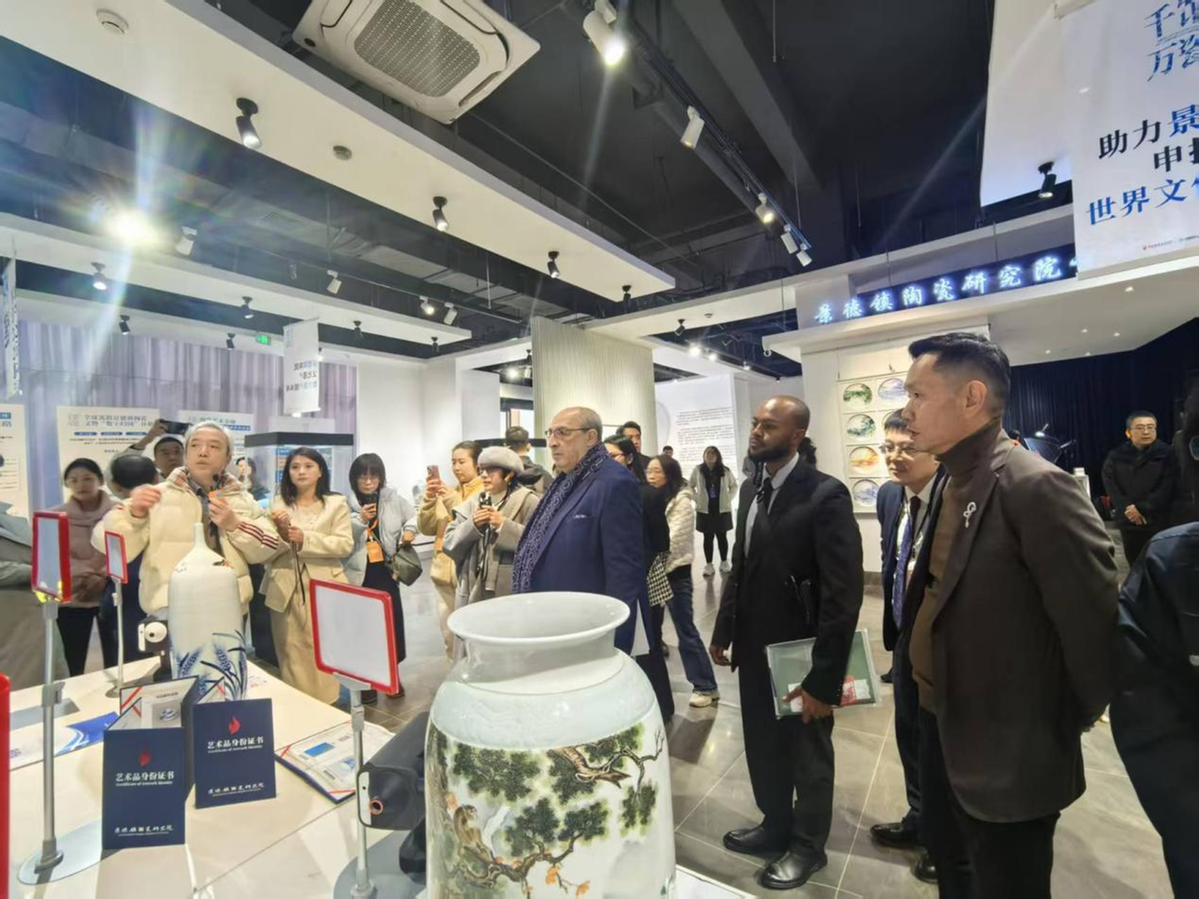
Participants explore exhibits at the "Thousand Museums and Porcelain Pieces" in the Digital-Intelligent Exhibition Hall in Jingdezhen, Jiangxi province, during the World Internet Conference event "Journey into Outstanding Cases - Journey into the Digital Porcelain Capital", on Jan 15, 2026. [Photo provided to chinadaily.com.cn]
The World Internet Conference organized an event themed "Journey into Outstanding Cases - Journey into the Digital Porcelain Capital" in Jingdezhen, East China's Jiangxi province, on Jan 15.
It brought together over 30 participants, including embassy representatives from Morocco and Lesotho, members of the WIC Specialized Committee on Cultural Heritage Digitization, delegates from member organizations, and media professionals.
The event served as a valuable platform for international exchange, building a bridge for integrating digital technology with ceramic culture.
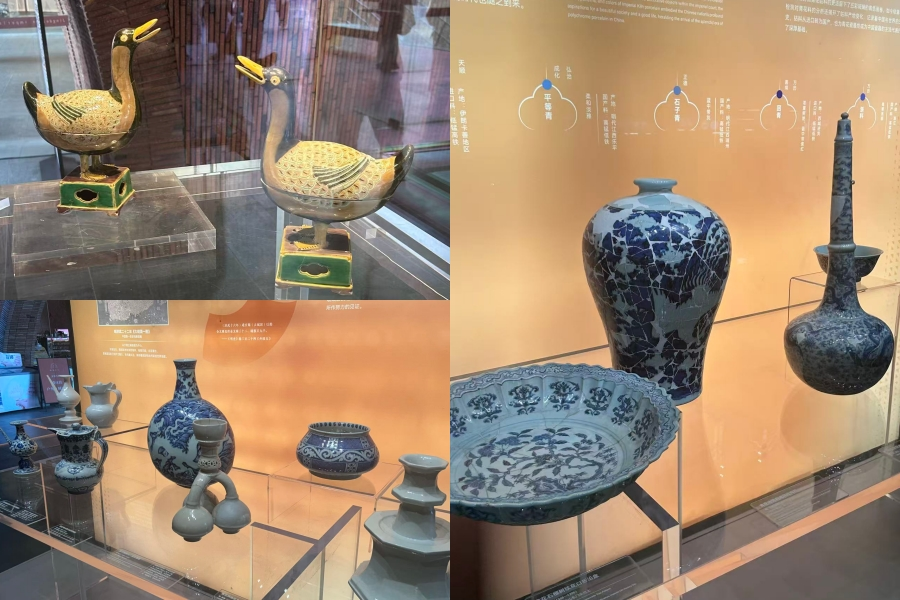
Ancient porcelains are on display at the Jingdezhen Imperial Kiln Museum in Jingdezhen, Jiangxi province, Jan 15, 2026. [Photo by Zhang Jie/chinadaily.com.cn]
In Jingdezhen, many workshops still uphold the tradition of handcrafted ceramics. Artisans gather around pottery wheels, using skills honed over years to knead, shape, trim, glaze, and fire the clay. Each step is filled with focus and passion, making every piece unique. This handmade model is the core of Jingdezhen's thousand-year ceramic culture. Its personalized value remains irreplaceable. The rapid development of digital technology is now injecting new vitality into this tradition.
Digital innovation is revolutionizing the design process, shattering creative constraints. In Taoyuan Valley, an "AI-powered pottery painting assistant" tool, draws upon a digitized archive of over a thousand traditional ceramic patterns. Requiring no professional design expertise, it can generate patterns that blend classical motifs with contemporary aesthetics in seconds. This tool provides creators with diverse inspirations, allows ordinary people to participate in ceramic design, and helps makers significantly shorten design cycles. It transforms thousand-year-old ceramic patterns from traditional limitations into cultural resources that everyone can create and enjoy.
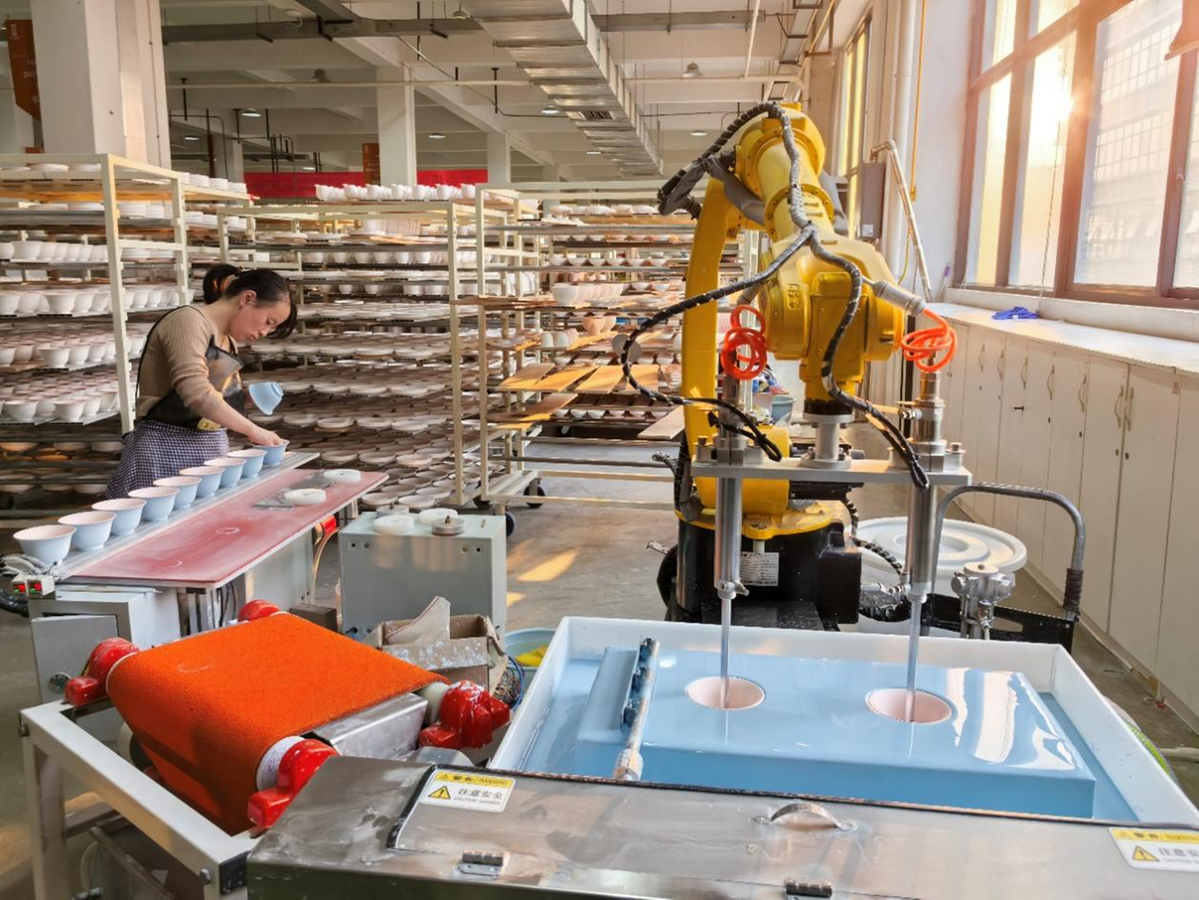
A woman works together with an automated glazing equipment at Yishan Ceramics Co in Jingdezhen, Jiangxi province, Jan 15, 2026. [Photo provided to chinadaily.com.cn]
Yishan Ceramics Co is deepening its digital transformation on the production front, boosting both efficiency and quality. Within its facilities, industrial assembly lines hum with precision, powered by digital systems overseeing every phase — a testament to technology's transformative role in traditional porcelain-making.
The company operates a fully automated cup production line that integrates forming, handle attachment, drying and demolding. With an hourly output of 1,200 pieces — roughly three to four times more efficient than manual crafting — it dramatically enhances mass-production capacity.
Digital upgrades extend to glazing and firing. Automated glazing equipment handles bisque-fired items, processing up to 1,400 pieces hourly while precisely controlling glaze thickness to prevent defects. A high-temperature tunnel kiln, operating continuously at 1,380°C, ensures consistent product quality through accurate temperature control, achieving a daily output of 30,000 pieces.
Digital management safeguards the entire workflow. Real-time data on output, yield rates and equipment performance are displayed on workshop screens, informing capacity planning, process refinement and maintenance — steadily steering ceramic production toward greater scale and standardization.
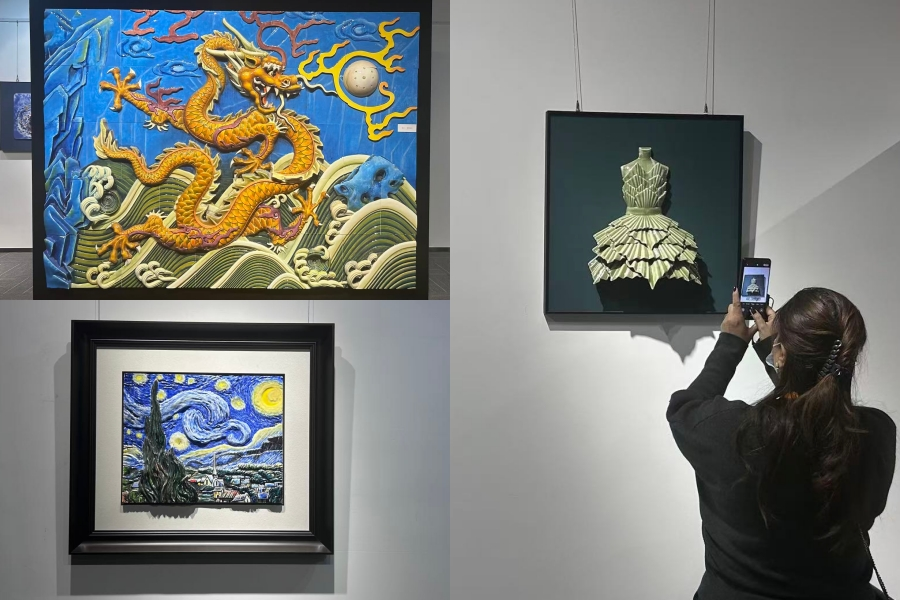
Ceramic 3D printing artworks are on show at Micro Porcelain Technology Co in Jingdezhen, Jiangxi province, Jan 15, 2026. [Photo by Zhang Jie/chinadaily.com.cn]
Micro Porcelain Technology Co focuses on pioneering ceramic 3D printing. By innovating core materials to overcome traditional limitations, it provides fresh impetus for the sector's evolution. The company's novel materials can accurately render intricate hollow structures and seamless joins, addressing industry challenges like deformation and collapse. Utilizing this material and its self-developed 3D printers, the production process bypasses steps like molding and trimming. Prototypes can be completed in as little as three days, drastically shortening development cycles while reducing reliance on manual skill — empowering designers to experiment and create differentiated products.
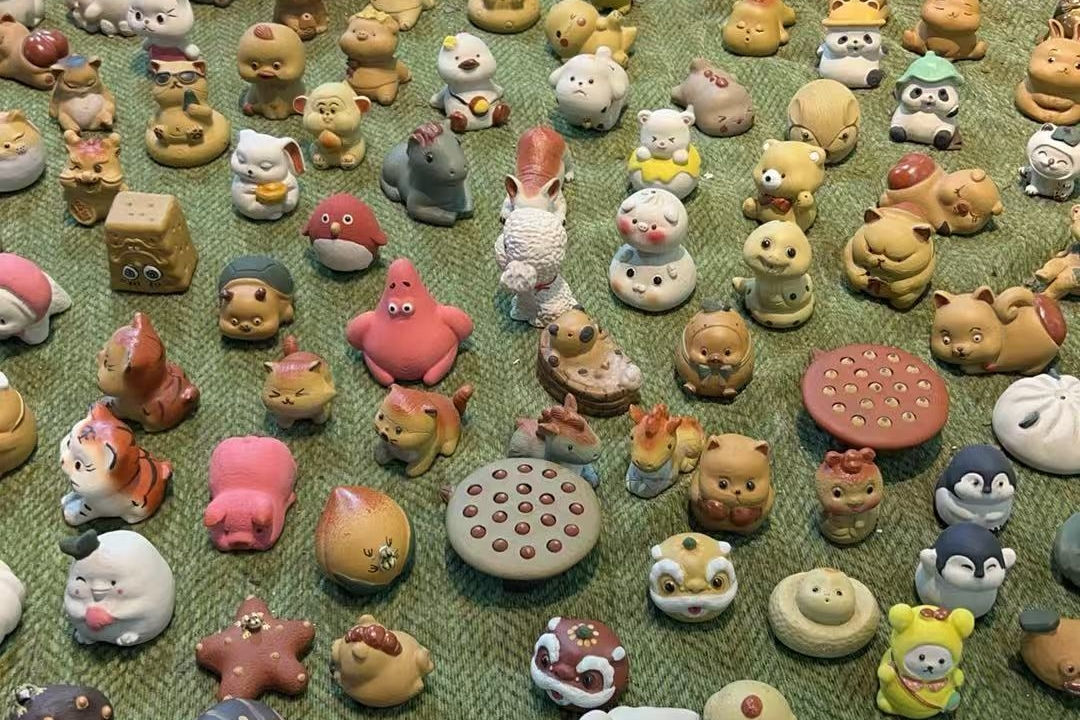
Porcelain models are showcased at a night market in Jingdezhen, Jiangxi province, Jan 15, 2026. [Photo by Zhang Jie/chinadaily.com.cn]
Taoxichuan Cultural and Creative Block has transformed old porcelain factory buildings into a digital platform integrating creativity, entrepreneurship, and sales. Its "Yi Space" public innovation platform gathers over 25,000 entrepreneurial youths, often called "Jing Piao" (Jingdezhen drifters). They inherit the craftsmanship spirit of handmade porcelain while leveraging a live-streaming base and platforms like Douyin and Kuaishou to build a global digital sales network. This allows both handmade treasures and mass-produced quality porcelain to reach more consumers.
A supporting intellectual property protection center safeguards original designs, forming a complete entrepreneurial chain of "creative market + Yi Space + live-streaming base + smart workshop". This chain drives employment for 110,000 people upstream and downstream, with over 30,000 registered copyrights, making the ceramic industry ecosystem more prosperous and diverse.
Digital technology is reshaping Jingdezhen's ceramics industry by blending traditional craftsmanship with modern innovation. It preserves the unique value of handmade porcelain while improving quality and efficiency in mass production. This approach allows the ancient porcelain capital to maintain its cultural roots while exploring new growth through technology. Jingdezhen's transformation showcases a path for traditional sectors to evolve, promising a forward-looking future.
