
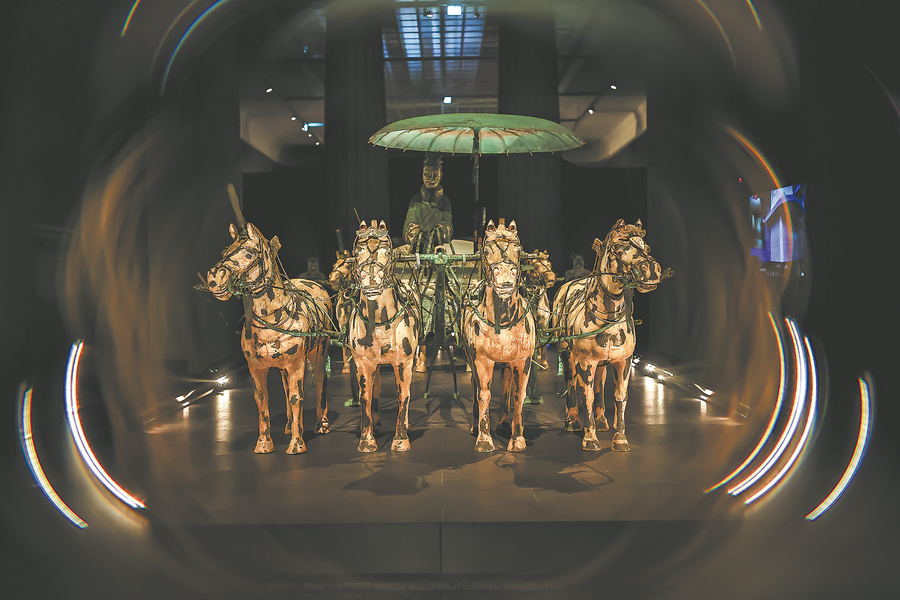
Terracotta Warriors and a chariot on show at the Museum of Fine Arts in Budapest, Hungary, in late November. XINHUA
BUDAPEST — On Nov 27, The Museum of Fine Arts in Budapest opened one of the most significant Chinese cultural exhibitions ever held in Hungary, presenting more than 150 ancient artworks from the Qin (221-206 BC) and Han (206 BC-AD 220) dynasties, including 10 original Terracotta Warriors.
The exhibition, Civilization of the Qin and Han Dynasties — The First Chinese Emperor's Terracotta Warriors, is jointly organized by the Budapest museum and the Shaanxi Provincial Cultural Heritage Administration, and will run for six months.
In his opening speech, Hungarian President Tamas Sulyok says that Hungary and China have developed "strong and fruitful "relations in various fields, including culture, economy, science, innovation, and diplomacy. The exhibition, he says, reflects the mutual respect and cooperation between the two countries.
Chinese Ambassador to Hungary Gong Tao says the exhibition is among the most representative displays of Chinese culture in Europe in recent years, offering visitors an opportunity to experience China's history and civilization. He says the event has become an important chapter in cultural exchanges between the two countries and a symbol of their deepening friendship.
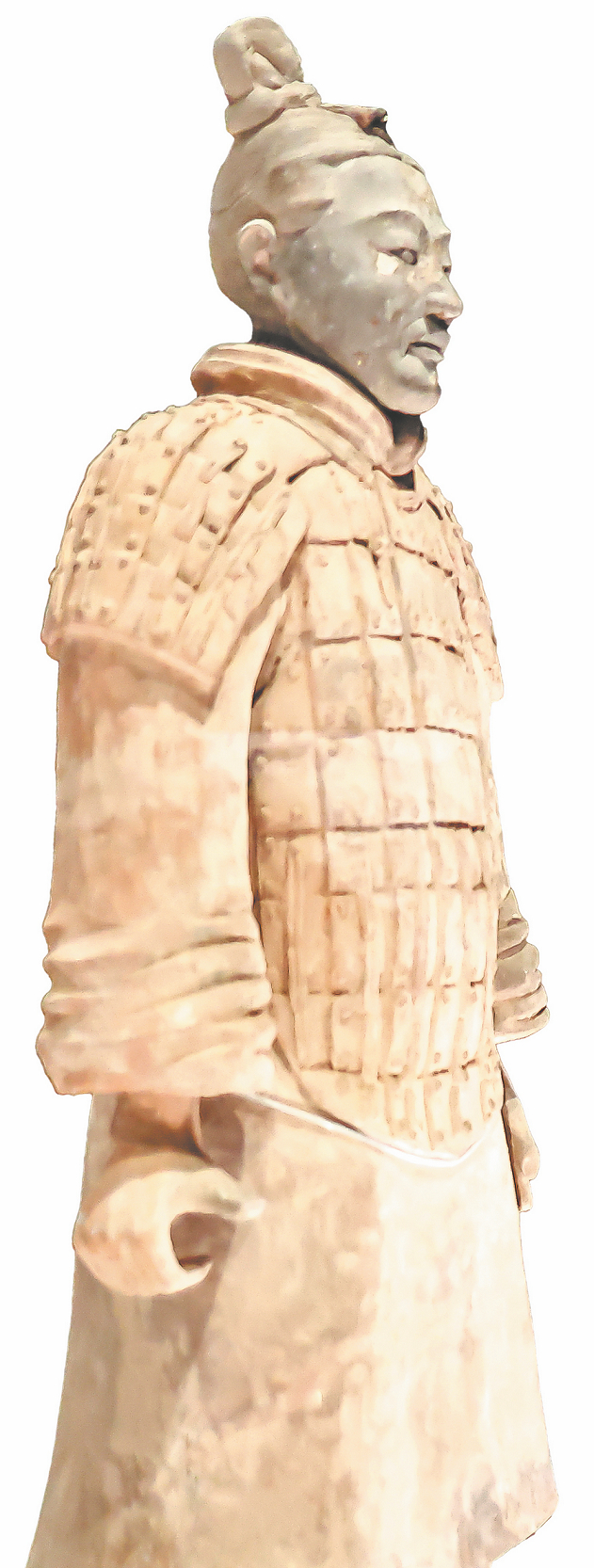
Terracotta Warriors and a chariot on show at the Museum of Fine Arts in Budapest, Hungary, in late November. XINHUA
The exhibition traces the rise of the Qin Empire, the unification of China under Emperor Qinshihuang, and the craftsmanship behind the emperor's army of Terracotta Warriors. Key exhibits include weapons, ceremonial objects, chariot models, and burial items from the imperial tomb.
Another section highlights the Western Han Dynasty (206 BC-AD 24), with artifacts from the Yangling Mausoleum of Emperor Jing. These objects illustrate early Silk Road exchanges and aspects of governance, economy, and measurement systems during the period.
Director general of the museum, Laszlo Baan, says the exhibition sets a new benchmark for Central Europe. He expresses confidence that visitor numbers could be "among the highest in the museum's history", approaching half a million.
Curator Gyorgyi Fajcsak says the exhibition offers a unique opportunity to explore the roots of ancient Chinese civilization. The archaeological objects, she says, reflect essential elements of Chinese culture and provide insights into daily life during the Qin and Han periods.
Reka Palinka, senior museologist, says she first saw the Terracotta Warriors in 1988 in Budapest, and revisiting them decades later has deepened her understanding of their historical and artistic significance.
"When I was young, it simply amazed me; now I can truly appreciate the scale and significance of this extraordinary archaeological ensemble," she says.
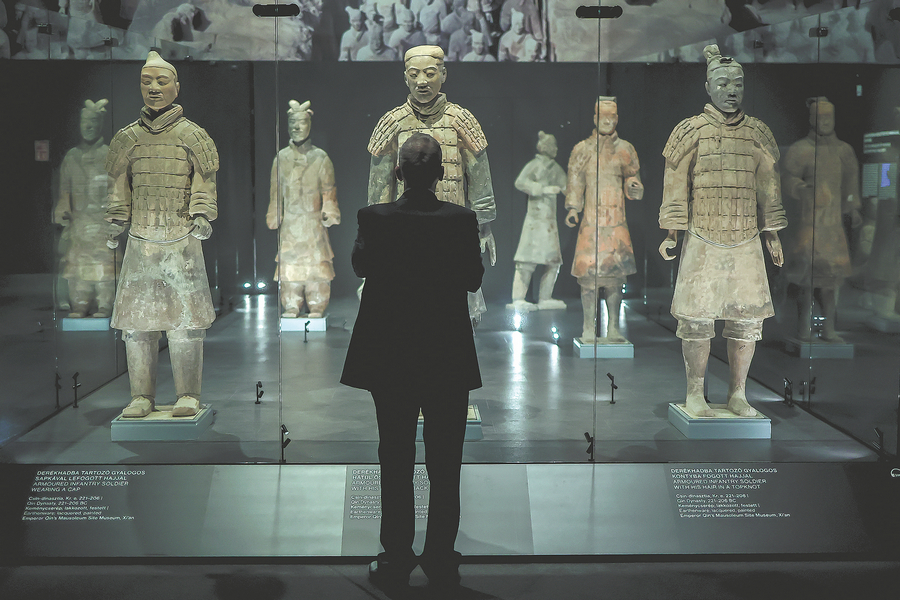
A visitor admires exhibits at one of the most representative displays of Chinese culture in Europe in recent years. XINHUA
