
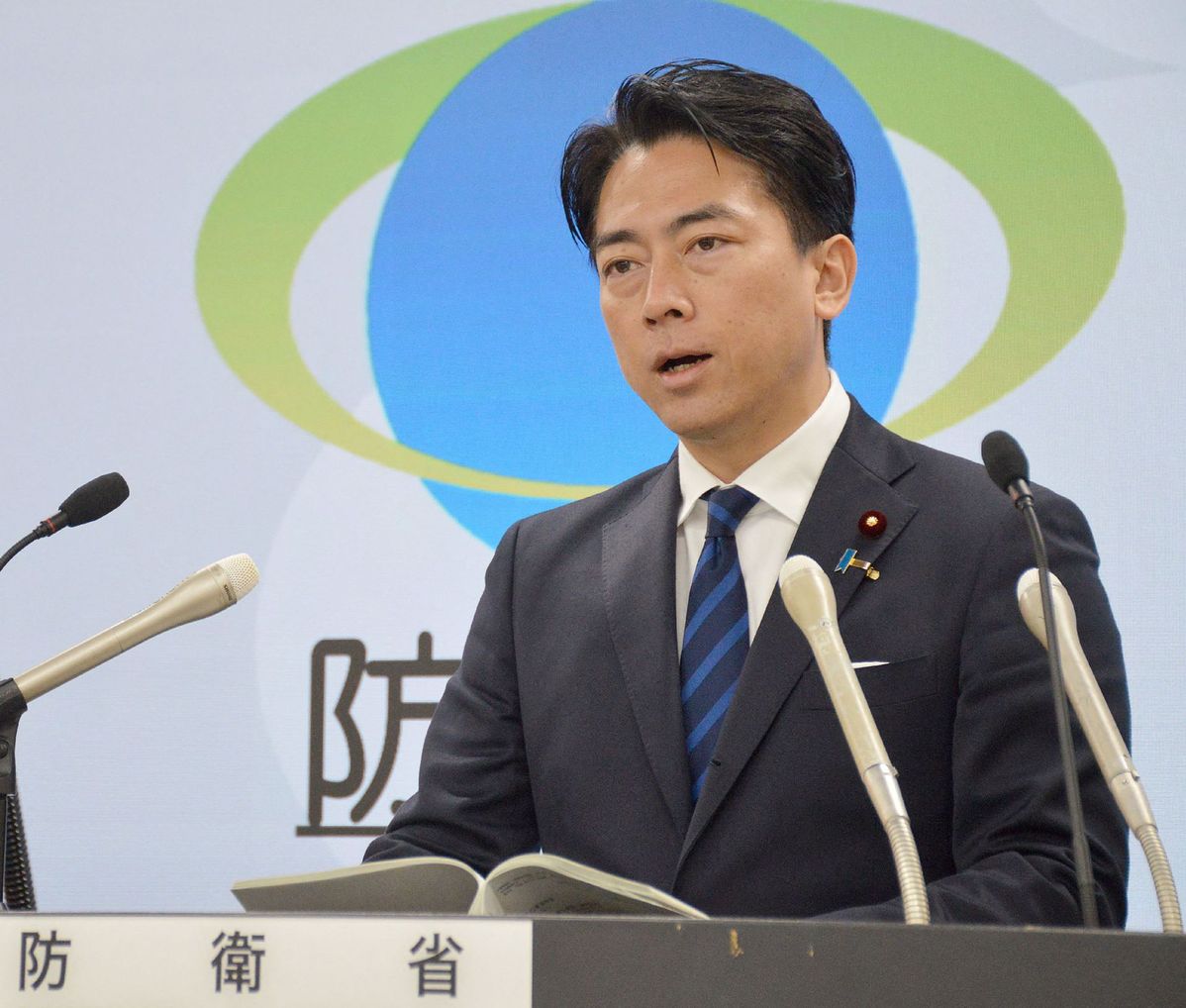
Japan's Defense Minister Shinjiro Koizumi holds a press conference at the Defense Ministry in Tokyo on November 25, 2025. [Photo/Agencies]
Tokyo is reportedly weighing exporting a missile system to the Philippines as it moves to ease long-standing restrictions on weapons exports, a step that experts say would further accelerate Japan's military expansion and heighten regional tensions.
According to a Kyodo News report, Tokyo is now holding informal consultations with Manila over the potential export of the Self-Defense Forces' Type 03 medium-range surface-to-air missile. Under the proposal, Japan would abolish its current "five-category" restriction on defense equipment exports — expected as early as the first half of next year — and swiftly begin formal export review processes.
This development underscores the Japanese administration's proactive stance toward defense equipment exports, said the Kyodo News report.
The government's growing readiness to export such systems reflects a broader shift toward loosening long-standing export curbs and expanding its defense industrial footprint, experts said.
Chen Hong, executive director of the Asia Pacific Studies Center at East China Normal University in Shanghai, said Japan's reported plan to export the missile to the Philippines is an attempt to bypass the constraints of its pacifist constitution and further militarize Japan's posture, which risks accelerating an arms race in the region and increasing the likelihood of regional conflicts.
For decades after World War II, Japan maintained a constitutionally mandated "exclusively defense-oriented policy", exercising restraint on arms exports and projecting itself as a "peace-loving nation", he said. In recent years, however, the government has moved to loosen the constraints of the postwar framework as it seeks to redefine the country as what it calls a "normal nation", Chen said.
"Japan's plan to deploy missiles near the Taiwan region of China, coupled with its intention to export medium-range missiles to the Philippines, marks a further departure from its postwar restraints," he said, adding that Tokyo risks accelerating bloc confrontation in the region and heightening the potential for military escalation as it attempts to export a missile system to the Philippines.
The Reciprocal Access Agreement between Japan and the Philippines, which took effect on Sept 11 this year, allows Japanese troops to operate on Philippine soil, reflecting the two countries' increasingly close military cooperation, Chen noted.
"Such moves risk undermining traditional mutual trust in the Asia-Pacific, raising the chances of strategic miscalculation and increasing the likelihood of regional crises," he said.
Moreover, the UN Arms Trade Treaty establishes common standards for the international trade of conventional weapons and sets out measures to curb the proliferation of weapons. As a signatory, Japan has in recent years repeatedly revised its Three Principles on Arms Exports, eroding its credibility on disarmament and nonproliferation and adding to the risks of military conflict, Chen said.
Militarization path
Zamir Ahmed Awan, founding chair of the Global Silk Route Research Alliance, a think tank in Pakistan, said Japan's recent aggressive moves, including plans to export missiles and loosen long-standing arms export restrictions, represent a dangerous turn down the path of militarization and pose a serious threat to regional peace and security.
"During World War II, Japanese militarism inflicted immense suffering on many Asian countries. Today, the posture of the (Japan's Prime Minister) Sanae Takaichi's administration appears to be steering Japan toward a revival of militaristic tendencies, a development that warrants close vigilance from the international community," he said.
"The Takaichi administration invokes what it calls Japan's 'existential crisis' as a pretext, yet its policy direction signals a return to the old path of military expansion," Awan said.
By linking developments in the Taiwan Strait to its own national security, Japan is effectively internationalizing the Taiwan question and drawing other countries, including the Philippines, into its containment strategy against China, he added.
Chen from Shanghai also said the measures now being pursued by the Japanese government amount to a gradual encroachment on China.
"Such actions have drifted far from the constraints of its pacifist constitution and risk undermining the postwar international order. They will further narrow the space for resolving disputes through multilateral platforms and mechanisms, posing new challenges to regional peace and stability," he said.
"The international community should strengthen multilateral mechanisms, curb the politicization of arms exports, and build common operational norms to prevent the Asia-Pacific from sliding into a new Cold War-style confrontation," Chen added.
liujianqiao@chinadaily.com.cn
