
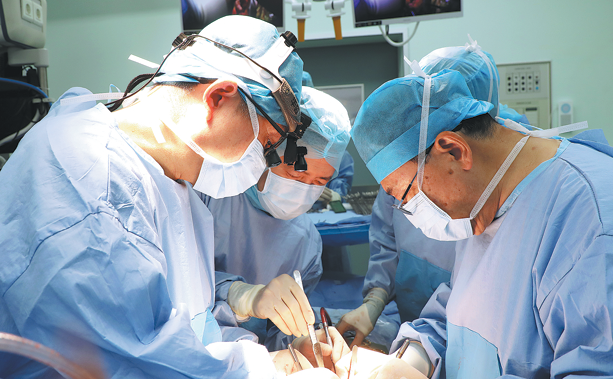
Doctors perform a cardiac surgery on Xiaoni at TEDA International Cardiovascular Hospital in Tianjin. China Daily
A 5-year-old girl named Xiaoni, who underwent two high-risk cardiac surgeries over 110 days, was discharged from hospital earlier this month after making a full recovery.
Weighing only 12.2 kilograms and diagnosed with restrictive cardiomyopathy — a rare heart muscle disease accounting for as little as 2 percent of cardiomyopathy diagnoses — the young patient from Jiangsu province was once teetering on the brink of death.
In this critical moment, a joint medical team led by Professor Liu Xiaocheng from TEDA (Tianjin Economic-Technological Development Area) International Cardiovascular Hospital, and Professor Mo Xuming from Nanjing Children's Hospital decided to treat her with dual artificial heart implantation surgery, successfully saving her life.
This groundbreaking achievement has set a new global record for the lowest body weight in such surgeries, marking China's entry into the forefront of the research and development of pediatric artificial hearts and biventricular assist device (BiVAD) implantation technology.
Xiaoni, despite being in end-stage heart failure and in urgent need of a heart transplant, was unable to locate a donor heart, and so artificial heart implantation became the only life-saving option.
Complicating matters, Xiaoni was not only young and underweight with severe developmental delays, but her restrictive cardiomyopathy had also resulted in cardiac chambers significantly smaller than those of normal children, posing immense challenges for the implantation.
More critically, as she suffered from simultaneous biventricular heart failure, BiVAD support was imperative to sustain her life. To address this dilemma, the medical team collaborated with engineers from implant manufacturer Rocor Medical Technology Co to modify their second-generation "Rocket Heart" within 13 days, developing a fully magnetically levitated ventricular assist device tailored for Xiaoni, with each pump weighing a mere 69 grams.
Additionally, the outer diameter of the sewing ring was reduced from 29 millimeters to 22.4 millimeters, and its weight was cut from 6.4 grams to 1.17 grams. Overcoming numerous obstacles, the surgical team successfully implanted the two artificial heart chambers into Xiaoni's small cardiac and thoracic cavity.
"Currently, the artificial hearts commonly used for children with heart failure in developed countries are extracorporeal pneumatic devices, which are bulky, severely restrict children's activities, and carry high risks of infection and thrombosis," Liu said in an interview after the procedure.
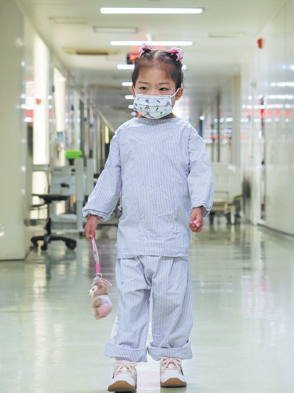
Xiaoni recovers at the hospital after her surgeries. CHINA DAILY
Several top cardiac centers in the United States, Canada and Germany have expressed intentions to collaborate in clinical trials for the second-generation "Rocket Heart".
"Our innovative work has not only saved a child, but also provided a new option for the treatment of end-stage heart failure in children worldwide," Liu said.
Forty days after the BiVAD implant, Xiaoni received a matching donor heart, paving the way for a successful transplant performed by Liu's team.
