
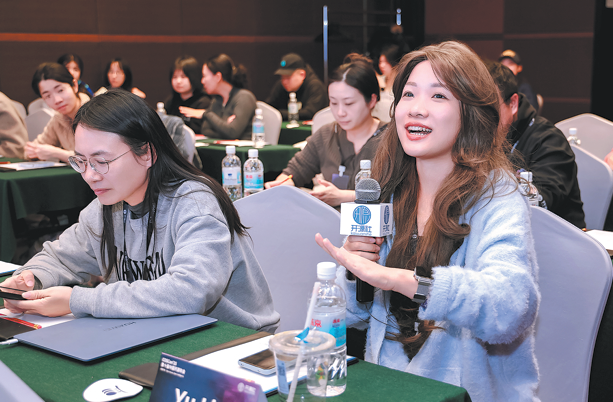
The 10th China Open Source Conference, held from Dec 6 to 7 in Beijing, attracts more than 1,500 visitors, including developers, community organizers, students, and industry representatives from China and abroad. CHINA DAILY
By gently tapping conference badges embedded with near-field communication (NFC) chips, participants exchanged contact information within seconds. Technology enthusiasts shared ideas with exhibitors and volunteers, while others listened attentively to speakers in packed meeting rooms. Together, these small moments captured the atmosphere of an event shaped as much by human connection as by technology.
The scene unfolded at the 10th China Open Source Conference (COSCon), organized by KAIYUANSHE and held from Dec 6 to 7 at Park Plaza Beijing Science Park.
With the theme "Open Source, Open Intelligence", the two-day event attracted more than 1,500 visitors, bringing together developers, community organizers, students, and industry representatives from China and abroad.
Conference topics ranged from traditional fields such as economics, law, and hardware to emerging areas including artificial intelligence, highlighting both technological change and the expanding role of open source in shaping new industries.
"AI has become an underlying layer in many technical fields," said Jiang Bo, chairperson of KAIYUANSHE and head of Open Source Growth of Ant Group.
"It is reshaping how open source develops, while open-source collaboration continues to support innovation in AI," she added.
One emerging area drawing particular attention was embodied intelligence, a frontier at the intersection of AI and robotics.
Jiang noted that 2025 has already seen rapid progress in the field, with much of it driven by open-source technologies.
"We believe the sector may undergo even greater transformation in 2026," she said, adding that the conference views embodied intelligence as a potential future technological direction.
Beyond technical frontiers, Jiang also reflected COSCon's growing international reach. Overseas guests included representatives from organizations such as the Open Source Initiative, OpenChain, and Open-UK, making this year's gathering the largest to date in terms of international participation.

The 10th China Open Source Conference, held from Dec 6 to 7 in Beijing, attracts more than 1,500 visitors, including developers, community organizers, students, and industry representatives from China and abroad. CHINA DAILY
"China has long been a major user of open-source software, and Chinese developers have become increasingly active contributors to global open-source communities in recent years," Jiang said.
That trend is particularly visible in the field of large language models, where China and the United States now lead global contributions.
"Chinese companies, including Alibaba, Ant Group, Moonshot AI, and DeepSeek, have adopted open-source approaches, reflecting a broader shift toward collaborative development," Jiang added.
Despite its expanding scale, COSCon remains driven by grassroots participation. KAIYUANSHE is a nonprofit organization, and both the conference and the broader community are maintained entirely by volunteers. Many organizers, including core members of the organizing team, have full-time jobs elsewhere and contribute in their spare time.
For Yuan Gungun, a long-time member of the community, open source is as much about people as it is about code. Having worked in startups for much of her career, she sees similarities between entrepreneurial culture and open-source collaboration. "Both rely on people contributing beyond formal roles,"Yuan said. "They grow through shared goals and mutual trust."
She noted that while open-source software is widely used, its sustainability depends on active participation. "Open source is not only about sharing code," she said. "It also involves contributing back to the community, whether through technical work or other forms of support."
Yuan believes that events like COSCon play an important role in making open-source technologies more visible. "Many of them operate behind commercial products," she said. "Conferences like this help people better understand how these technologies support different industries."
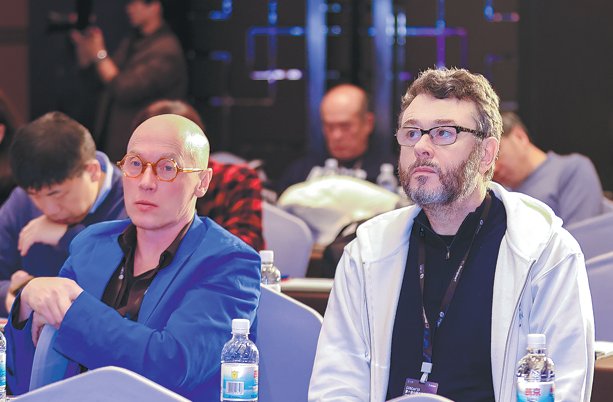
The 10th China Open Source Conference, held from Dec 6 to 7 in Beijing, attracts more than 1,500 visitors, including developers, community organizers, students, and industry representatives from China and abroad. CHINA DAILY
Inclusive participation
Beyond technical discussions, COSCon has long emphasized diversity as part of its community culture. Since its first edition in 2016, the conference has featured a women's forum, following common practices at international open-source events.
"In a field often perceived as male-dominated, it is important to recognize that women have long been contributing to open source," Jiang said.
For Fu Fenju, a project operations specialist, COSCon is a place where research, reflection, and practice intersect.
She pointed to the broader history of computing, noting that women were among the earliest practitioners — from pioneering programmers to operators of the first large-scale computers.

The 10th China Open Source Conference, held from Dec 6 to 7 in Beijing, attracts more than 1,500 visitors, including developers, community organizers, students, and industry representatives from China and abroad. CHINA DAILY
"Many emerging industries have seen women as foundational participants," Fu said. "The question is not whether women can contribute, but whether their efforts continue to be recognized as fields evolve."
Fu's presentation was strongly grounded in data and research, including findings from a 2021 Linux Foundation survey showing that women accounted for about 14 percent of developers, though disparities between projects remain significant.
"Studies measuring code changes and commit frequency — how often developers submit code — have found no significant productivity differences between male and female contributors," Fu said. "This suggests that women's capabilities are often underestimated rather than limited."
Beyond research, Fu has worked to apply open-source principles to public-interest initiatives. She initiated a public welfare program on a code-hosting platform, connecting open-source technologies with nonprofit organizations. She also co-founded GoodAction Hub, an open-source platform that aggregates public welfare events and provides accessibility-friendly dining guides.
"Open source is not just about software," Fu said. "It is also a way of organizing collaboration for the public good."
For many participants, she added, involvement is also about shared learning. "Many student volunteers come to understand how open source connects classroom learning with real-world application," she said. "Communities grow when more people are willing to learn together and take part."
