
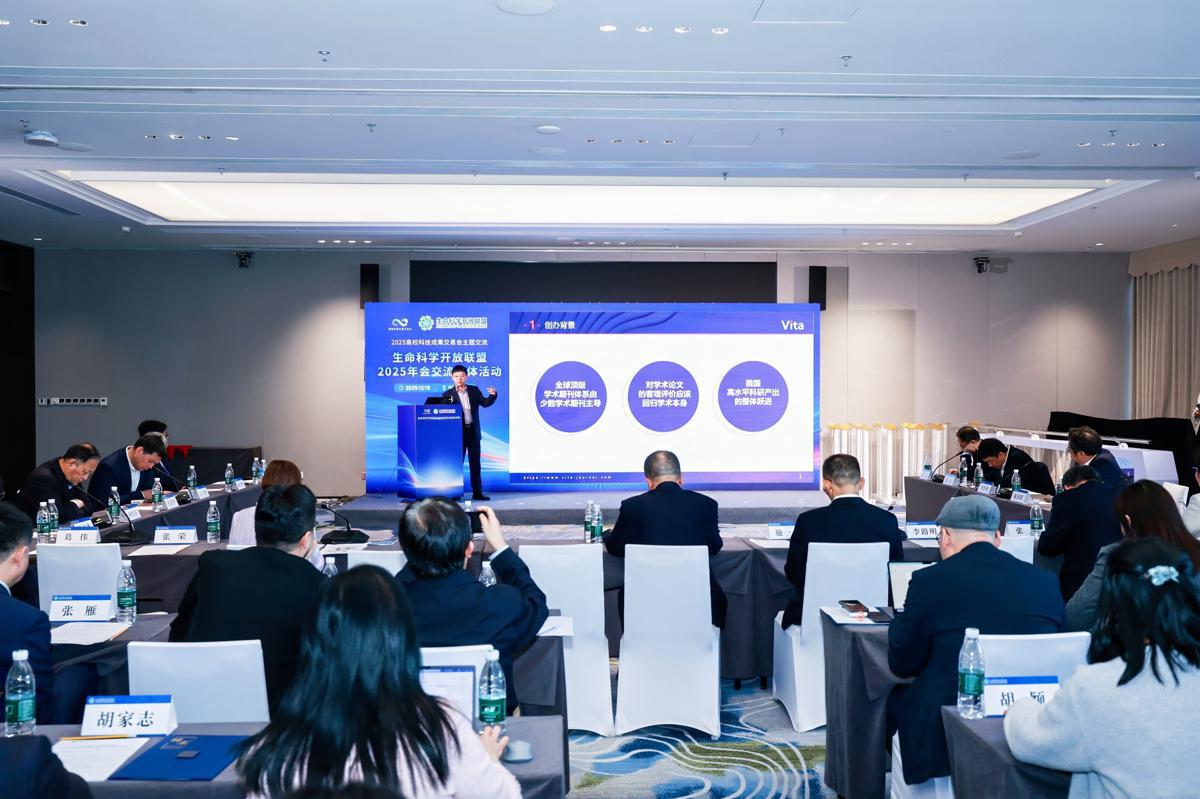
The 2025 annual meeting of the Alliance of Open Life Science begins in Guangzhou city, Guangdong province, on Monday. [Photo provided to chinadaily.com.cn]
The Alliance of Open Life Science, an international, open, and non-profit academic community, has extended membership invitations to 32 leading universities and research institutions worldwide and received responses from some, according to an announcement made during the 2025 annual meeting of the alliance, which opened in Guangzhou city, Guangdong province, on Monday.
The institutions invited include prestigious names, including the University of Oxford and Imperial College London.
Such progress marked a new step in China's commitment to fostering global openness in the life sciences sector, said the alliance formed voluntarily by universities, research institutions, and other societal organizations.
Representatives from the alliance's existing 33 member universities and institutions attended the event.
Jin Li, an academician with the Chinese Academy of Sciences and president of Fudan University, delivered the alliance's work report. Shi Yigong, also a CAS academician and president of Westlake University, introduced the development plan for the alliance's journal.
The alliance said that humanity has entered an era of big science, where global collaboration is essential to address fundamental questions like the origins of life and the mysteries of health. The alliance is therefore dedicated to building a global innovation network and cooperation mechanism to facilitate breakthroughs at the forefront of life sciences, technological development, talent cultivation, and industrial innovation, thereby expanding international collaboration and civil exchange channels.
During the meeting, the alliance announced its second batch of new members. When the alliance was first established in August, it included 15 founding members, such as Peking University, Tsinghua University, Fudan University, and the Hong Kong University of Science and Technology. Now, with the addition of the 18 new members, the alliance covers the major leading universities and research institutions in the life sciences field in China.
Adhering to the principle that science knows no borders, the alliance said it aims to benefit human society and will be committed to promoting the development of open science in the life sciences and technology fields, striving to create a series of high-quality public goods.
