

Taiwan veteran singer Chyi Yu recently concludes her concert tour in Beijing in November after a 16-year hiatus. The tour has taken her to cities such as Beijing, Shanghai and Chengdu in Sichuan province. [Photo provided to China Daily]
On a recent evening in Beijing, veteran singer Chyi Yu stepped back onto the stage of the Beijing Exhibition Theater, marking her return after 16 quiet years, with her new Forever Splendor solo concert.
The moment carried a soft circle of fate, for her special guest that night was Wu Qingfeng — the very person who, 16 years earlier, had been only a disillusioned young man in the audience, who was trying to decide whether to continue singing at all.
His creative path felt foggy, his sense of purpose thinning, and he wondered if stepping back from music might spare him further pain.
The luminous words from Chyi's famous song, Olive Tree, cut through his uncertainty. They convinced him that surrendering to setbacks would only weaken his ability to care for the music, the craft and the people he loved. That sentence became his anchor, persuading him to keep singing, keep writing, keep searching — leading to this moment, when he finally stood beside her, no longer a restless listener in the dark but an artist steady in his own light.
"What makes being a singer so precious is that we never know which song, or even which single line, might change a life," Chyi reflects.
The singer from Taiwan, who debuted in 1979 with her album Olive, has held an unwavering belief in the power of sound to lift people through pain.
"Life is inevitably filled with hardships," she says.
"Through my music, even when it carries sadness or despair, I hope to guide people toward hope or at least a way out."
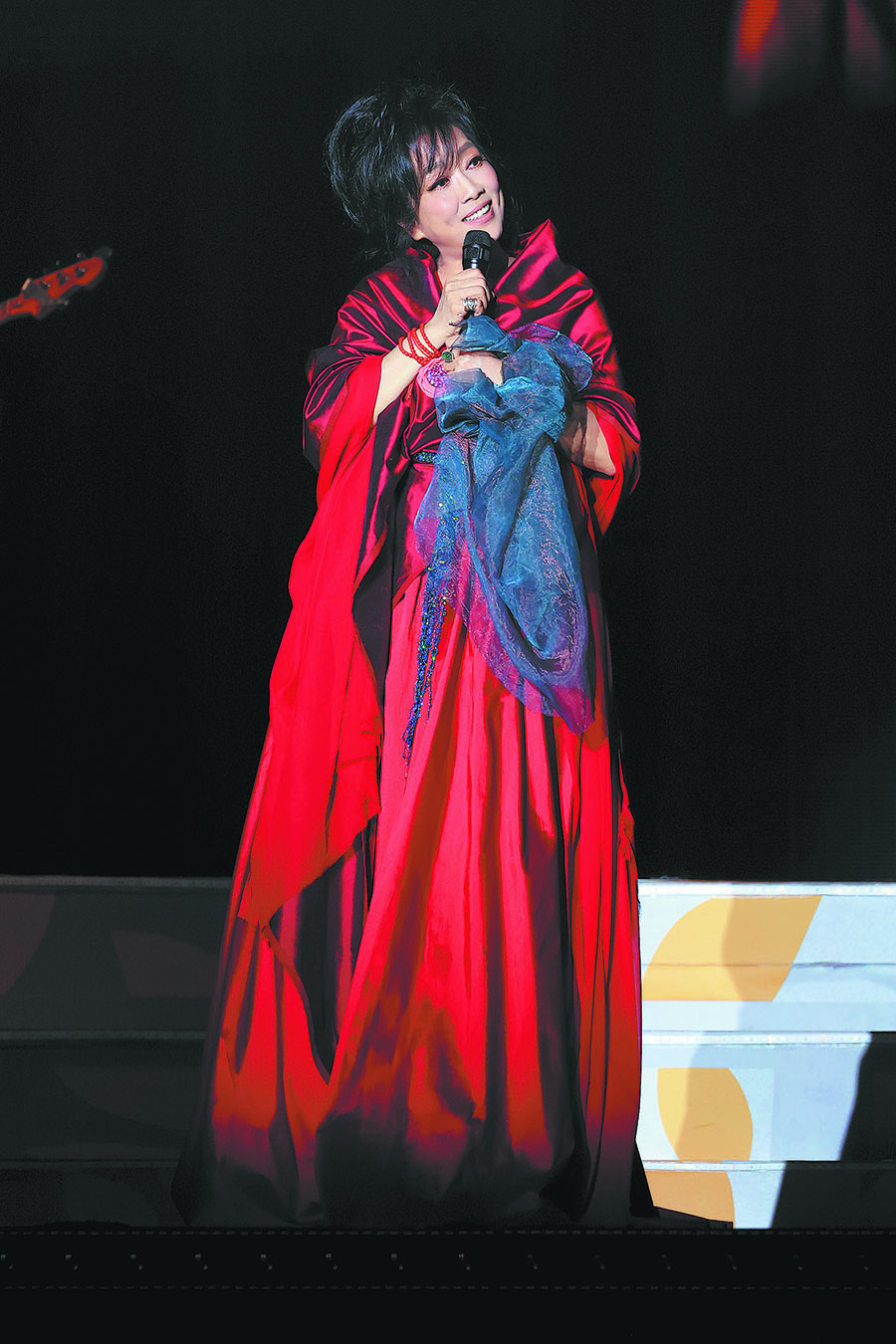
Taiwan veteran singer Chyi Yu recently concludes her concert tour in Beijing in November after a 16-year hiatus. The tour has taken her to cities such as Beijing, Shanghai and Chengdu in Sichuan province. [Photo provided to China Daily]
The single, Olive Tree, from Chyi's debut album, which became her enduring signature song, is widely regarded as a hallmark of Taiwan's "folk song movement" of the 1970s.
This cultural period was characterized by active collaboration among university students, writers, artists, and musicians to create pop music distinguished by poetic Chinese lyrics, reflections on society, and a pursuit of cultural identity.
Before this shift, throughout the 1960s and early '70s, Western music dominated the imaginations of young people in Taiwan. Bob Dylan, Joan Baez and Paul Simon were revered.
Yang Tsu-chun, a 70-year-old Taiwan scholar who was an active singer during the period, recalls in the music program Infinity and Beyond that this inclination toward Western music somewhat limited the local expression of emotions through Chinese literature, poetry and songwriting.
"Under this aesthetic suppression, young people sought a way out," she says, adding that starting in the 1970s, they began using music to "find their own voice," which later coalesced into the aforementioned cultural movement.
This wave had a far-reaching influence across Mandarin-speaking communities.
"The atmosphere back then made us realize the importance of original songwriting," recalls Chyi.
"Music wasn't a calculated career pursuit. It was a declaration of ideals. Even if I only knew a few chords, I believed I could create something meaningful, perhaps because I had a particular talent for writing lyrics."
At the time, she was an anthropology major at Taiwan University who participated in and won a local singing competition. This achievement caught the attention of renowned musician Li Tai-hsiang, who would later become the producer of her debut album and the composer of Olive Tree.
Penned by writer Sanmao, the pen name of Echo Chen Ping, the song weaves philosophical inquiries about life, freedom and ideals into its lyrics.
Within this context, the "olive tree" emerges as a potent symbol for the idealist's pursuit, inviting listeners to reflect on what their own "olive tree" might be.
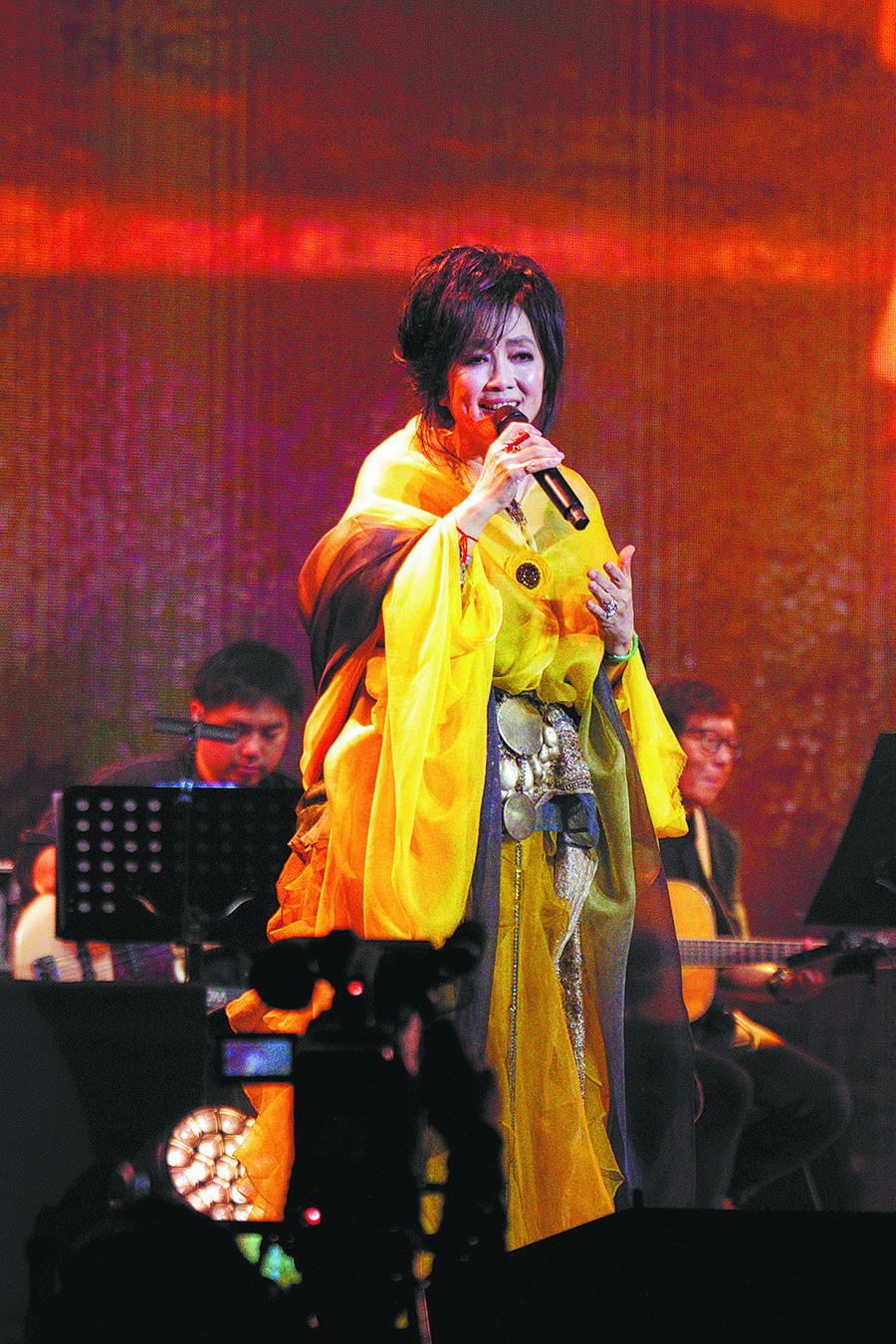
Taiwan veteran singer Chyi Yu recently concludes her concert tour in Beijing in November after a 16-year hiatus. The tour has taken her to cities such as Beijing, Shanghai and Chengdu in Sichuan province. [Photo provided to China Daily]
After the release of her debut album, Chyi went to the University of California, Los Angeles, to pursue a graduate degree in anthropology.
As she approached graduation, she wrote a thesis related to Taiwan folk music and decided to return to her hometown to continue her music career.
"Anthropology allowed me to encounter diverse cultures with respect, and to resist limiting myself creatively," she says.
Her academic background also made her realize the immense influence music can have on people.
"Anthropological research shows that the function and impact of music in culture are not random. For example, the ritual music of indigenous peoples and traditional Chinese temple music both have clear purposes and instrumental roles."
"Knowing this, I couldn't bring myself to use music casually. Music is also an expression of my values," she explains.
This conviction led her to infuse her songwriting with profound philosophical reflections on life. A prime example is her album Camel, Bird, Fish released in 1997 which contains her musings on love, happiness, and desire. Paired with her ethereal and melodious voice, the 12 songs on the album exude a transcendent and compassionate quality.
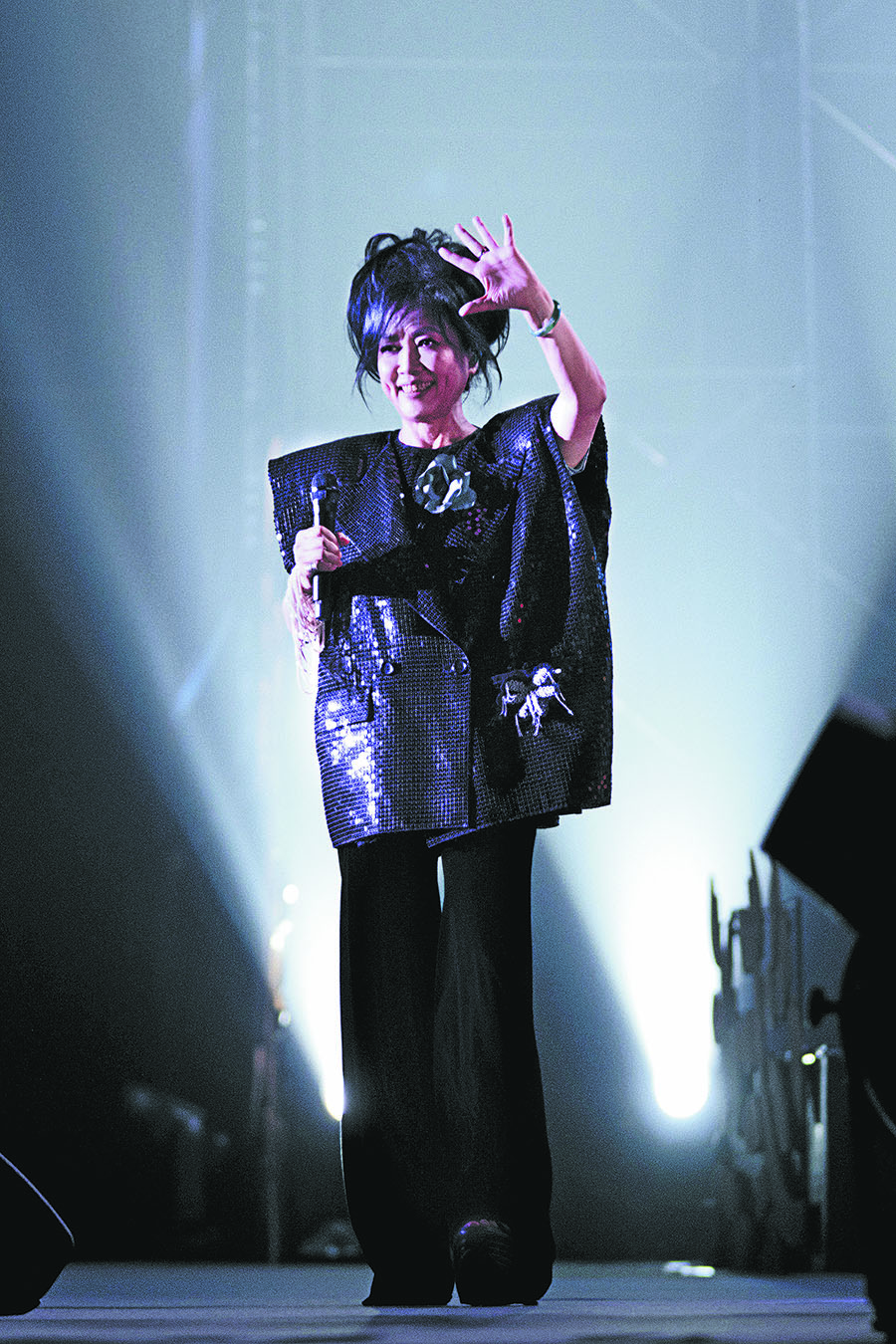
Singer Chyi Yu at her concert in Chengdu in June. [Photo provided to China Daily]
The album earned her the award for Best Mandarin Female Singer at the ninth Golden Melody Awards the following year.
It also became her last pop music album to date, as she later shifted her focus to exploring religious music.
"Now, religious or spiritual music better reflects the essence of my life, which is indeed quieter and more focused on self-cultivation," she admits, having realized that what she wished to pursue was no longer viable within the mainstream pop market.
When she reflects on Olive Tree — the very song that shaped her identity — she feels no need to cling to its symbolism.
"I have already become who I am today because of the 'olive tree'," she says. "It's time for the tree to disappear, because I have already become it."
"After the image of the tree is endowed with beauty, we may also attach greater dreams and deeper pursuits to it, wandering far in search of it. But now I feel that 'the olive tree' is more like a state closest to one's original self. Throughout our lives, whether in pursuit or in seeking, the most beautiful destination is the place nearest to our original selves," wrote Ricki, a Weibo user after attending Chyi's recent Beijing concert.

Chyi performs with Hong Kong singer Emil Wakin Chau in August at the Shanghai stop of her recent tour Forever Splendor. [Photo provided to China Daily]

Chyi performs in Shanghai. [Photo provided to China Daily]

Chyi's concert at Jing'an Sports Center in Shanghai in August attracts thousands of fans. [Photo provided to China Daily]

Taiwan veteran singer Chyi Yu recently concludes her concert tour in Beijing in November after a 16-year hiatus. The tour has taken her to cities such as Beijing, Shanghai and Chengdu in Sichuan province. [Photo provided to China Daily]
