

A contestant competes in the car painting category of the Third Vocational Skills Competition of China in Zhengzhou, Henan province, in late September. [Photo provided to CHINA DAILY]
Every night for nearly two years, Li Minghui would remain in her training room until at least 10 pm, often forgetting whether it was a weekday or weekend. The 29-year-old teacher from Henan Technician College of Medicine and Health was preparing for the third iteration of the nation's most prestigious skills contest — the Vocational Skills Competition of China — where she would eventually claim the gold medal in early childhood care.
Li's story of determination and dedication to her craft is just one of thousands of others, spurred on by the nation's push to improve vocational skills backed by massive investment, legal reforms and a focus on high-end skills for new industrial sectors.
Her preparation involved more than just technical practice. She spent hours perfecting how to support an infant's head, neck and spine with just the right amount of pressure, learning to use a hollow palm and relying solely on wrist strength to pat an infant's back for burping.
"The smallest details matter tremendously in this profession," Li said. "When performing artificial respiration in first-aid scenarios, for instance, you must completely cover the infant's mouth and nose while maintaining the correct rhythm."
During the three-day competition, Li faced six rounds covering four core modules. On the first day, she handled artificial feeding and environmental disinfection, ensuring every movement was both precise and gentle.
The health management module tested her ability to administer medication and handle post-vaccination reactions, while the health care segment required demonstrating tuina (traditional Chinese infant massage) and performing CPR with exact compression depth.
"The most challenging part was balancing technical precision with emotional connection," Li said. "We had to treat the simulated infants as real ones, communicating soothing words while performing operations, and responding calmly to questions from standardized 'parents' who would point out potential safety hazards in the environment."
The Third Vocational Skills Competition was held in September in Zhengzhou, Henan province, and featured 3,420 competitors from 35 delegations competing in 106 events.
As China's highest-level, largest and most influential comprehensive national vocational skills showdown, the competition includes 66 events serving as selection trials for the WorldSkills Competition, along with 40 nationally selected events.
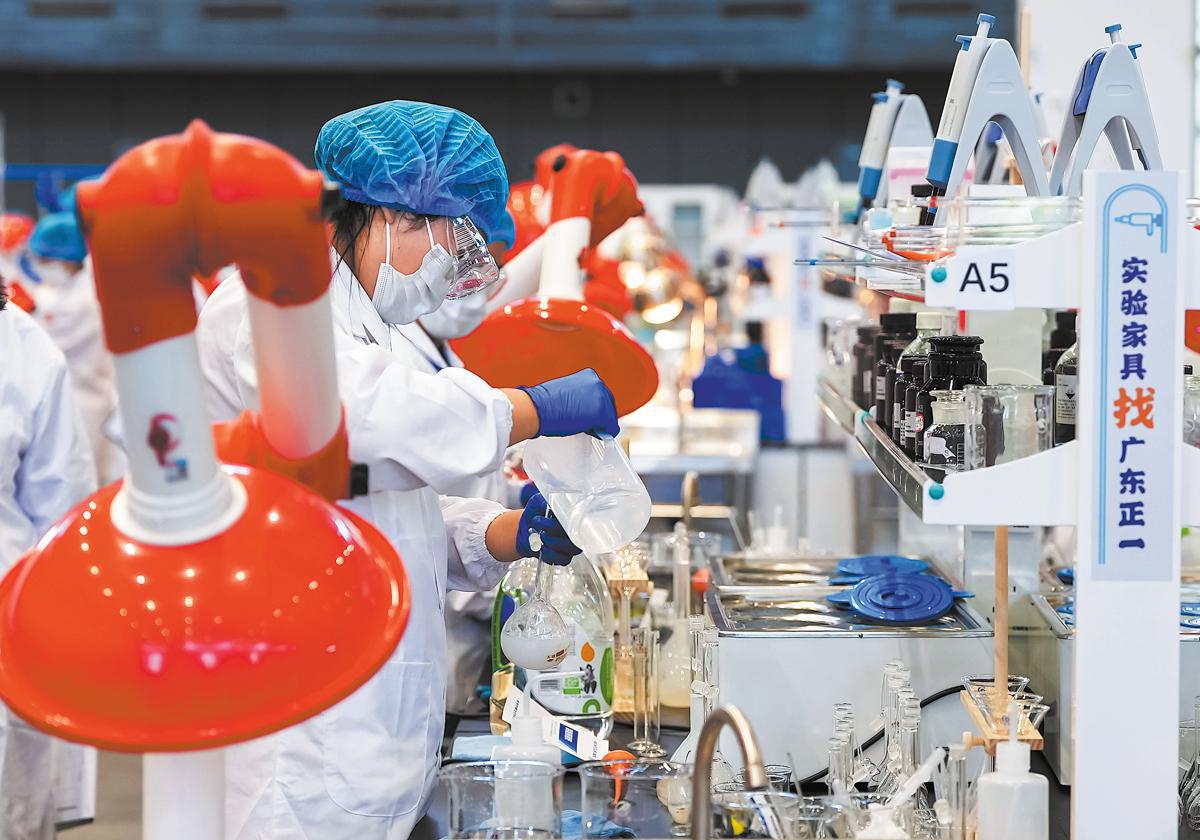
Contestants make solutions in the laboratory testing skills competition. [Photo provided to CHINA DAILY]
For Li, the competition was a transformative experience that showcased how dedication to craft builds not just individual careers but also contributes to national development. In workshops, classrooms and competition halls across China, a new generation of skilled professionals is rising, ready to meet the challenges of tomorrow with expertise, innovation and unwavering commitment to excellence.
For Min Sida, a 21-year-old nursing student from Shanghai University of Medicine & Health Sciences, the health care category presented a unique set of challenges.
All communication with standardized patients had to be conducted entirely in English, requiring not just language proficiency but also the ability to identify both physical needs and psychological concerns, he said.
"The biggest challenge wasn't just the English," Min said. "It was projecting genuine warmth and approachability, especially as a male in a female-dominated profession."
He spent hours practicing in front of a mirror, refining his facial expressions and body language until they felt natural.
His training routine was rigorous. He practiced English dialogues daily, repeatedly refining his phrasing and tone. For technical skills, he focused on the competition's four key scenarios: hospitals, day care centers, long-term care facilities and home settings.
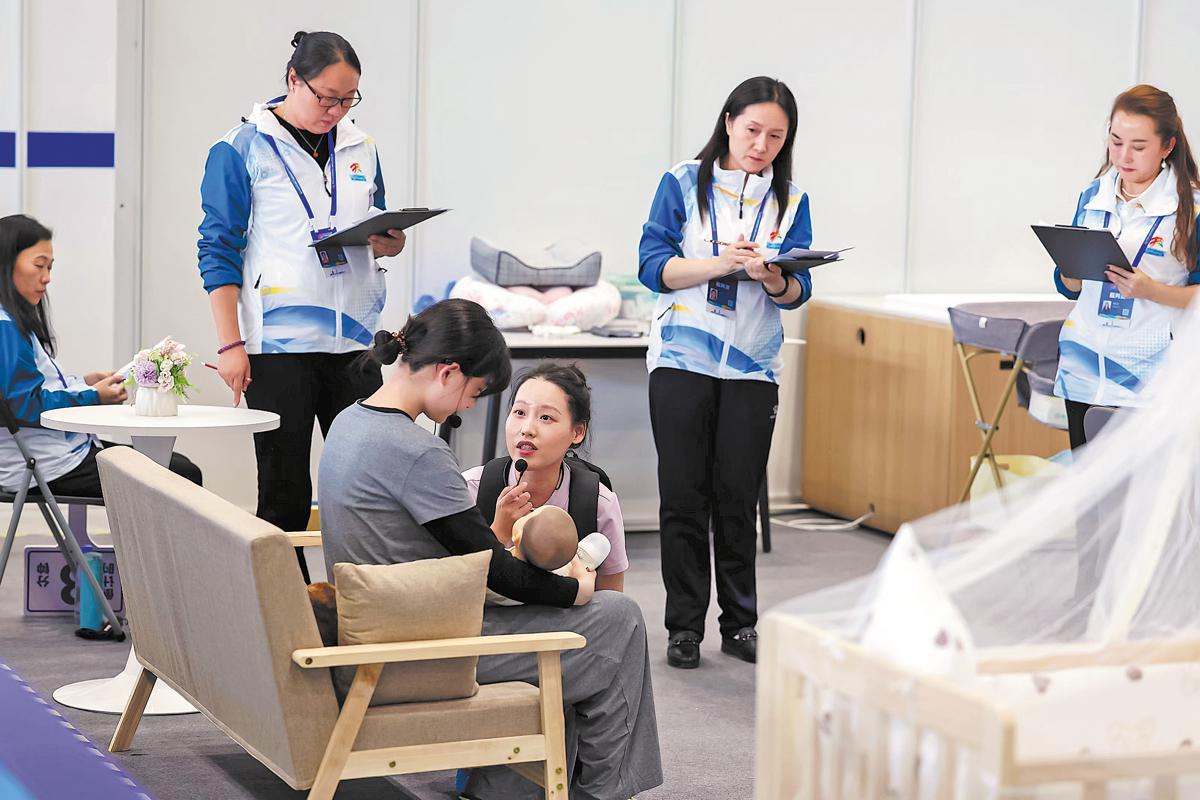
Judges evaluate contestants in the childhood care category. [Photo provided to CHINA DAILY]
Unlike traditional nursing, the competition excluded all invasive procedures, focusing instead on noninvasive care and communication.
Judging combined subjective and objective elements. The objective part focused on the standardization and completeness of tasks, while the subjective evaluation assessed non-verbal cues, communication fluency and English proficiency, he said.
Min said preparing for the competition has improved his professional skills greatly and how to put patients' needs first and listen to their needs. He is eager to start working and put what he has learned into real-world use.
Nineteen-year-old Zhou Le from Ningbo Technical College came away from the heavy vehicle technology competition with a unique perspective. Despite his team's history of winning gold medals in previous competitions, he saw his silver medal as a "valuable wake-up call" rather than a disappointment.
"The competition spanned three days and simulated real-world breakdowns of heavy equipment," Zhou said. He works with forestry machinery and engineering vehicles like excavators, rollers and tractors.
What makes heavy vehicle repair particularly complex is that these aren't ordinary vehicles, Zhou said. They're industrial machinery with intricate systems designed for tough work environments. The competition involves diverse vehicle models and fault types, requiring extensive training to master, he said.
After the competition models were announced, Zhou dedicated three full months to preparation. "Training can be tedious at times," he said. "But the joy of learning new skills and the sense of accomplishment when a repaired vehicle starts up — it's like solving a challenging puzzle."
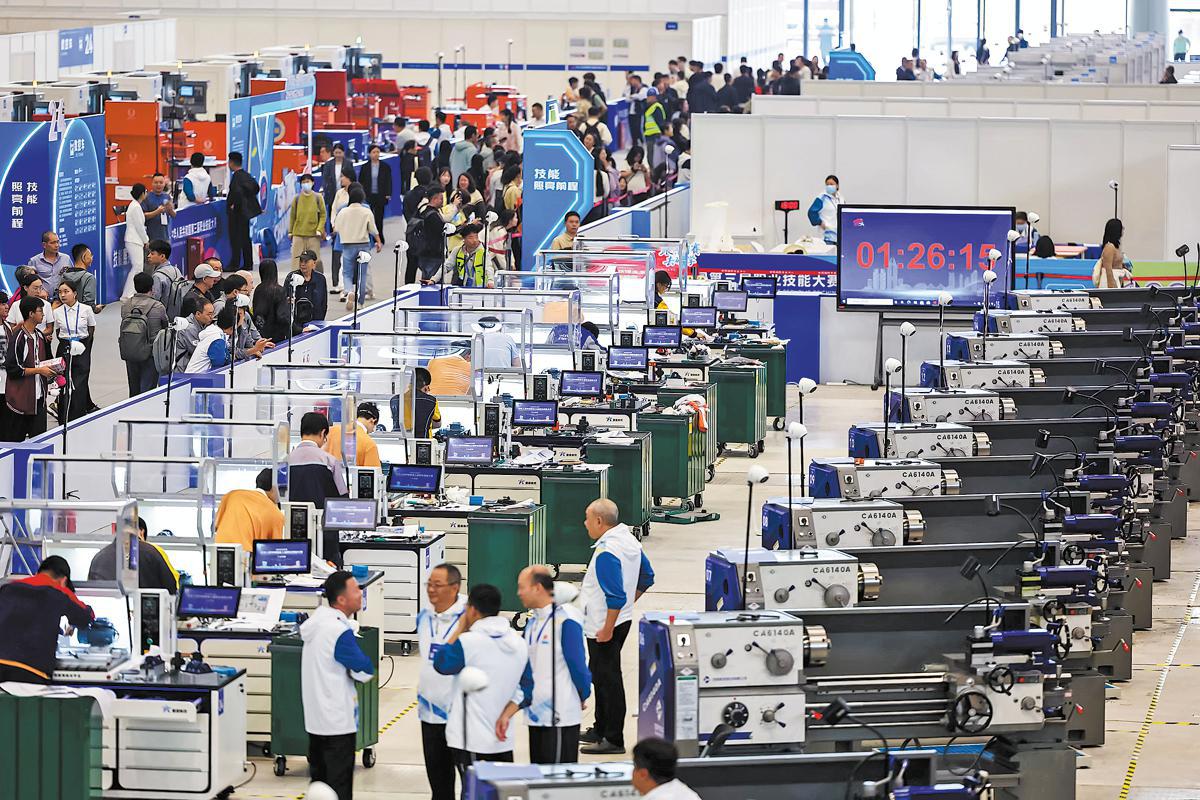
Contestants compete in the digital machinery discipline. [Photo provided to CHINA DAILY]
Beyond technical skills, Zhou valued the industry exchange. "Every contestant has unique problem-solving approaches. Post-competition discussions let us share experiences and learn from each other."
Now qualified for the national team selection, he's determined to continue training for the 48th World-Skills Competition set to take place in Shanghai in September next year.
WorldSkills will attract 1,400 young people from more than 60 countries and regions to compete across dozens of skill categories, promoting vocational and technical education globally.
Xie Xin's journey to the national competition began during his undergraduate studies in social sports, when he became a certified coach and started working part-time at gyms. Now 28, he represented Jiangxi province in the national competition after winning the provincial championship.
The social sports guidance competition he participated in covered five comprehensive modules: physical fitness, movement instruction, professional knowledge quizzes, small-group classes and exercise program design.
"It's a rigorous test of both physical and mental strength," Xie said, adding that the three-day event left him physically and mentally exhausted.
The most challenging segment was the physical fitness contest held on the first morning. Contestants had to complete a grueling sequence: lifting six 40-kilogram sandbags and throwing them over a 1.7-meter-high bar, followed by a shuttle run with five markers spaced 4 meters apart, pushing a 100-kilogram resistance sled for 20 meters, and crawling 12 meters while balancing on a yoga ball.
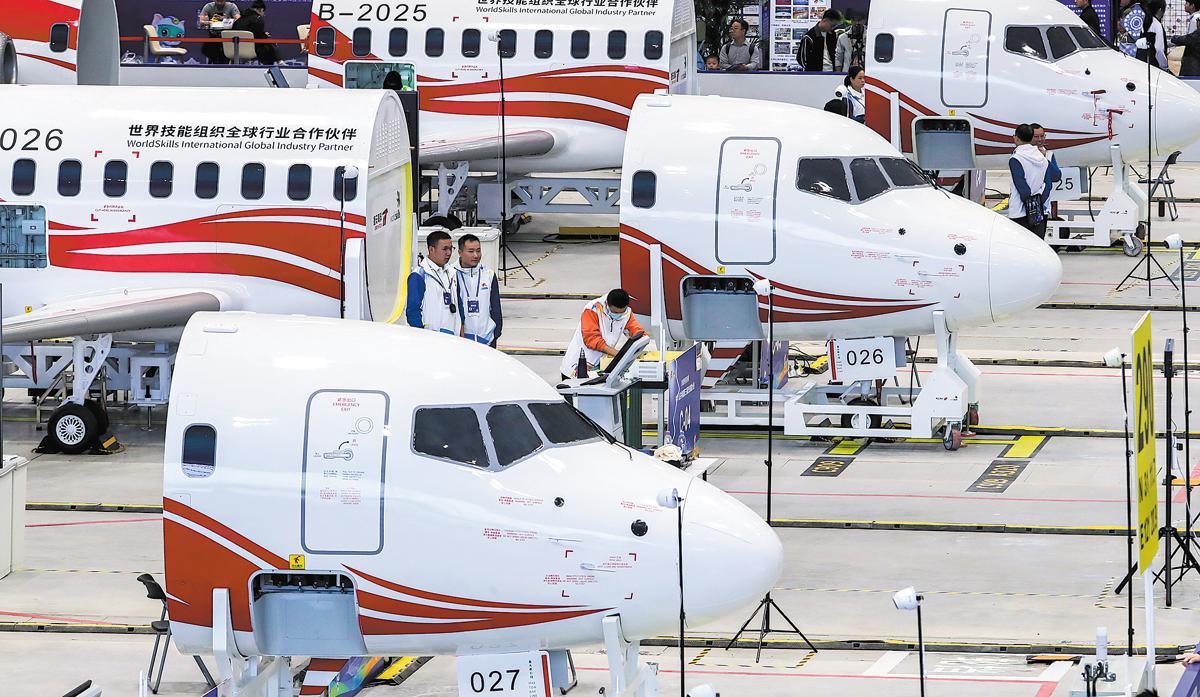
Judges oversee contestants in the aeroplane maintenance subject. [Photo provided to CHINA DAILY]
"After finishing, all athletes lay on the ground, needing a long time to recover," Xie said. He completed the segment in 2 minutes and 7 seconds, just 3 seconds behind the winner, with the event record standing at 2 minutes and 3 seconds.
Preparing for the national competition required a careful balance between work and training. "I spent two hours daily on physical training and reviewed professional knowledge after work or classes," Xie said. He took two weeks of leave from work before the event to refine movement instruction and small-group teaching with his coach.
Currently working as a part-time lecturer at Jiangxi College of Applied Technology, Xie sees growing opportunities in China's fitness sector. "The industry is thriving amid national initiatives like the 'Healthy China' strategy," he said. "Professional, positive coaches enjoy good income and social respect."
His coaching achievements speak to his expertise — he's helped a high school student gain muscle and widen his shoulders during summer training, and a female college student lose 6 kilograms in just one month. "Witnessing clients' transformations gives me an immense sense of accomplishment," he said.
Experts said beyond the personal triumphs of competitors, the competition highlighted broader trends in China's evolving skills cultivation landscape, as vocational education and high-skilled talent are driving national development.
They said regardless of education background, one can become a highly skilled worker and come up with innovative ideas to solve real problems once he or she puts the effort in.
Yang Weifeng's journey at Zhengzhou Yutong Group, a commercial vehicle maker in Zhengzhou, started in 2002 as a chassis assembly intern who meticulously recorded bolt fastening data.
Since then, he has evolved into a senior specialist in new energy and intelligent networking vehicles. "The most ordinary positions can achieve extraordinary results through dedication and innovation," he said.
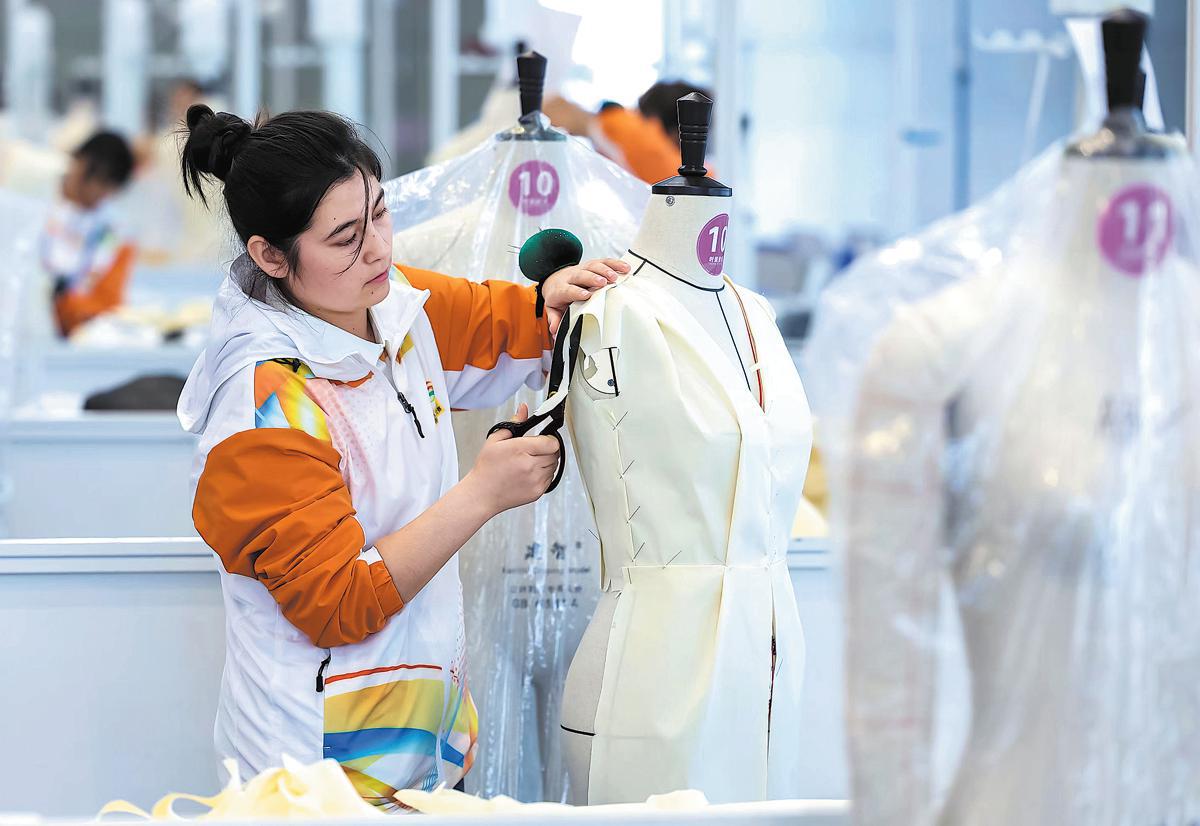
A contestant cuts fabric in the fashion tailoring competition. [Photo provided to CHINA DAILY]
Yang's career transformation demonstrates how skilled workers must continuously adapt to technological changes.
When Yutong established its new energy technology department in 2009, Yang found himself working alongside master's and doctoral graduates. His innovative spirit continued as he designed a "bolt-free" fixed structure cable clamp that reduced processing and installation time from 3.1 minutes to just 54 seconds.
Now working in intelligent networking, Yang emphasized that new technologies bring opportunities. "The more innovative the field, the more opportunities exist for those willing to learn, research and innovate," he said.
Shao Weijun, Party Secretary of Hangzhou Technician Institute, confronts the daily challenge of addressing how to ensure students' skills can be rapidly transformed into real productivity for enterprises.
Through collaborations with companies like BMW and Alibaba, the college has established five industrial colleges and 28 enterprise academies.
The outcomes speak volumes, with graduate employment rates reaching 99 percent with over 92 percent working in their trained fields, while enterprise satisfaction consistently exceeds 98 percent, he said.
These industry-education partnerships have attracted investment projects worth over 15 billion yuan ($2.12 billion) to the local region, demonstrating how skilled talent development directly fuels economic growth, he said.
zoushuo@chinadaily.com.cn
