
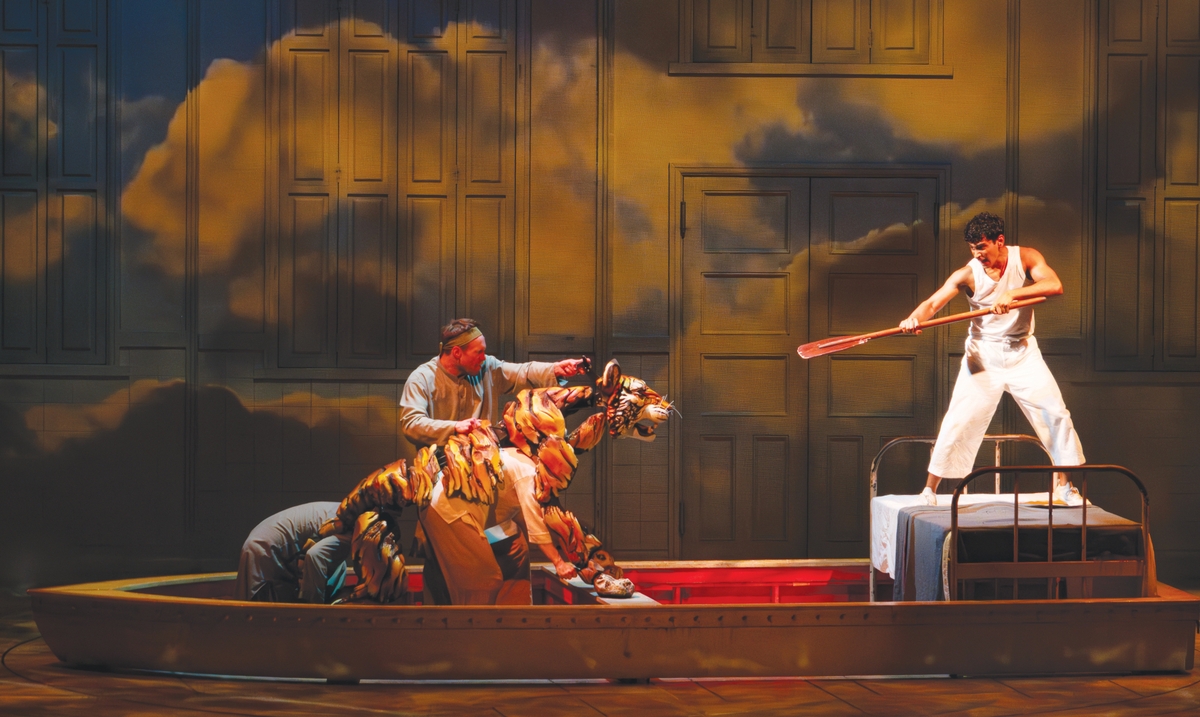
Creative lighting and stunning puppetry bring Life of Pi alive on stage. [Photos provided to China Daily]
London's Chinatown is in the middle of the British capital city, but it is also at the heart of another very distinctive city within a city: Theatreland.
What is collectively known as the West End comprises many venues across central London, but three of the most theater-packed roads, Shaftesbury Avenue, Charing Cross Road and St Martin's Lane, run close to Chinatown and are also financial arteries for London's tourist economy.
According to trade association the Society of London Theatre, for every one pound ($1.33) spent on a ticket, an additional 1.27 pounds are spent at local businesses such as hotels and restaurants, and with 17.1 million people attending West End shows in 2024, the West End's economic contribution to city life, as well as its cultural one, is huge.
With offerings ranging from the Agatha Christie murder mystery The Mousetrap, which has run at the St Martin's Theatre for 73 years, and Shakespeare plays, to musicals such as Just for One Day and comedies such as The Producers, there is something for all tastes.
As well as being popular with locals, 24 percent of all overseas visitors to London go to see a show, and with travelers from China making up a significant number of the capital's visitors, and being among its biggest spenders, a lot of those seats will be occupied by Chinese tourists.
So it is no surprise that, increasingly frequently, West End producers and performers are looking to build on that interest by performing in China.
Matilda, based on the Roald Dahl story about a book-loving young girl with magic powers, and the hugely popular The Phantom of the Opera are two shows that have recently toured China, to great acclaim. Two more award-winning hits that recently came to Shanghai Culture Square are Six and Life of Pi.
Six is an all-female pop musical, telling the story of the six wives of England's 16th century king Henry VIII, which has grown from a student theater project to an international phenomenon.
With a running time of 80 minutes and no interval to break its momentum, its exuberance and energy have seen Six win rave reviews around the world — and 23 major awards. A perfect fit for the social media era, it has built such a huge global fan community, known as the Queendom, that later this year there will be Japanese language performances of the show in London.
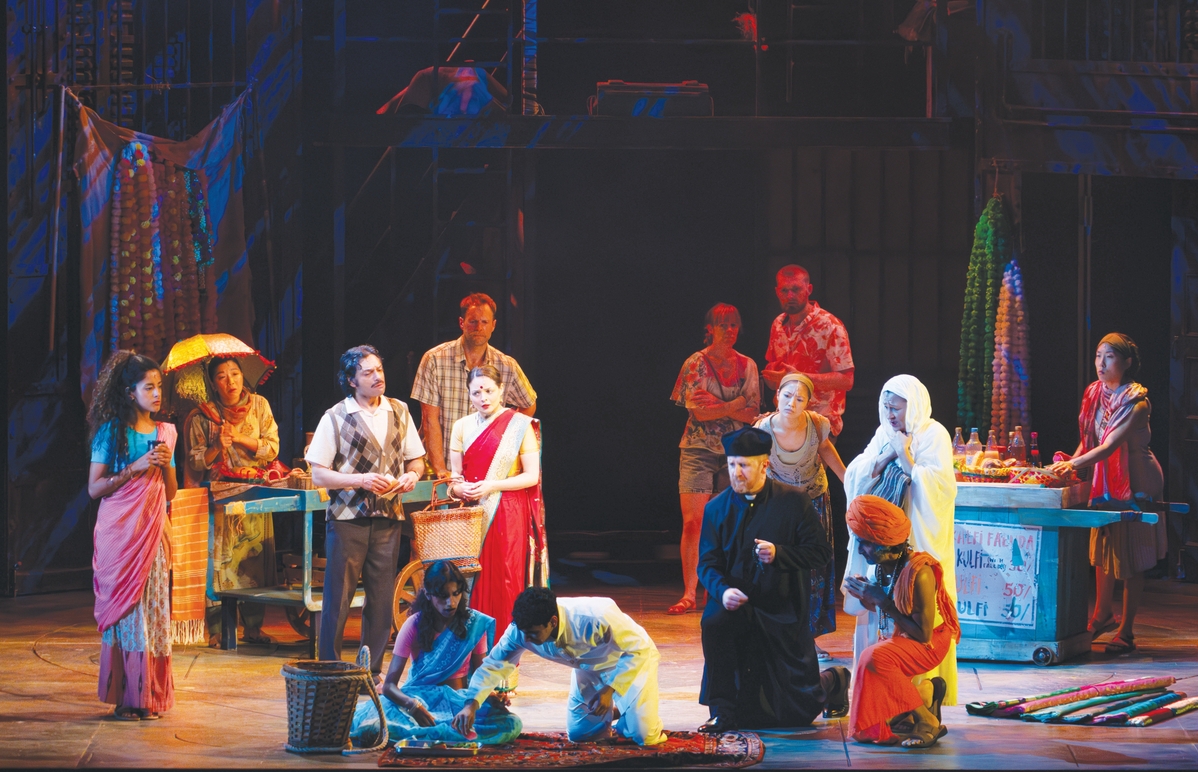
Lolita Chakrabarti's stage adaptation of Yann Martel's bestseller has won many awards in the West End and on Broadway. [Photo provided to chinadaily.com.cn]
Enthusiastic audiences
Life of Pi is a visually stunning staging of Yann Martel's best-selling book, also an Oscar-winning movie, about a boy who survives a shipwreck.
Tom de Keyser is chief executive of Royo, a production company with offices in London and Shanghai, that has taken Life of Pi, and also the thriller Agatha Christie's And Then There Were None, around China.
He told China Daily top class facilities, a rich local heritage and enthusiastic audiences made China one of the most exciting places in the world to operate.
"A few years ago, you'd only have played Beijing, Shanghai and Guangzhou, but now a lot of second-tier cities have developed fantastic state-of-the-art modern theaters and have built up a real appetite for high-quality theater, so we will now tour for 10-14 weeks, across many different cities, whereas previously we'd only have done two or three weeks," he explained.
Royo having British and Chinese staff working together in both countries means that in addition to its own productions, it helps other companies' shows get on the stage in China, making for a diverse performance schedule.
"Shows from all over the world are forming part of the program at these new theaters, alongside home-made Chinese performances, and that makes for a really eclectic program that you don't see in other countries, which also helps with engaging younger audience," he added. "It's not like there is an attitude that theater is just for one type of person."
Shanghai is a particular magnet for touring shows, and De Keyser called its principal venues, Shanghai Culture Square and the Shanghai Grand Theater, "two of the most magnificent state-of-the-art theaters I've ever seen anywhere in the world".
Someone who has had a chance to see Chinese audiences up close and can compare them to those in the West End and on New York's Broadway is performer and recording artist Kerry Ellis, known as the Queen of the West End.
Her resume includes many of the biggest roles in shows such as Oliver, Miss Saigon, My Fair Lady, Les Miserables and Wicked, on both sides of the Atlantic, as well as concert performances, which is what took her to Shanghai, first 12 years ago, and also this year.
"What I love about our industry is you can connect with people whether you speak the language or not, so I love to travel and perform all over the world and China is up there with my favorite places," she told China Daily.
"I was first there about 12 years ago in Shanghai, when I went with a concert show, doing hits from the musicals. I remember speaking to local audiences and promoters who said 'it's early stages (of development) so we can only do a bit of it', but the love for it is there.
"When I went back and did my own solo show at same venue, it was a 'pinch me' moment, to sell it out on my own. They don't see my shows and I'm not in their lives, so to have an audience across the other side of the world — that was a real moment for me, and to have that response there was incredible."
The Shanghai skyline has changed radically since Ellis's first visit, and so has China's theatrical landscape. "There's a real buzz about theater, there's been a real gear change, you can sense it with all the musicals going in and out, there's a hunger for it," she added.
Ellis will return to China for more performances next year, and said one cultural difference that had taken some adjustment was the respectful pre-show silence of Chinese audiences.
"In London or New York, there's always a hum from the audience before you go on, but in China it's not like that at all, which freaked me at out at first as I'd not experienced it before — you wonder if anyone is out there," she said.
"But then you go out to a wall of love and appreciation, so that took me by surprise a bit."
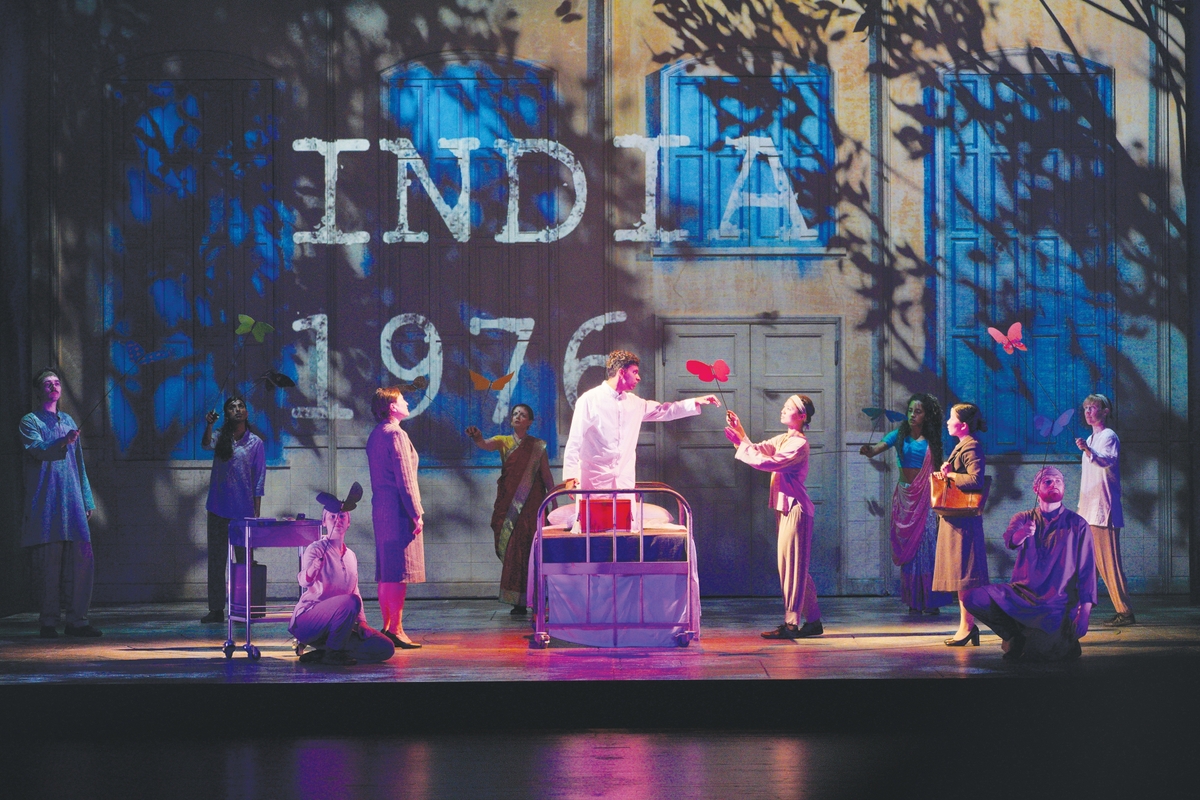
Life of Pi's extensive nationwide tour is a sign of China's growing appetite for international theater productions. [Photo provided to chinadaily.com.cn]
Strong work ethic
Like De Keyser, Ellis is full of praise for the standard of the facilities, calling them "from front of house to backstage, second to none", and she has also been struck by the dedication and professionalism of China's theatrical workers.
"From sounds to lights, to musicians to backstage, their work ethic is amazing — they care so much and they want to get it right. It's top-class professionalism throughout the whole system.
"The talent there is amazing, too — some of the musicians I've worked with have blown my mind. I know there's a big scene of young talented people who are coming up and want to be in shows and want to travel and be part of that theatrical world, so it's great to see."
Serin Kasif is business development director at Andrew Lloyd Webber's Really Useful Group, which has been taking his shows and productions including Cats, Evita and The Phantom of the Opera to China for more than 20 years.
She said the company's relations with local producers such as SMG Live were vital to its touring success in China. "For a show like Phantom, the decision on where we go and for how long is made very closely with our partners — we don't pretend to know what Chinese audiences want, which is why we work with producers and venues on what they want, we're in constant conversation to find what is the best fit," she explained.
China's long theatrical tradition meant that local audiences were excited to welcome visiting shows, she said, but also that they were discerning and knowledgeable about what they wanted to see.
"Chinese audiences, in my experience, are incredibly informed with a good sense of which titles are hits across the world, and which resonate with what they want to see, so they're not coming blindly … they make very informed decisions."
Phantom will return to China in the fall, as part of what Kasif called a "pipeline of productions" that continues to take shows to China, and as the Really Useful Group looks back at more than two decades of work in China, it remains committed to strengthening its ties with Chinese producers and audiences.
"These are incredibly inspiring relationships, working with the best in class in China, and while they would probably say that they learn a lot from us, I would say we've learnt a lot from them as well — I'm constantly excited when I get to work on projects with partners in China," said Kasif. "We want to take more of our shows and be able to honor our Chinese audiences, because they are such a loyal fanbase."
Like the Really Useful Group, Royo also foresees a busy future in China, including more concerts by West End stars, and another major Agatha Christie production. But in a nod to its roots in two countries approach, there is the prospect of some of China's top performers making the reverse journey.
"What shows we can bring here is something we do discuss a lot," said De Keyser. "For many years, London has been a hub of some of the world's best theater so I think there would be real interest in bringing Chinese theater here, partly for the Chinese population, but also because of so many British people's interest in a culture as rich as China's."
Contact the writer at julian@mail.chinadailyuk.com.
