
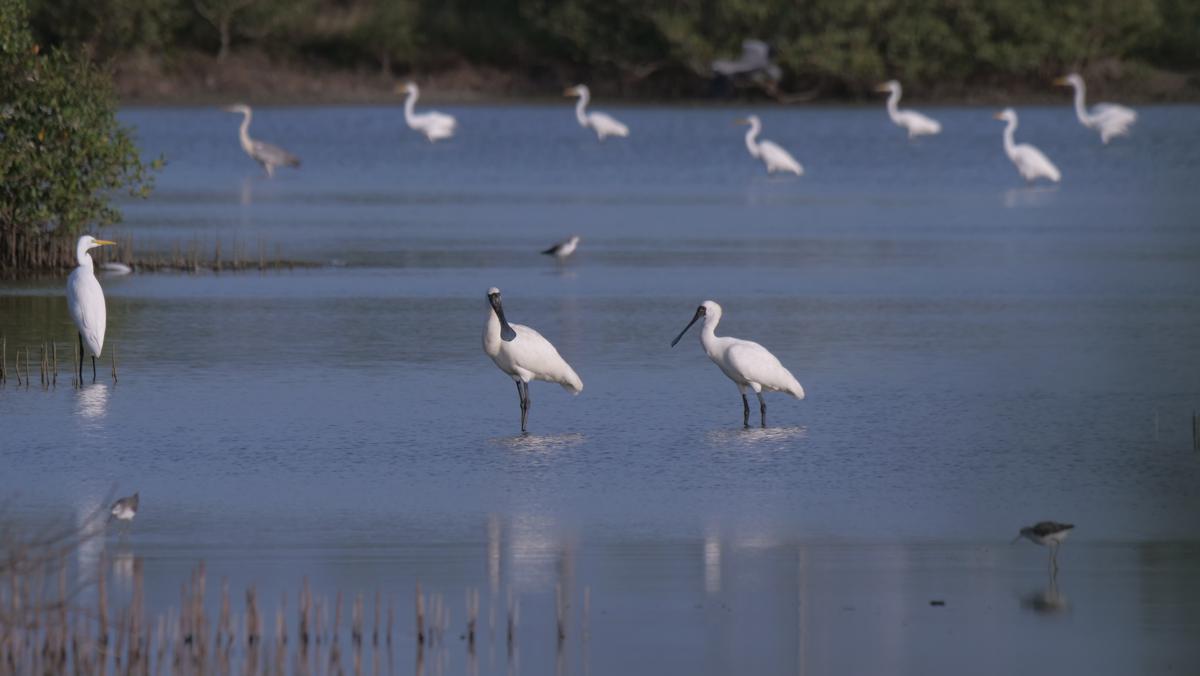
A flock of black-faced spoonbills are pictured at a nature reserve in Dongfang city, Hainan province. [Photo by Huang Zijun/For chinadaily.com.cn]
A provincial nature reserve in Hainan province has become a critical success story for wetland conservation, with populations of the endangered black-faced spoonbill quadrupling over the past decade.
The Black-faced Spoonbill Nature Reserve in Sibi Bay, Dongfang city, was established in 2006 to protect the rare migratory bird and its mangrove habitat. Recognized as a nationally important wetland in 2020, the reserve has since implemented measures that have led to a dramatic recovery in wildlife.
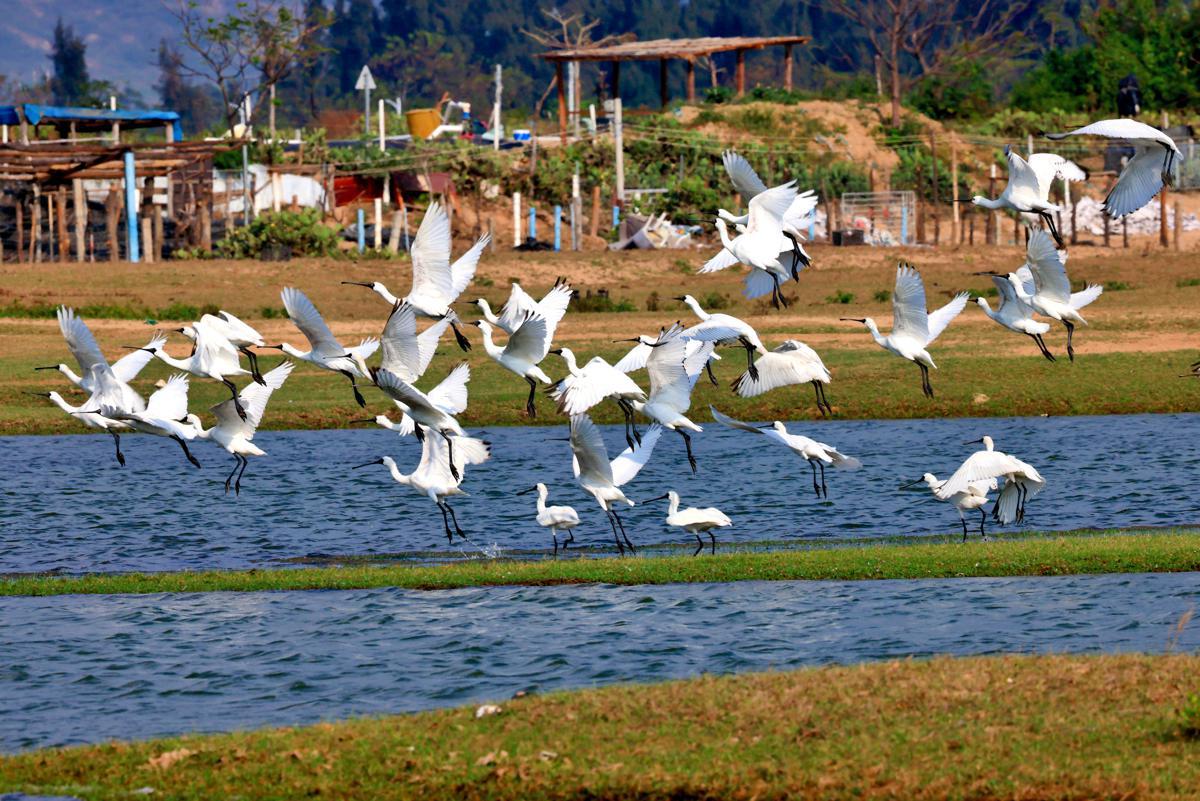
A flock of black-faced spoonbills fly over a wetland in Dongfang city, Hainan province. [Photo by Chen Kaikui/For chinadaily.com.cn]
The black-faced spoonbill is considered the flagship species of waterbird conservation in East Asia. It's classified as a globally endangered species and is under class one protection in China.
In 2015, only 34 black-faced spoonbills were recorded in Sibi Bay. By 2025, that number has soared to 120 - a nearly fourfold increase.
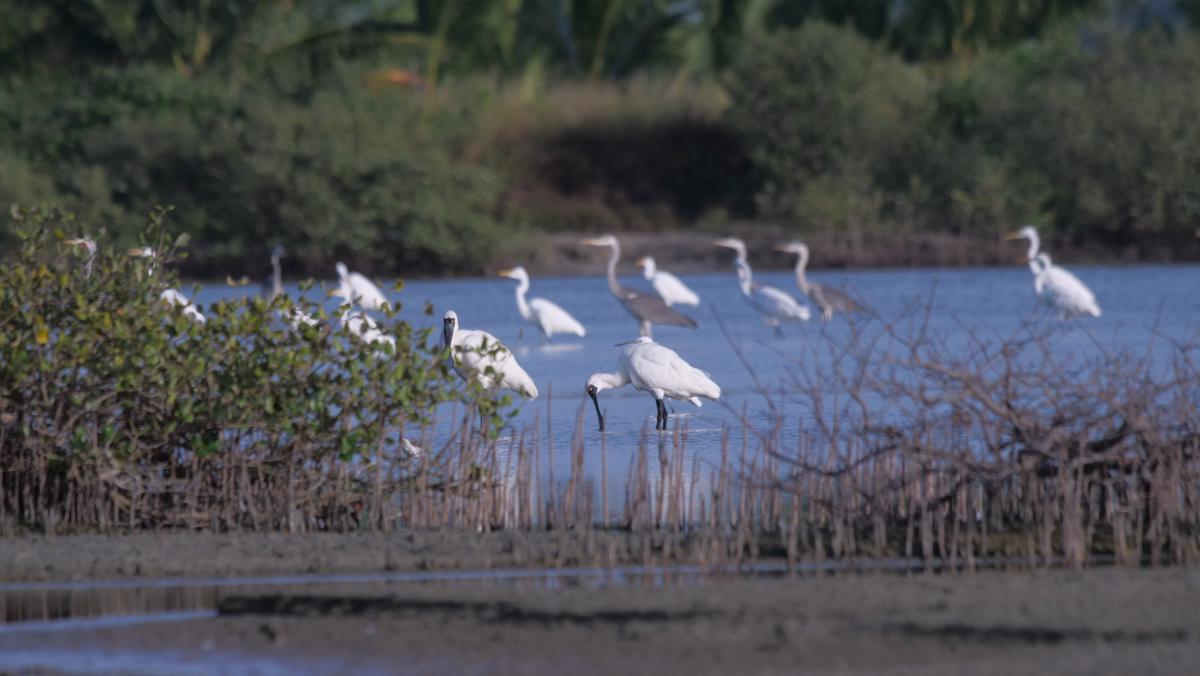
A flock of black-faced spoonbills are pictured at a nature reserve in Dongfang city, Hainan province. [Photo by Huang Zijun/For chinadaily.com.cn]
Conservation efforts include removing 850 acres of aquaculture ponds to restore natural tidal flows and rebuild food sources, shutting down wind turbines to prevent bird collisions, replanting native mangrove species while removing invasive plants and compensating local communities with monthly payments to reduce fishing disruptions.
The broader avian population has also surged, from 5,000 birds in 2023 to 7,000 in 2025, with 31 new species documented, including the cotton pygmy goose and black-winged kite. Experts credit the rebound to improved mangrove health, expanded food supplies and reduced human interference.
Since 2020, the reserve has cleared invasive species and replanted native mangroves, strengthening coastal resilience against storms and filtering pollutants. Bird species in the area have jumped from 75 to 106, while eco-tourism has flourished, drawing over 100,000 visitors annually for events like "Bird-Loving Week" and "Wetland Day".
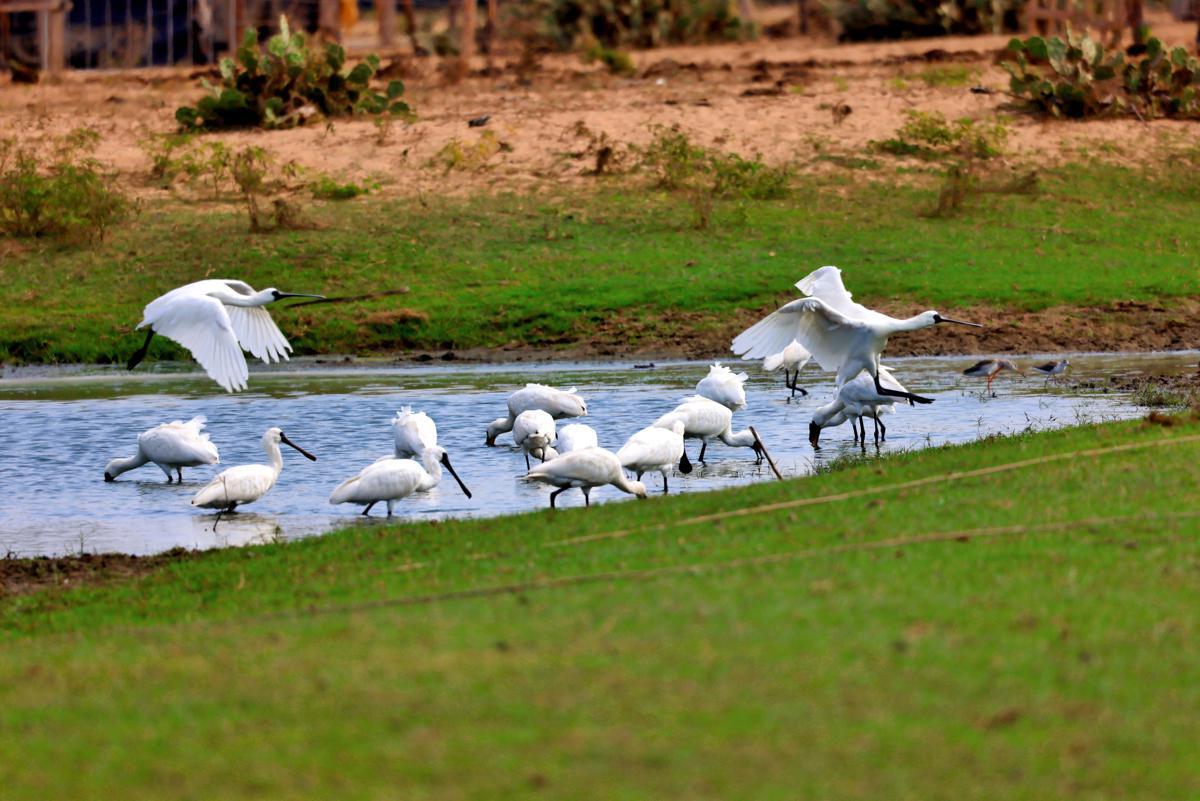
A flock of black-faced spoonbills is seen at a nature reserve in Dongfang city, Hainan province. [Photo by Chen Kaikui/For chinadaily.com.cn]
To gain local support, the Dongfang city government has implemented an ecological compensation program that pays villagers living near the nature reserve monthly subsidies of 50 yuan ($6.85) per person, local officials said. In 2024 alone, the program distributed 1.9 million yuan to 3,158 residents in an effort to reduce human activity in sensitive wetland areas. Meanwhile, patrols and education programs have heightened public awareness.
This reserve shows how science-based conservation can revive ecosystems while benefiting communities. Its success offers a model for global wetland protection as climate and habitat pressures intensify, according to local officials.
