
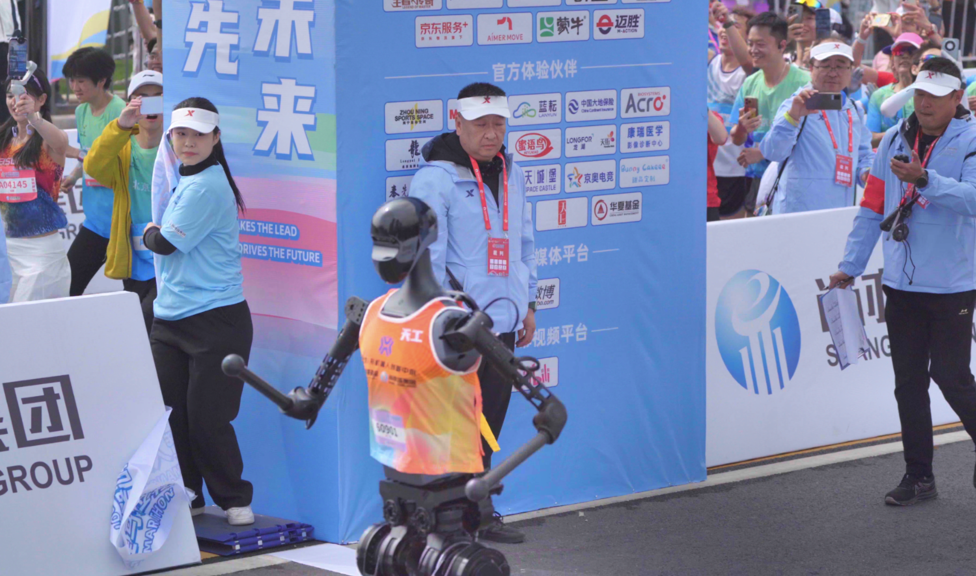
The world's first humanoid robot half-marathon concluded in Beijing's Economic-Technological Development Area on Saturday. [Photo by Qi Yichao/chinadaily.com.cn]
In a historic fusion of cutting-edge technology and athletic endurance, the world's first humanoid robot half-marathon concluded today in Beijing's Economic-Technological Development Area, where 20 robots and thousands of humans challenged themselves on a 21.0975-km course.
The standout robot performer "Tiangong Ultra", developed by Beijing Humanoid Robot Innovation Center, which crossed the finish line in two hours, 40 minutes, and 42 seconds, won the first place.
Designed for marathon-level endurance, the robot boasted a peak speed of 12 km/h and an average pace of 7.88 km/h. Standing 1.8 meters tall, it features large strides, optimized joint torque and human motion data integration to achieve a more natural running gait.
A robot developed by a Beijing-based company Noetix Robotics, won the second place with the result of three hours, 27 minutes, and 50 seconds. The team changed robot player once during the race.

The world's first humanoid robot half-marathon concluded in Beijing's Economic-Technological Development Area on Saturday. [Photo by Qi Yichao/chinadaily.com.cn]
Compact at 1.2 meters tall, it achieved 3.5 m/s sprint speeds and acrobatic maneuvers such as jumps and flips.
Jiang Zheyuan, founder of Noetix Robotics, said as long as their robot crosses the finish line, it means a lot to them.
"The marathon is an 'extreme test' that will expose technical flaws and offer a foundation for future standardization," he said.
The third place was given to a robot team from Shanghai, which changed robots players twice during the competition.
The event, dubbed a "marathon of the future", marked a milestone in robotic innovation and human-robot collaboration.
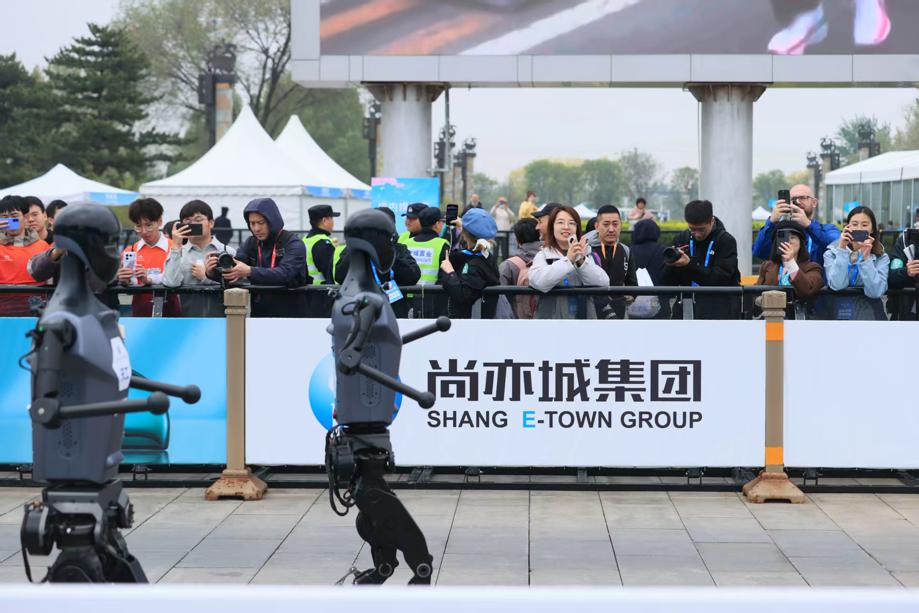
The world's first humanoid robot half-marathon concluded in Beijing's Economic-Technological Development Area on Saturday. [Photo provided to chinadaily.com.cn]
The race, featured a dual-track system where humanoid robots and human athletes started simultaneously but followed separate lanes secured by barriers or green belts.
Each robotic team comprised three human operators—engineers, controllers, or pacers—working in tandem to navigate the route, which spanned from Nanhaizi Park to Tongming Lake's National Innovation Park.
The competition adopted a timed race format. Teams can choose to either replace the batteries of a single robot or use a relay method, though each battery change comes with a 10-minute penalty.
The event served as a proving ground for humanoid robots' practical roles.
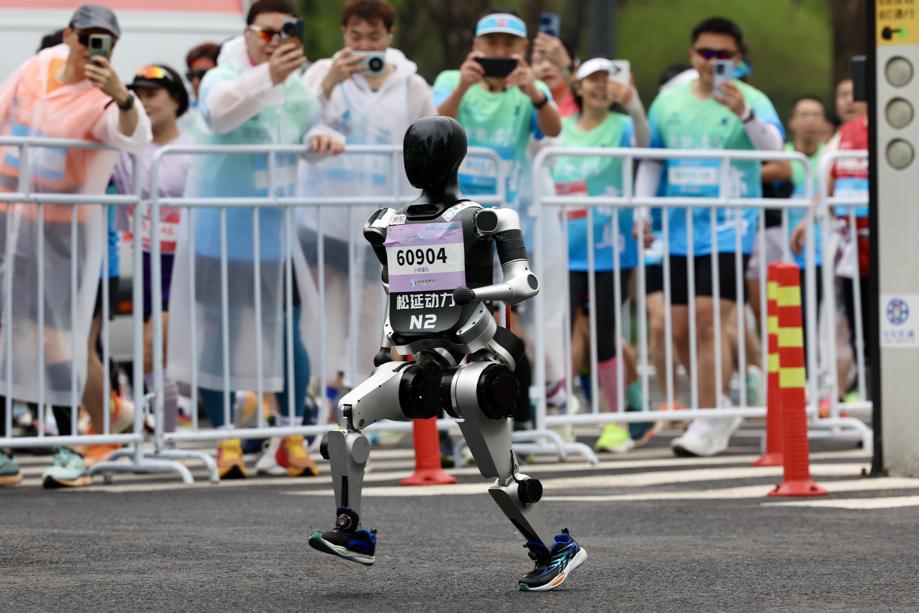
The world's first humanoid robot half-marathon concluded in Beijing's Economic-Technological Development Area on Saturday. [Photo by Wei Xiaohao/chinadaily.com.cn]
"This marathon isn't just about speed; it's about validating reliability for disaster response, elderly care, and logistics," said Liang Liang, deputy director of the management committee of the Beijing's Economic-Technological Development Area.
"Seeing the robots fall and rise again, I felt so excited that they are making the history, which in accordance with every generation of technology development in the past, that is to face the challenge and make it through," said Fan Fan, an audience member.
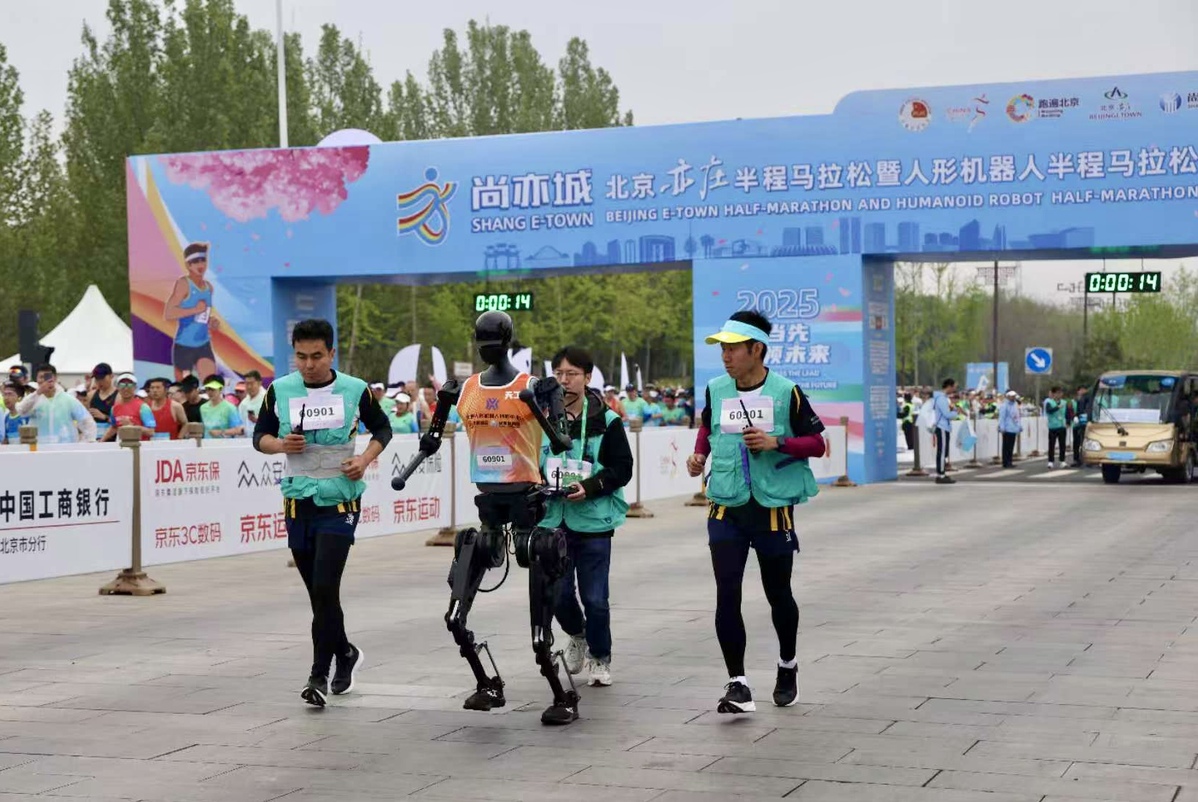
The world's first humanoid robot half-marathon kicked off at Yizhuang, Beijing on Saturday morning. [Photo by Wang Jing/chinadaily.com.cn]
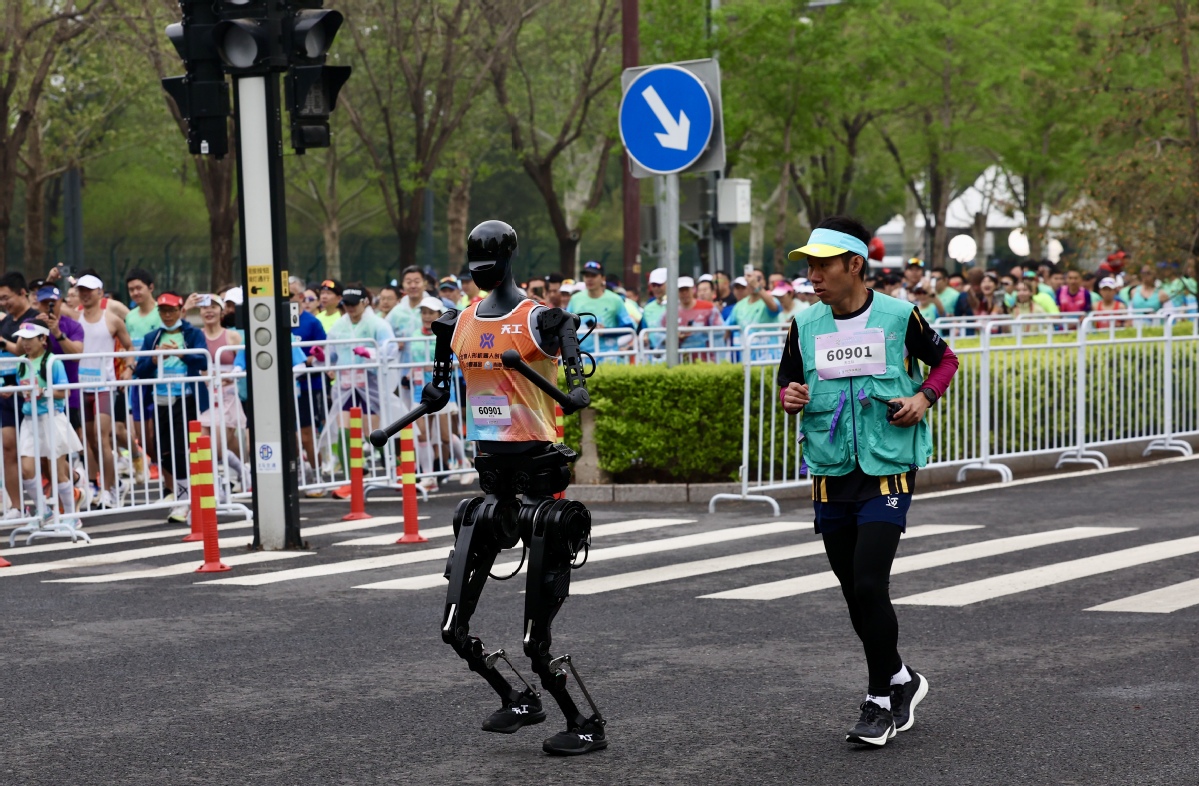
The world's first humanoid robot half-marathon kicked off at Yizhuang, Beijing on Saturday morning. [Photo by Wei Xiaohao/chinadaily.com.cn]

The world's first humanoid robot half-marathon kicked off at Yizhuang, Beijing on Saturday morning. [Photo by Wei Xiaohao/chinadaily.com.cn]
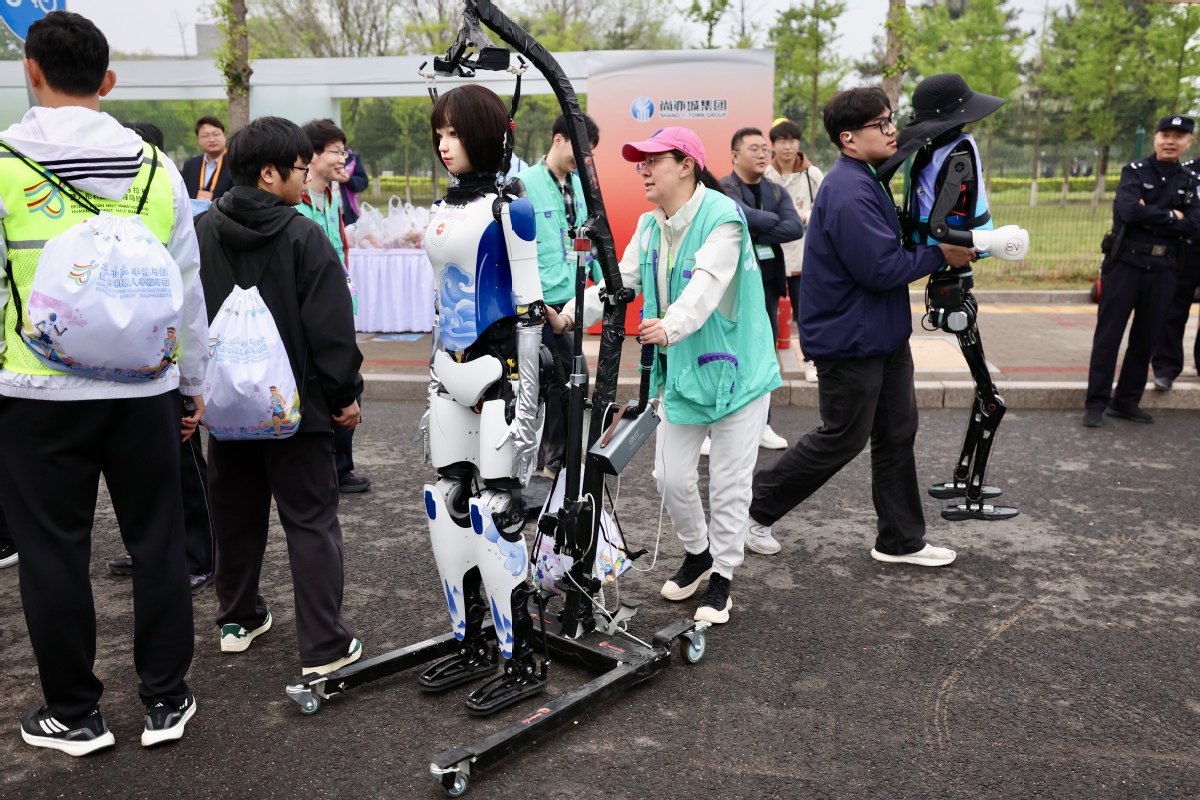
During the pre-competition preparations, a staff member uses support devices for a robot. [Photo by Wei Xiaohao/chinadaily.com.cn]
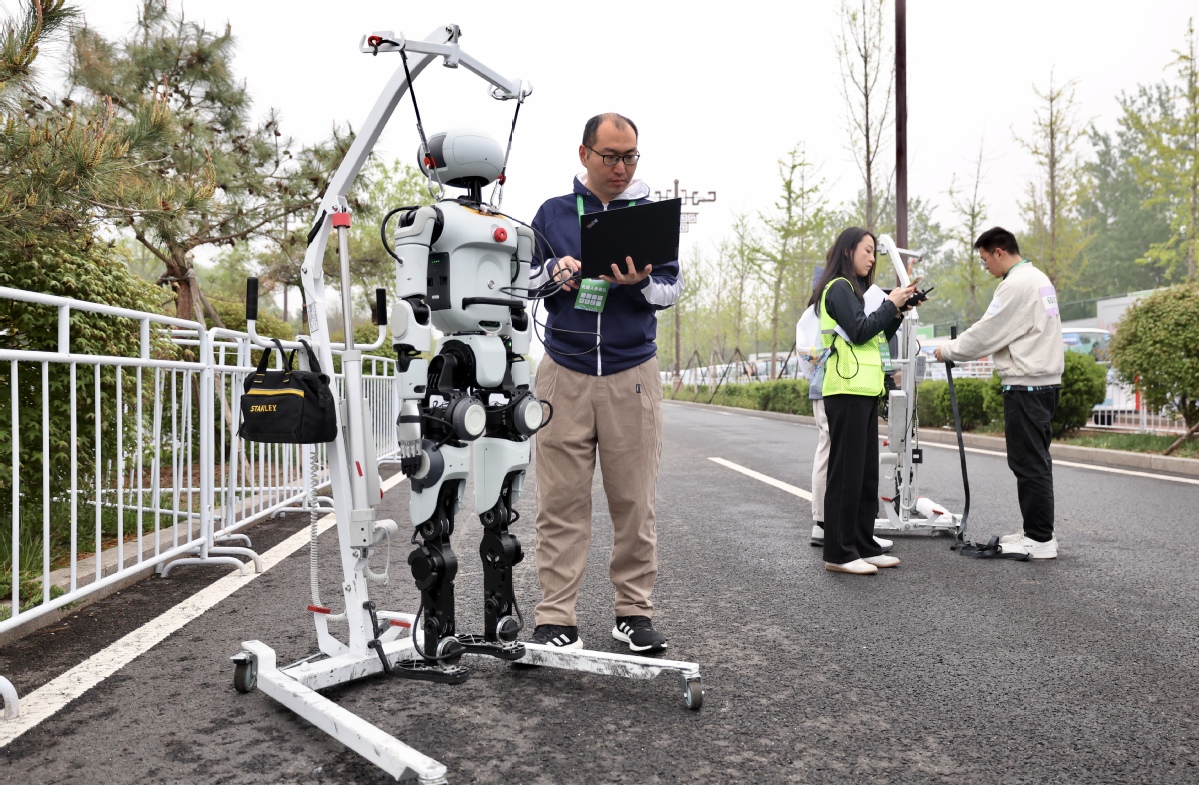
During the pre-competition preparations, many staff members use support devices for their robots. [Photo by Wei Xiaohao/chinadaily.com.cn]
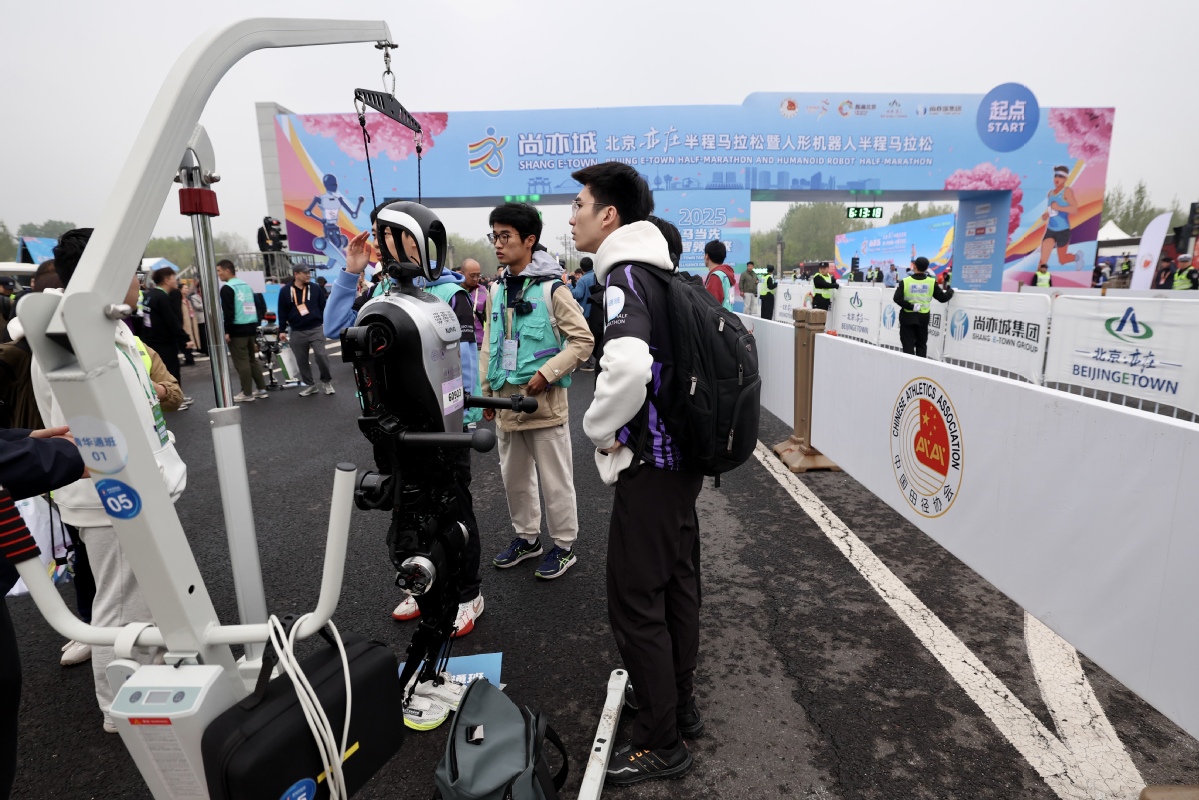
During the pre-competition preparations, many staff members use support devices for their robots. [Photo by Wei Xiaohao/chinadaily.com.cn]
