
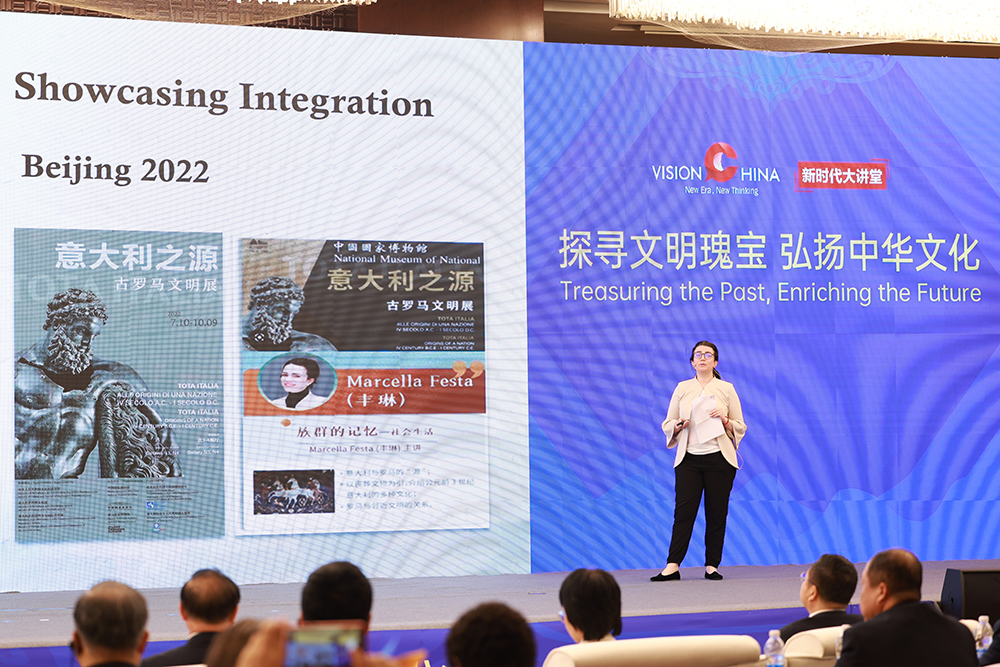
Marcella Festa, associate professor at the School of Cultural Heritage of Northwest University
As an archaeologist, it is my privilege to uncover the secrets of ancient civilizations and piece together the stories that have shaped our world. These stories are shared histories, which foster a deeper appreciation for the diversities and commonalities that define humanity, and by doing so, enriches our understanding and educates and inspires future generations.
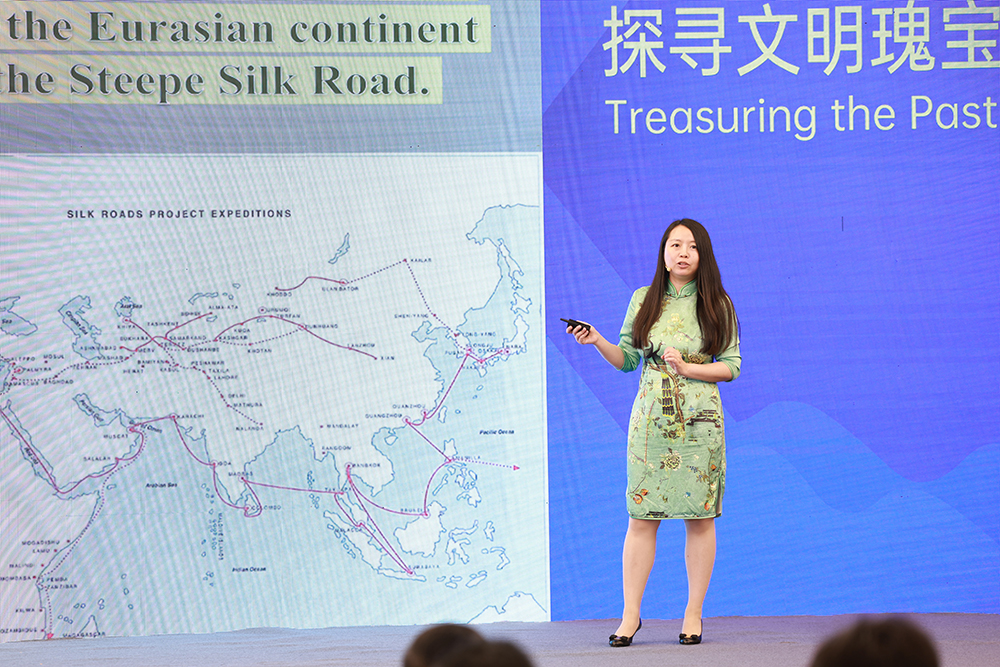
One of the most iconic examples of cultural integration is the Silk Road, an ancient network of routes that for centuries connected Asian and European civilizations.
In the contemporary world, the legacy of the Silk Road continues through initiatives like China's Belt and Road Initiative, launched in 2013. This initiative not only seeks to foster economic integration but also enhances regional connectivity, facilitating cultural and educational exchanges on a global scale.
One of the ways in which archaeology helps to connect the world is through exhibitions. These exhibitions are not just about showcasing artifacts; they're about fostering cultural exchange and appreciation of cultural diversity.
In academic archaeology, the growing interest in an interconnected world is evident not only in the surge of articles published in academic journals on this topic, but also in the emergence of new journals in Europe and the United States dedicated to the Asian region, with a heavy focus on discoveries from China.
In archaeological research, we have witnessed an increase in collaborations among researchers from different countries, characterized by a growing number of scholarships, visiting student and scholar programs and joint research projects.
Archaeology has another crucial role — challenging and reshaping narratives. It has the power to debunk stereotypes or misconceptions about history and culture, fostering a sense of shared heritage. This shared heritage can promote mutual respect and understanding among different cultures in today's globalized world.
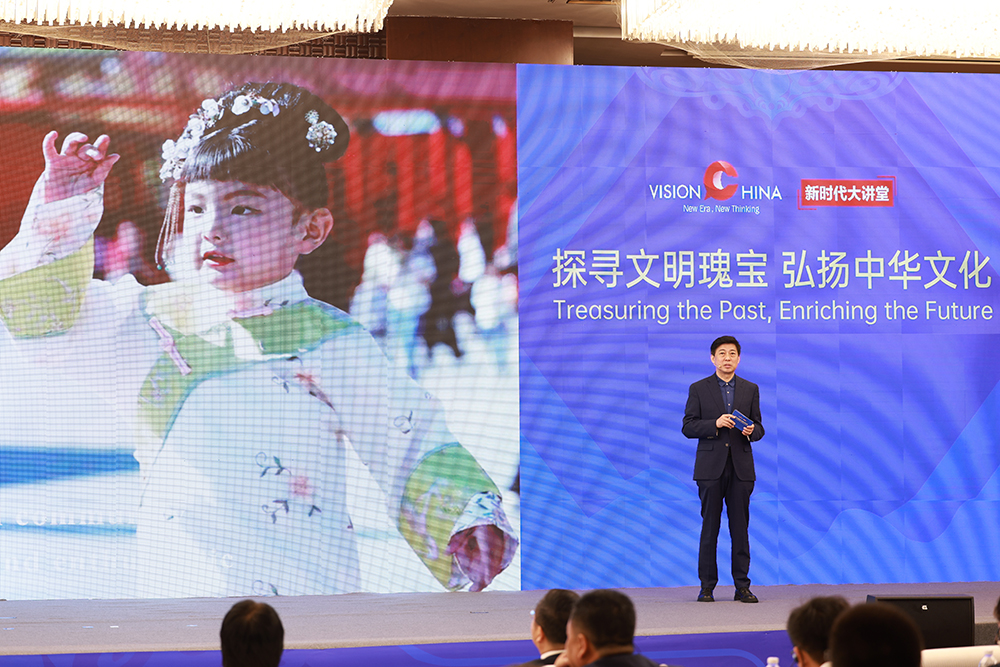
Zhu Yong, research librarian at the Palace Museum, director of the Palace Museum Cultural Communication Researcher Institute
Chinese civilization is essentially a diversified and integrated civilization. Dating back 6,000 years, from the present-day Liaoning province in the north to Liangzhu in today's Zhejiang province in the south, the sparkles of civilization shone across the vast land of China. Su Bingqi described it as a "sky full of stars". Among these "stars", the Hongshan culture in Liaoning shines particularly brightly.
Liaoning is located at the forefront of where the fishing and hunting culture that once boomed met the agrarian culture that had China's Central Plains as a hub, as well as grassland culture. Hongshan culture, by absorbing advanced elements from the Central Plains agrarian cultures, was the first to usher in the dawn of civilization.
Various systems of civilizations, in their process of development and spread, merged and converged. This continuous transformation has led to the optimization and growth of itself, making the Chinese nation a melting pot of many cultures and different ethnic groups. The characteristics of consistency, originality, uniformity, inclusiveness and peacefulness are exemplified in a very typical way in Liaoning.
Liaoning's geography is not closed but open, whether traveling from north to south through Liaoning into the Central Plains, west into the Inner Mongolia autonomous region today, or east to the Korean Peninsula. This freedom of movement provided by the open landscape allowed for the formation of an economic and cultural community shared by various ethnic groups.
Liaoning's culture reflects the continuity of Chinese civilization, the innovative acceptance of new things, the unity that brings people together, the inclusiveness that embraces diversity, and the promotion of coexistence, harmony and peace. It shines as an outstanding example of the prominent features of Chinese civilization.
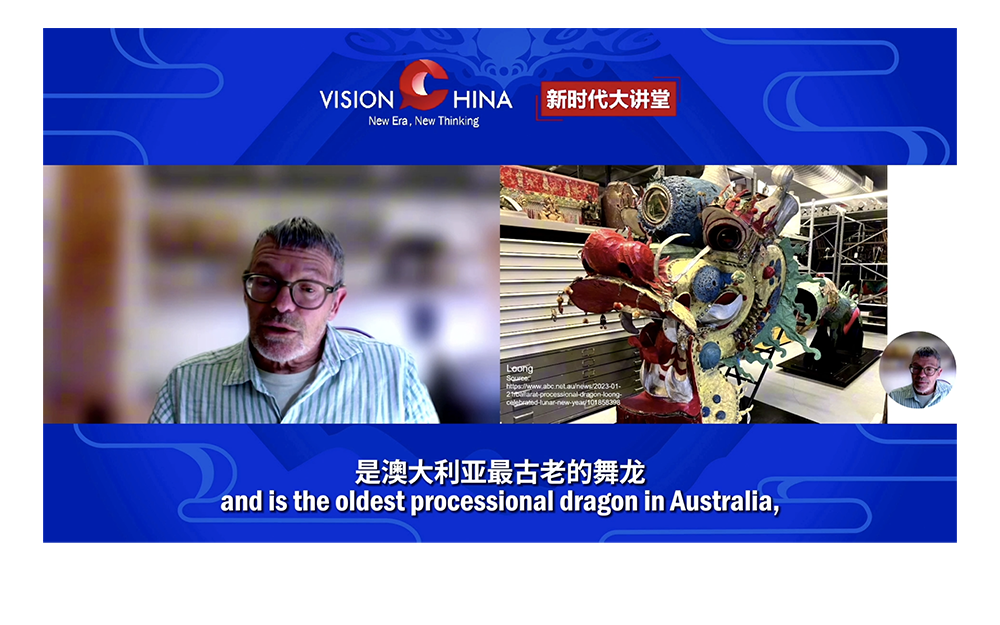
Steve Brown, senior research fellow at the University of Canberra's Centre for Creative and Cultural Research
Australia has a rich heritage that expresses the story of migration working and living in Australia.
For example, the Huawang Chinese Temple and Museum, located in the tropical region of Far North Queensland, is the last timber and corrugated iron Chinese temple in Australia.
Established in 1903, most of the temple fittings, including the elaborate carvings, the bell and metal vessels, were made in China and transported to Australia.
Australia's heritage consists of three categories. First, indigenous or First Nations heritage. Australian Aboriginal people have lived in Australia for more than 65,000 years and occupied all parts of the continent's landscapes.
These landscapes are rich in stories as much as they are in built structures, history and heritage. The best known heritage structure in Australia is the Sydney Opera House, shown here in its beautiful setting in Sydney Harbor.
It is important to note that no landscape in Australia is entirely natural. All landscapes are the product of natural systems, indigenous land use and migrant settler work and leisure.
While some places are listed on the UNESCO World Heritage List, and many important objects are in museums, much of our heritage is the everyday things that individuals and families love and value.
I express my warmest, the most sincere wishes for a happy and joyous Chinese Cultural and Natural Heritage Day. Please do celebrate the biggest and best heritage of your (Liaoning) province, but also the everyday family heritage and stories that are so important to our modern societies. By treasuring a past whether in Australia, China or elsewhere, we can enrich our future.
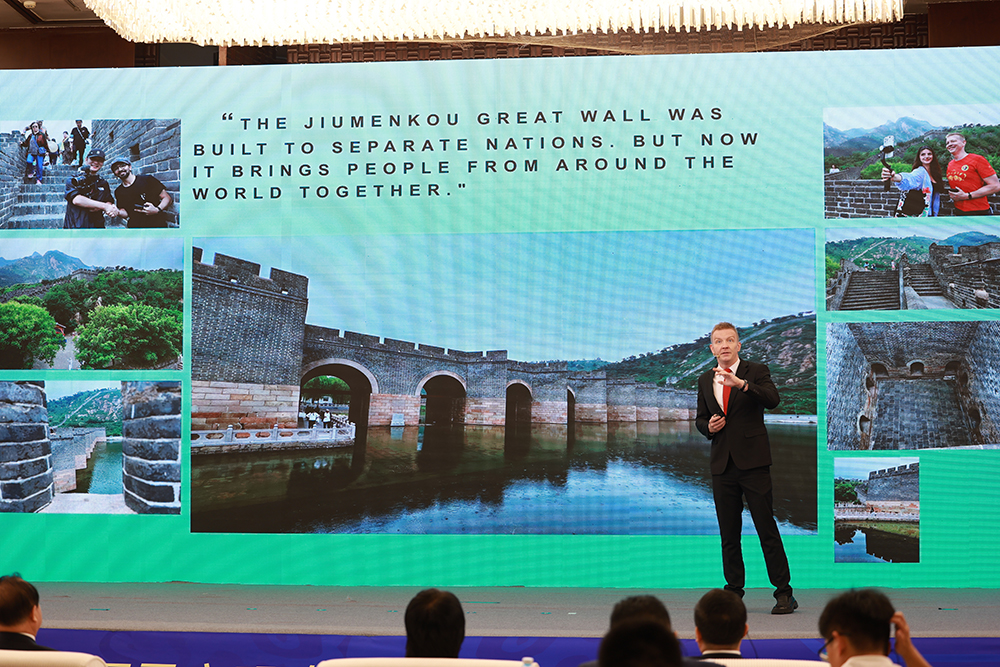
Erik Nilsson, senior journalist, core member of the Edgar Snow Newsroom, China Daily
Exchanges and innovations bring diversity to the DNA of cultures that evolve, in every sense, like species that must adapt to changing environments or face extinction.
For example, in today's China, Spring Festival hongbao are still red envelopes containing cash — albeit they are increasingly digital packets containing digital currency sent by WeChat.
Indeed, exchanges are as crucial to intangible culture's conservation as corporeal technologies are to the preservation of physical specimens.
One way we can think about cultural exchanges is like the ancient Silk Road transported to today and then, through digital technologies, from today to the future — like a digital Belt and Road.
While few of the tangible cultural items, like silk and porcelain, that were traded among civilizations along the ancient Silk Road physically survive today, many of the intangible cultural products that moved along these trade routes psychically remain — be they religions or recipes, musical instruments or culinary ingredients, artistic styles or mathematical concepts.
No matter who you are or where you are on this planet, these cultural exchanges from long ago and far away have shaped your life since you were born and will continue to do so for your children, their children and those born after them.
For all of human history, so many peoples have spoken their own distinctive dialects in their respective regions.
But increasingly, all of humanity speaks to one another in a shared language of ones and zeroes, not only rewriting the cultural exchanges of today, globally, but also their legacies beyond tomorrow, for our world yet to come and for time immemorial.
While technology can enhance cultural exchanges and preservation... there will always remain value in meeting person-to-person, face-to-face and hand-in-hand to better see eye-to-eye. That is, the personal touch in every sense of the phrase, the value of which can never be fully replaced with any number of ones and zeroes.
Zhong Lina, professor from the Beijing International Studies University
Imagine if time were to flow backward like a river, to 5,000 years ago. At that point, the early Chinese civilizations, including the Taosi and Longshan cultures in the Central Plains, would not have yet emerged from the water. But, the Niuheliang culture and the Chahai culture... would be floating serenely on the surface.
The academic community believes that over 5,000 years ago, there existed a primitive civilized society with the rudiments of a state structure in this region. At that time, Niuheliang was one of the few regions in the entire Chinese landmass to have reached this stage of development.
There are traces of agriculture, fishing, hunting and nomadic mixed cultures. The land of Liaoning was always in a state of endless vitality and change.
Liaoning is not just the connection between Northeast China and Central China, but more importantly, it is the key that connects Northeast Asia with the inland Eurasian world and even the Western world. It is the land-sea key that links the Eurasian continent of Northeast Asia and the Pacific Plate.
Geography played a very important role in the development of human history. The location of Liaoning determined that Liaoning's story influenced China and the world on a larger scale.
Right now, coastal and border areas in Liaoning are further opening up and cooperating with Northeast Asian countries, and smart manufacturing based on a complete industrial chain is taking off.
The profound culture came from the unparalleled geographical environment, and the geographical environment also determined Liaoning's unique value in countless takeoff processes of China.
