
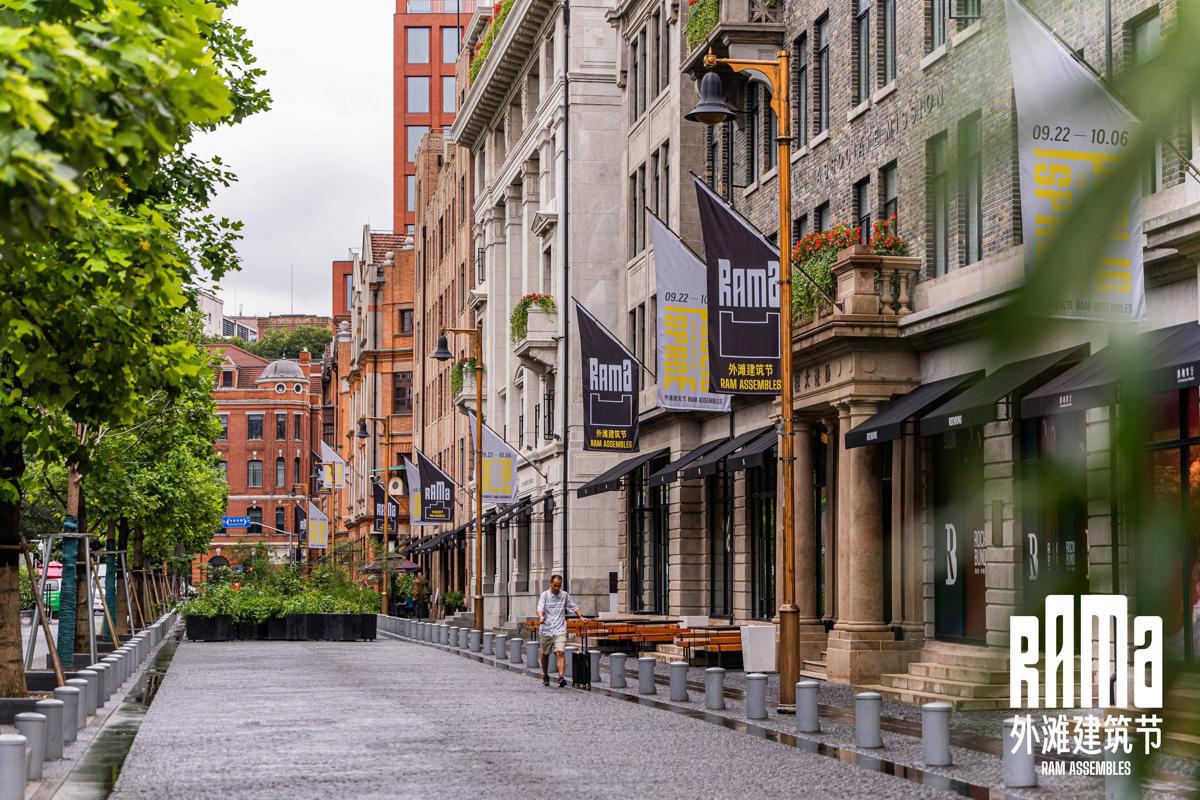
The Rockbund neighborhood, a collection of century-old architecture in the Shanghai Bund, reopened to the public on Friday after 17 years of renovations and adaptations. Photo provided to chinadaily.com.cn
The Rockbund neighborhood, a collection of century-old architecture in the Shanghai Bund, reopened to the public on Friday after 17 years of renovations and adaptations.
Located between Suzhou Creek and Nanjing Road East, the Rockbund contains six new constructions and 11 historic buildings built from 1896 to 1932, which combine European styles with Asian elements.
In 2007, David Chipperfield Architects was commissioned to restore, update and convert the historic buildings of the Rockbund and design a new extension to the Art Deco building, which now houses the Rockbund Art Museum.
Being one of projects that involves most historic buildings in Shanghai, the Rockbund project sought to create a symbiosis between the old and new buildings.

Architect David Chipperfield. Photo provided to chinadaily.com.cn
"The buildings carry memories as well as the original material. You can never build a new building more sustainable than keeping the old one and reusing it," said Chipperfield, also a Pritzker Prize-winning architect. "If you keep a building and renew it, you will win the race."
To mark the completion of the Rockbund project and the opening of the new museum entrance and Museum Plaza, RAM has introduced RAM Assembles.
RAM Assembles seeks to bring together diverse perspectives on both new and old architecture, engaging a wide range of fields concerning contemporary architecture, urbanism, art and design.
For each edition of this new biennial, the RAM team will choose an architect as an artistic director to create a new architectural intervention in the Rockbund neighborhood, with a specific focus on the Museum Plaza.
As Chipperfield was selected to serve as the first edition's creative director, he chose "Public Space" as his curatorial theme.
The public space stands for the areas between buildings that allow people to share space and time, which in Rockbund takes art beyond the museum walls and integrates it into daily life.
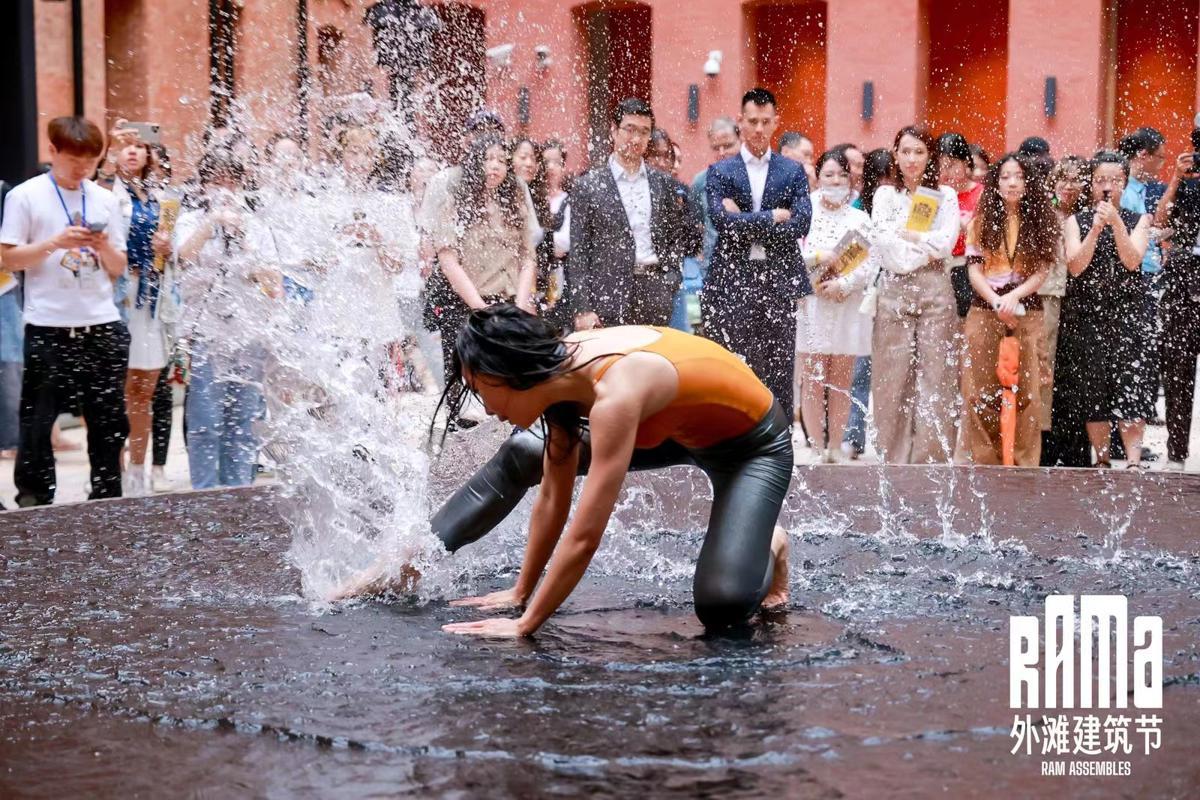
Several installations, staircases and small ponds, are designed to activate the interstitial public spaces. Photo provided to chinadaily.com.cn
The potential for the city to function in the common interests requires people to maintain an idea of what a city should be, and public space is always central to this vision, said Chipperfield.
"If we want to protect the quality of cities, we have to protect not only buildings, but the spaces in between, and we have to think about all of those things which contribute to the quality of life," he added.
Several installations, namely some staircases and small ponds, are designed to activate the interstitial public spaces. They are scattered throughout the Museum Plaza of the Rockbund area and its surrounding alleyways, providing the conditions for spontaneous public activities.
They will also integrate with the art and cultural agenda of RAM Assembles, catalyzing a series of synchronized, multi-location events during the festival.
From Sept 22 to Oct 6, more than 100 activities will occupy Rockbund's public space with the themes of "activation, conversation, and neighborhood", helping people perceive, use, design and respond to public space.
Zheng Zheng contributed to this story.
