
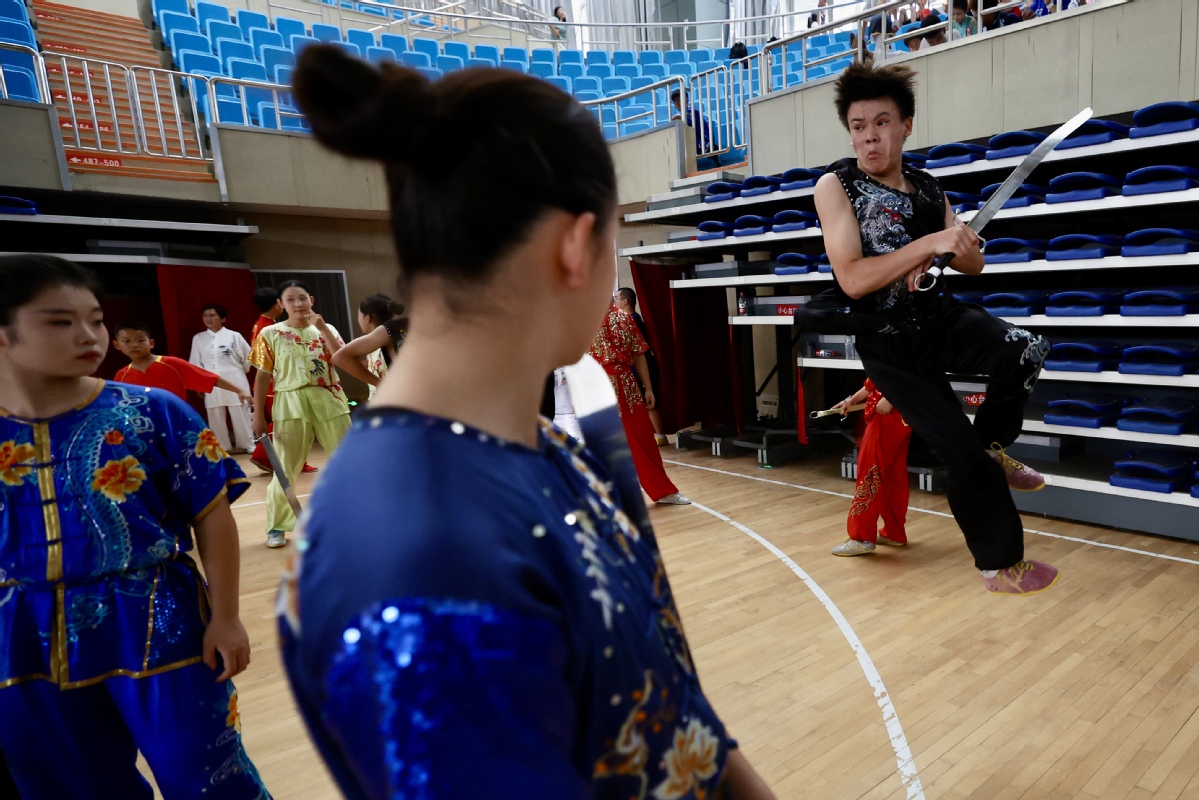
Participants showcase their moves. [Photo by Wei Xiaohao/chinadaily.com.cn]
Over 1,000 martial arts practitioners, including some intangible cultural heritage inheritors, from more than 10 provinces including Zhejiang, Shandong and Hebei, and Tianjin city participated in the "Hanlong Jingwu Cup" 5th Panshan Wushu Festival in Panshan Scenic Area in Jizhou district, showcasing the charm of Chinese martial arts and promoting the inheritance and development of martial arts culture.
Tianjin's Jizhou district has a long-standing tradition of martial arts culture, being a hub for physical fitness and martial arts practice. Surrounding regions such as Hebei and Beijing are notable centers for martial arts training and exchange, as mentioned by Wu Bin, former chairman of the Technical Committee of the International Wushu Federation.
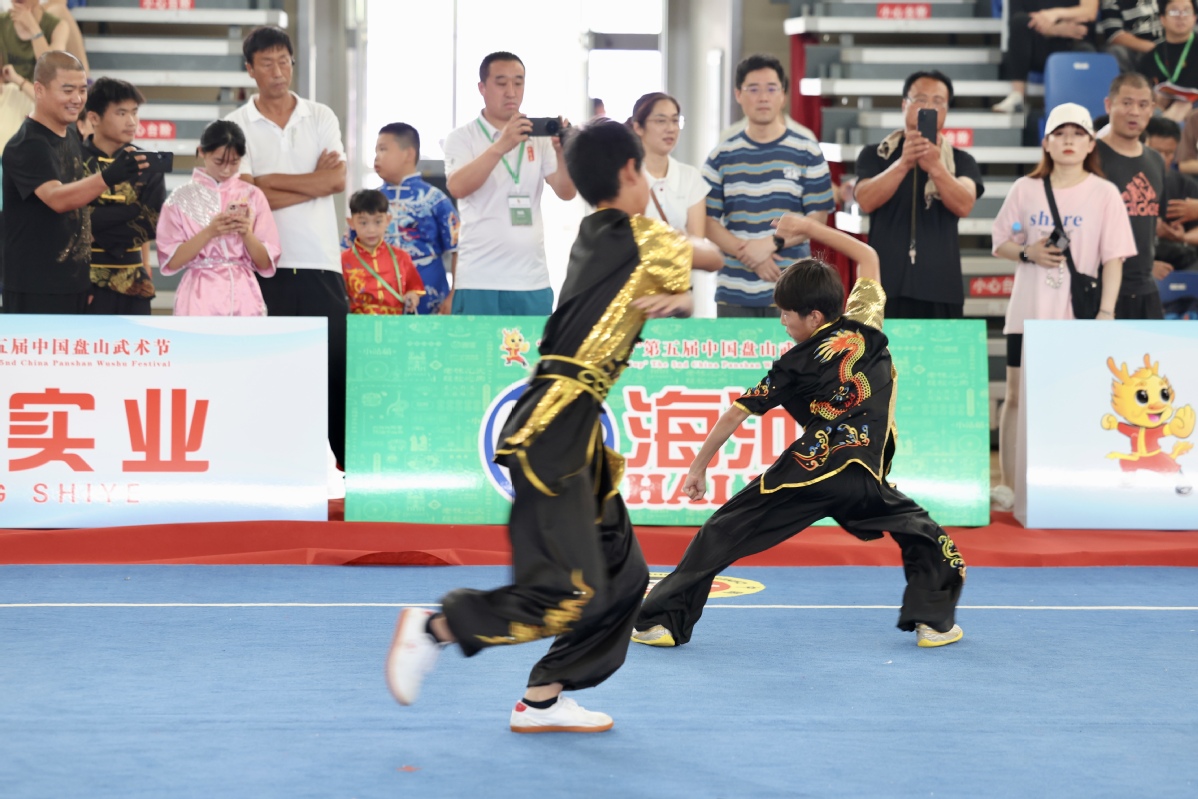
Participants compete in the tournament. [Photo by Wei Xiaohao/chinadaily.com.cn]
"This region has hosted numerous martial arts exchange events and holds significant importance in the preservation of martial arts culture," Wu said.
Participants in this martial arts festival come from different schools such as tai chi, Shaolin, and Baji.
"The performance forms of today's martial arts competitions include individual Wushu routines, paired exercises, and collective Wushu performance, with contents covering both traditional and modern martial arts routines. The jury will conduct a comprehensive evaluation based on the difficulty, skills, expressiveness, and spirit of the performances," Zhang Feng, director of Zhang Feng's Baji Boxing Heritage Institute, said.

Participants engage in the competition. [Photo by Wei Xiaohao/chinadaily.com.cn]
Zhang is from Mengcun, Cangzhou, Hebei province, the birthplace of Baji Boxing. Born into a martial arts family, he learned Baji Boxing from an early age under the influence of his father. "Martial arts can not only improve people's physical health but also strengthen their spirit. The physical fitness and will of the people play a decisive role in the future development of our country," he said.
Over the past 30 years, he has run martial arts schools for free and has trained more than 3,000 students so far. "As an inheritor of Baji Boxing, I will continue my career of spreading martial arts, train more students, and let the next generation inherit our martial arts spirit well," he added.
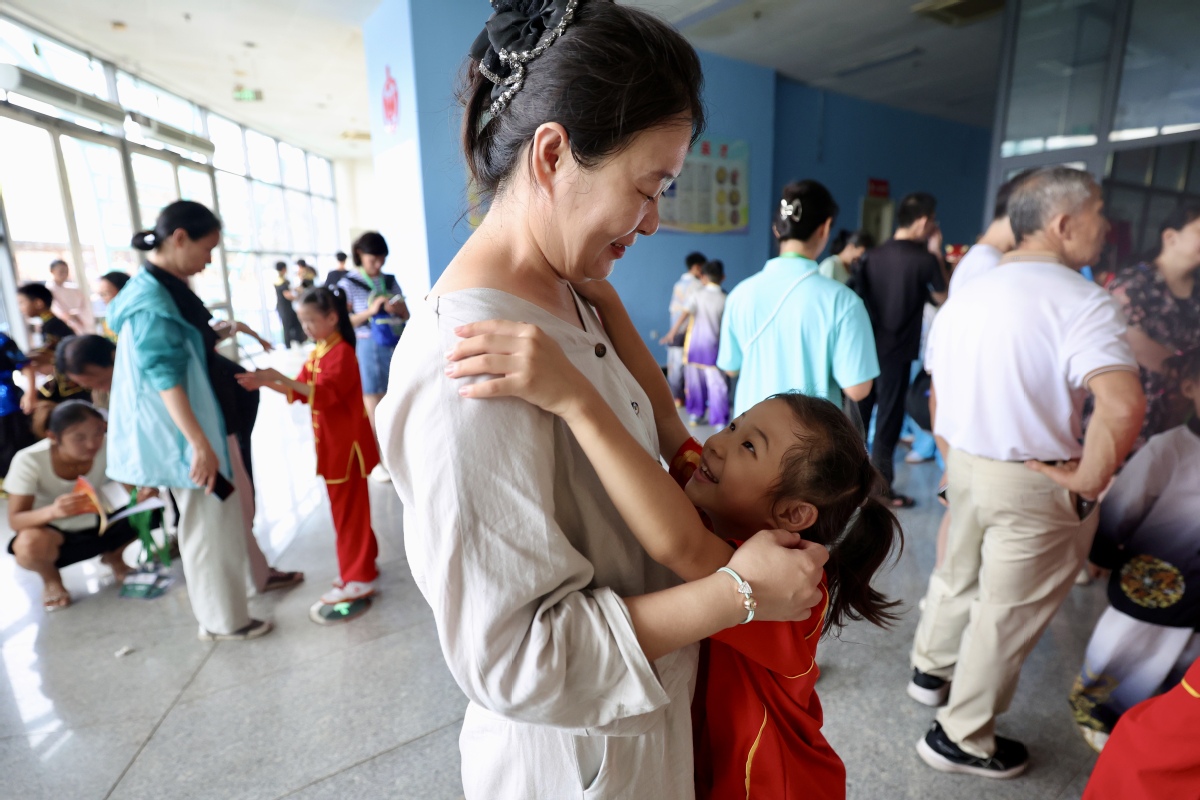
A young participant interacts with her mother before going on stage. [Photo by Wei Xiaohao/chinadaily.com.cn]
Sun Xiaoqi, a student in primary school and a martial arts athlete who has been learning martial arts for five years, said, "Martial arts not only make my body healthier but also strengthen my will. I will continue to learn martial arts and contribute my own strength to spreading traditional martial arts culture."
"Martial arts is one of the sports forms that can best represent Chinese culture and have the most Chinese characteristics," Wu said." Our martial arts culture is not only promoted nationwide but also widely spread internationally. Now, 156 countries have become member states of the International Wushu Federation," he added.
Lu Ruotong contributed to this story.
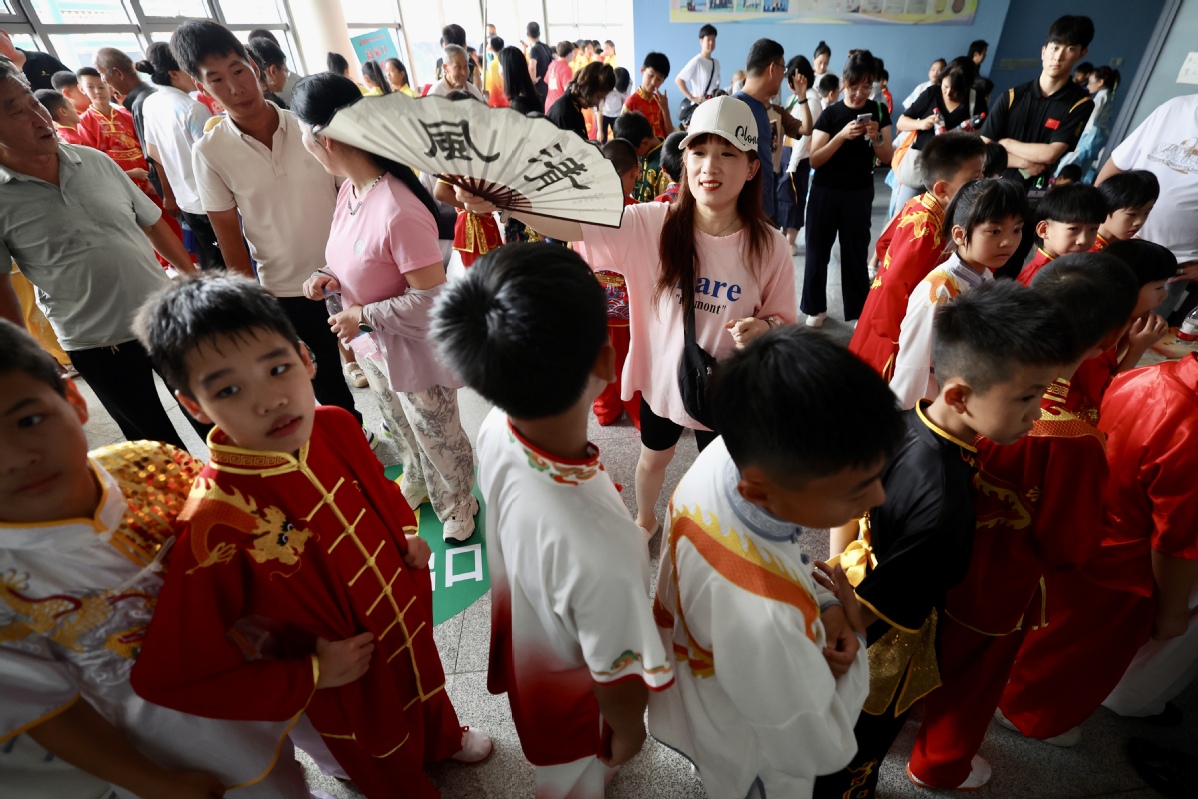
Outside the competition arena, parents accompany young participants as they wait to enter the competition. [Photo by Wei Xiaohao/chinadaily.com.cn]
