A group of Chinese scientists recently reported finding a 423-million-year old fossil from the Silurian period in Chongqing, suggesting that the development of animal jaws may have begun earlier than previously thought.
It is the second place to yield complete Silurian period fossils of fish with jaws, known as placoderms. The other is Qujing in Yunnan province.
The working team included researchers from the Institute of Vertebrate Paleontology and Paleoanthropology, the Chinese Academy of Sciences and the Chongqing Institute of Geology and Mineral Resources. Their findings were published in the biweekly peer-reviewed scientific journal Current Biology on Friday.
The new placoderm — given the technical name Bianchengichthys — is close to the last common ancestor of bony and cartilaginous fish.
"The fossil is exquisitely preserved with a mandible and paired fins," the report said. The mandible (lower jaw) "interestingly combines characteristics" of similar creatures, it said.
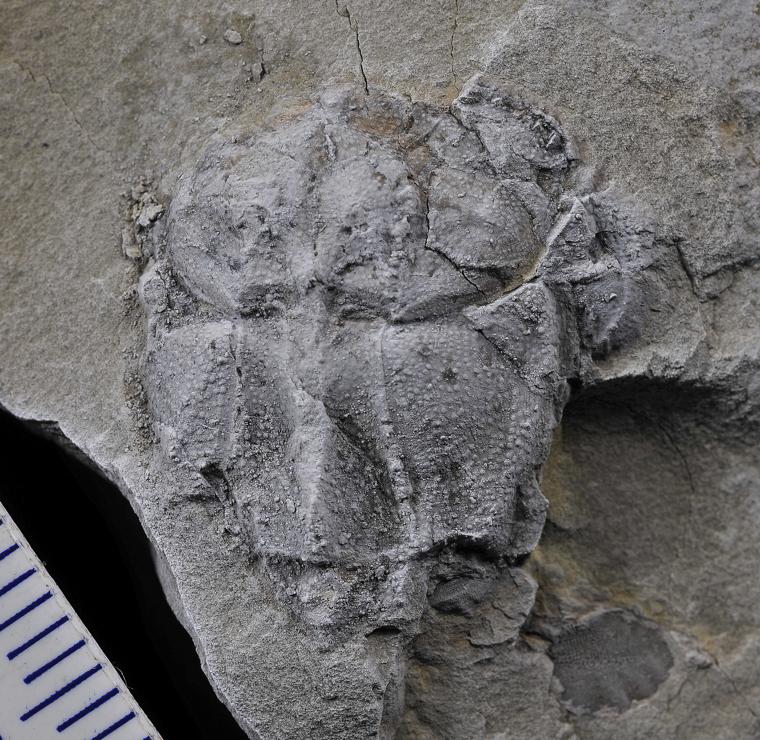
A group of Chinese scientists recently reported finding a 423-million-year old fossil from the Silurian period in Chongqing. It is the second site to yield complete Silurian period fossils of fish with jaws, known as placoderms. The other is Qujing in Southwest China’s Yunnan province. [Photo provided to chinadaily.com.cn]
Zhu Min, a researcher at the CAS Institute of Vertebrate Paleontology and Paleoanthropology, said the Silurian period occupies a pivotal stage in the unfolding of key evolutionary events, including the rise of vertebrates with jawbones.
"However, the understanding of this early diversification is often hampered by the patchy nature of the Silurian fossil record, with the articulated specimens of jawed vertebrates only known in isolated localities, most notably Qujing," he said.
The discovery significantly widens the distribution of Silurian placoderm-grade jawed vertebrates in South China and provides clues about the earliest evolution of jaws, he said.
He said the fossil is only 2 centimeters long and the fish may have been about 4 centimeters long.
"Though it is really a small fish, it could be a ferocious predator, eating other small animals around it with its maxillofacial bone and teeth," he said.

A group of Chinese scientists recently reported finding a 423-million-year old fossil from the Silurian period in Chongqing. It is the second site to yield complete Silurian period fossils of fish with jaws, known as placoderms. The other is Qujing in Southwest China’s Yunnan province. [Photo provided to chinadaily.com.cn]

A group of Chinese scientists recently reported finding a 423-million-year old fossil from the Silurian period in Chongqing. It is the second site to yield complete Silurian period fossils of fish with jaws, known as placoderms. The other is Qujing in Southwest China’s Yunnan province. [Photo provided to chinadaily.com.cn]

A group of Chinese scientists recently reported finding a 423-million-year old fossil from the Silurian period in Chongqing. It is the second site to yield complete Silurian period fossils of fish with jaws, known as placoderms. The other is Qujing in Southwest China’s Yunnan province. [Photo provided to chinadaily.com.cn]
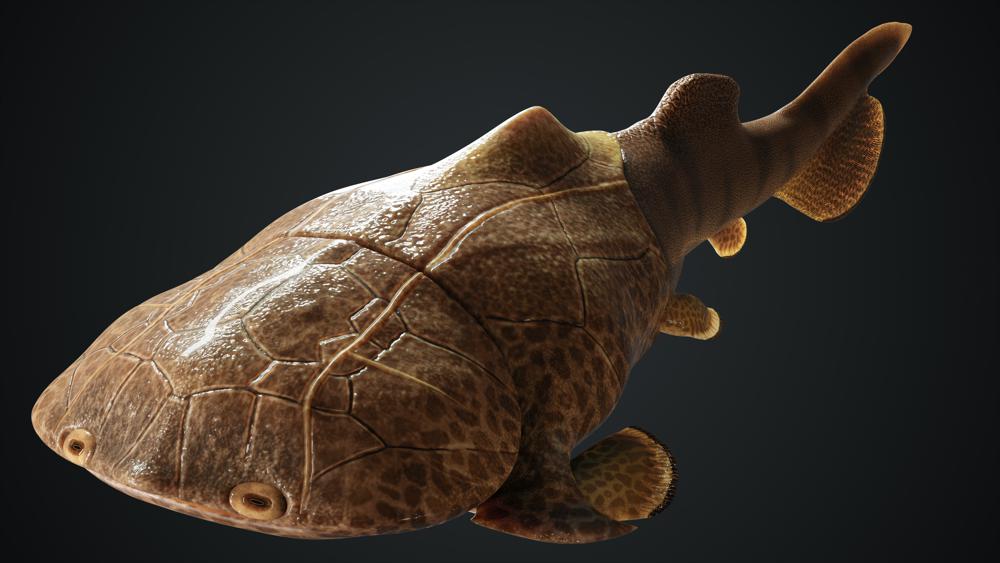
A group of Chinese scientists recently reported finding a 423-million-year old fossil from the Silurian period in Chongqing. It is the second site to yield complete Silurian period fossils of fish with jaws, known as placoderms. The other is Qujing in Southwest China’s Yunnan province. [Photo provided to chinadaily.com.cn]

A group of Chinese scientists recently reported finding a 423-million-year old fossil from the Silurian period in Chongqing. It is the second site to yield complete Silurian period fossils of fish with jaws, known as placoderms. The other is Qujing in Southwest China’s Yunnan province. [Photo provided to chinadaily.com.cn]

A group of Chinese scientists recently reported finding a 423-million-year old fossil from the Silurian period in Chongqing. It is the second site to yield complete Silurian period fossils of fish with jaws, known as placoderms. The other is Qujing in Southwest China’s Yunnan province. [Photo provided to chinadaily.com.cn]
