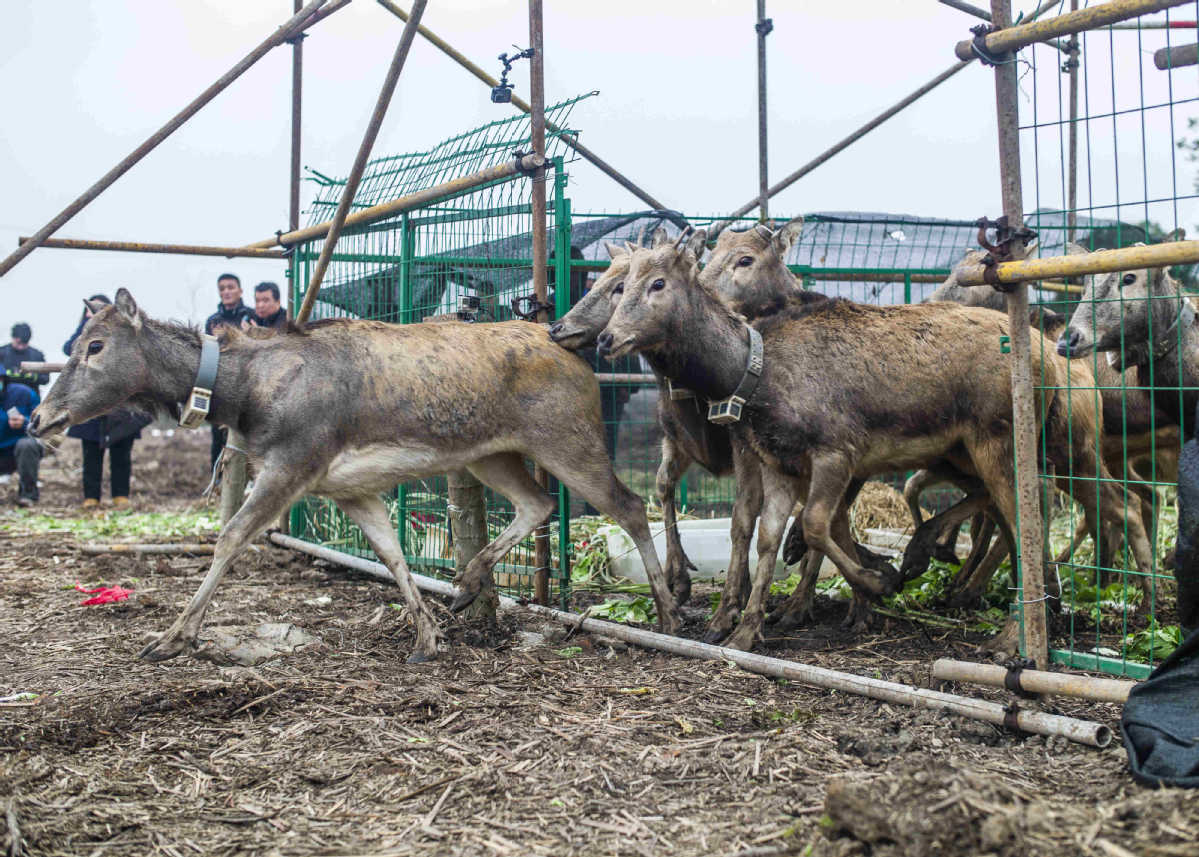
The 10 milu from Beijing dash toward East Dongting Lake National Nature Reserve. [Photo provided to chinadaily.com.cn]
A herd of milu, also known as Père David's deer, paces back and forth uneasily at the entrance of a shelter in Nanhaizi Milu Park, beyond the south-fifth ring road of Beijing.
After minutes of hesitation, the leading milu, puffing in trepidation, finally steps out and marches along a corridor set up by researchers at the Beijing Milu Ecological Research Center. It will lead them to a truck heading for East Dongting Lake National Nature Reserve, their new home.
In fact, the milu is a species of deer native to China. They once roamed on marshes and plains along the Yellow and Yangtze Rivers, but went extinct in the 1800s. The story of the species' survival is long and complicated.
The creature combines the features of a horse's face, a donkey's tail, cow's hooves and stag's antlers, often seen as auspicious signs in Chinese mythology.
Due to loss of habitat and human activities, their population dwindled to around 200 until the Qing Dynasty (1644-1911), with the last group on the planet being kept at Nanhaizi, then the royal hunting park.
A French missionary named Père David introduced this novel species to France in 1866. Later, a few more milu were transported to other European countries, while the rest were killed in the chaos of subsequent wars and natural disasters.
The scattered migrants, however, didn't live well in Europe. When British duke Herbrand Russell managed to pull 18 milu together and raised them at his Woburn Abbey in 1898, they finally got some breathing room.
Since its founding in 1985, Beijing Milu Ecological Research Center has endeavored to bring the milu back home. From 1985 to 1987, joint efforts brought 38 milu back to Nanhaizi Park.
In 1986, Milu Natural Reserve in Dafeng, Jiangsu province was founded, bringing another 39 milu from England. These 77 milu laid the foundation of the rejuvenation of the species in the country.
As the size of the milu group in China grew stronger, more nature reserves were established where traces of the deer have been found to keep them under protection.
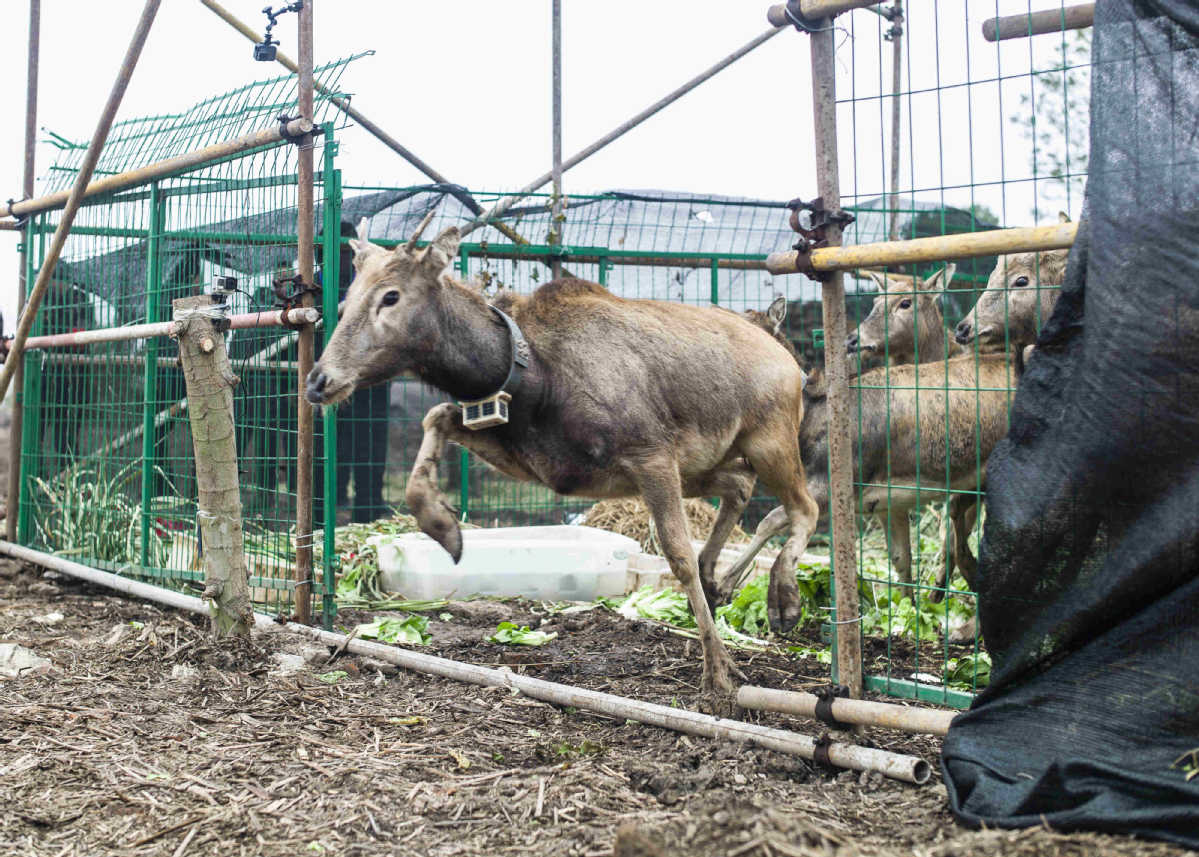
The 10 milu from Beijing dash toward East Dongting Lake National Nature Reserve. [Photo provided to chinadaily.com.cn]
Over the 35 years since the milu's return, the species' population has surpassed 8,000, active in 81 areas in China. Noticeably, they have formed pure wild groups independent from the protection of human beings.
When massive floods in 1998 destroyed the fences in Shishou Nature Reserve, north of Yangtze River, over 30 milu fled, bravely swam across the river. They found a new habitat near East Dongting Lake and reproduced, prompting the formation of the first group of wild milu.
"As a species adapts to the environment, they will gradually develop certain genetic features. Integration between different breeds will keep the useful features and eliminate the bad ones, so as to enrich genetic diversity and reduce the possibility of disease. That's also the intention of this East Dongting Lake trip," said Bai Jiade, director of the Beijing Milu Ecological Research Center.
The center has sent 546 milu to 41 nature reserves across the country since 1989.
"There are more than 8,000 milu in China now. The next step is to gradually release them into nature. To have milu from Beijing integrate into the wild groups in other places is an important approach," Bai said.
The ten milu in this trip to East Dongting Lake consists of both young and elderly specimens. In the summers to come, they will grow into strong competitors in the fight over leadership and mates.
Our herd, however, has no idea of all these sophisticated plans. The 30-hour trip has just made them sullen and tired.
As the truck drives into the reserve, they perk up after smelling the marsh. What awaits them is a broad field of 190 hectares with abundant water, grasses and sedges, over 200 bird and plants species, and their relatives.
Getting off the truck, they take a short break in a shelter. The moment the fences open, they bounce out in a trot, vanishing into the reeds.
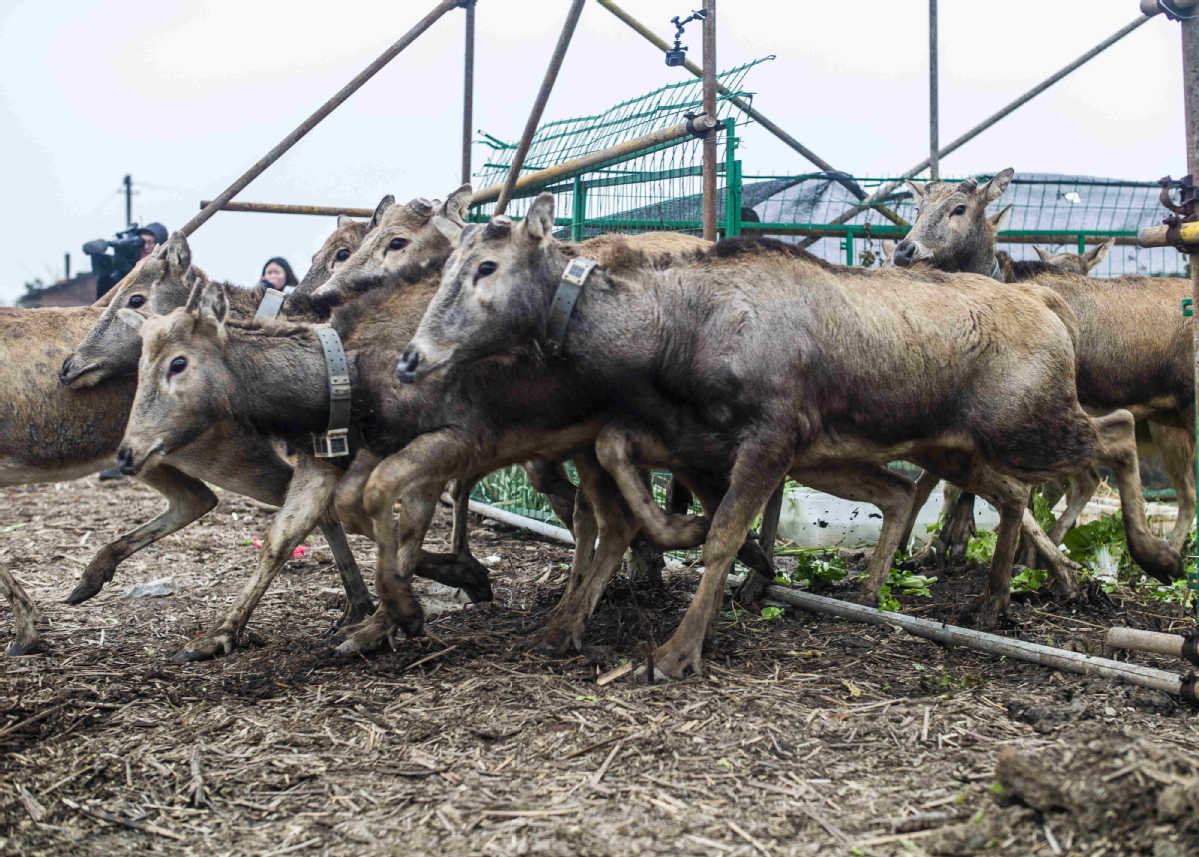
The 10 milu from Beijing dash toward East Dongting Lake National Nature Reserve. [Photo provided to chinadaily.com.cn]
But this is not the end of their story.
Soon they will be put to the test. A water-proof GPS collar will be attached to each of them, which enables the researchers to observe their habits after being released.
In the upcoming decades, researchers will further analyze the behavior and evolution of the species with genetic tools, and their influence on the ecosystem as a flagship wetland species.
"The revival of milu in China has set a good example for species reintroduction. Our ultimate goal is to make them survive on their own. After all, they belong to nature," said Yang Sheng, director of the reserve.

A fight between two milu bucks over the right to mate. [Photo provided to chinadaily.com.cn]

A milu buck usually wallows in mud to attract females during breeding season. [Photo provided to chinadaily.com.cn]
