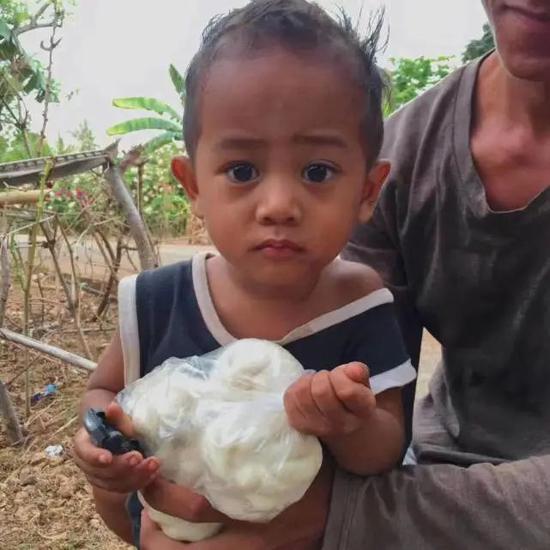
Local residents receive baozi made by Hong Silan and the hotel staff. [Photo provided to chinadaily.com.cn]
When a woman named Hong Silan boarded the plane to Cebu, the Philippines, from Xiamen, Fujian province, in January last year, she didn't expect to be stuck on a small island for more than a year.
Hong, 25, had planned to look for a job in Australia after a short period of English language study in Cebu, the Philippines, which she found cost less than in other English-speaking countries. But when she started her language course at a holiday resort on Camotes Island, the COVID-19 pandemic exploded around the world.
In March 2020, Australia imposed an entry ban on noncitizens and nonresidents intended to curb the spread of the virus. The Philippines also suspended all the passenger ship services.
As she couldn't travel to Australia, Hong tried her best to get a plane ticket back to China, but she found that flights were canceled because of the pandemic.
"There was also lots of fraudulent information to attract people who wanted to return China as soon as possible," she said. "So I gave up the idea and decided to stay on the island."
"Fortunately, it was quite safe, and there are no confirmed or suspected cases of COVID-19 so far," she said. "I have received lots of help from local residents."
The owner of the hotel where Hong lives decided to provide free room and meals.
"Filipinos are always happy to help others," he said. "In return, she also does some work at the resort to help us, such as teaching our staff Chinese."
Before coming to live on the island, Hong loved online shopping, makeup and skin care. But over the past year, she said, her material desires lessened.

Hong Silan has lived on Camotes Island in Cebu, the Philippines for more than a year. The experience has gradually changed her approach to life. [Photo provided to chinadaily.com.cn]
"Prices on the island are very low and there is no online shopping or food delivery service," she said. "I seldom spent more than 500 yuan ($77.30) a month."
"I feel relaxed and I can save lots of time and money to do something else," she said. "I really like to talk with my family members and friends about the simple life on the island."
After the lockdown of the island, Hong found that some residents had lost their jobs and had difficulty supporting their families. She wanted to do something for them and asked the hotel owner for help.
They decided to make Chinese baozi — steamed stuffed buns — to send to people in need.
In fact, Hong didn't know how to make baozi. She found an online course, and after watching the video repeatedly, she began to make the buns for several hotel employees.
Considering residents' religious customs, Hong visited local public officials who knew each family and made a list of 100 families, grouping them by their pork or chicken preference.
She and her friends spent a week making 1,000 baozi, which they sent to the needy families.
Accompanied by her new local friends, Hong learned some new things, such as diving, swimming and driving. She also experienced cliff diving and camping in the wild, which she had never wanted to try before.
In her spare time, Hong shared videos of life on the island on social media platforms, helping her make new friends.
"Although life on the island is temporary, it really brings me lots of surprises," she said. "I will still look for a more colorful life in the future."
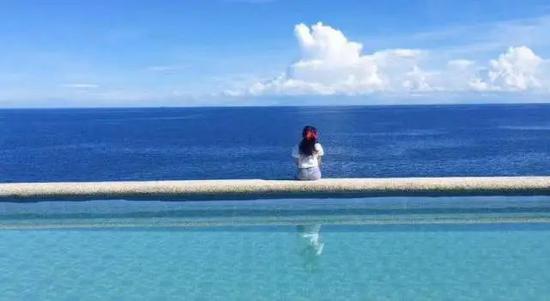
Hong Silan has lived on Camotes Island in Cebu, the Philippines for more than a year. The experience has gradually changed her approach to life. [Photo provided to chinadaily.com.cn]
